These free frog coloring pages explore life beside ponds, among fallen leaves and up leafy branches. Choose a resting, swimming or leaping frog, or take a closer look at eggs, a tadpole and a young frog with a remaining tail.
Short nature facts accompany the pictures to help children connect what they color with how frogs live and grow.
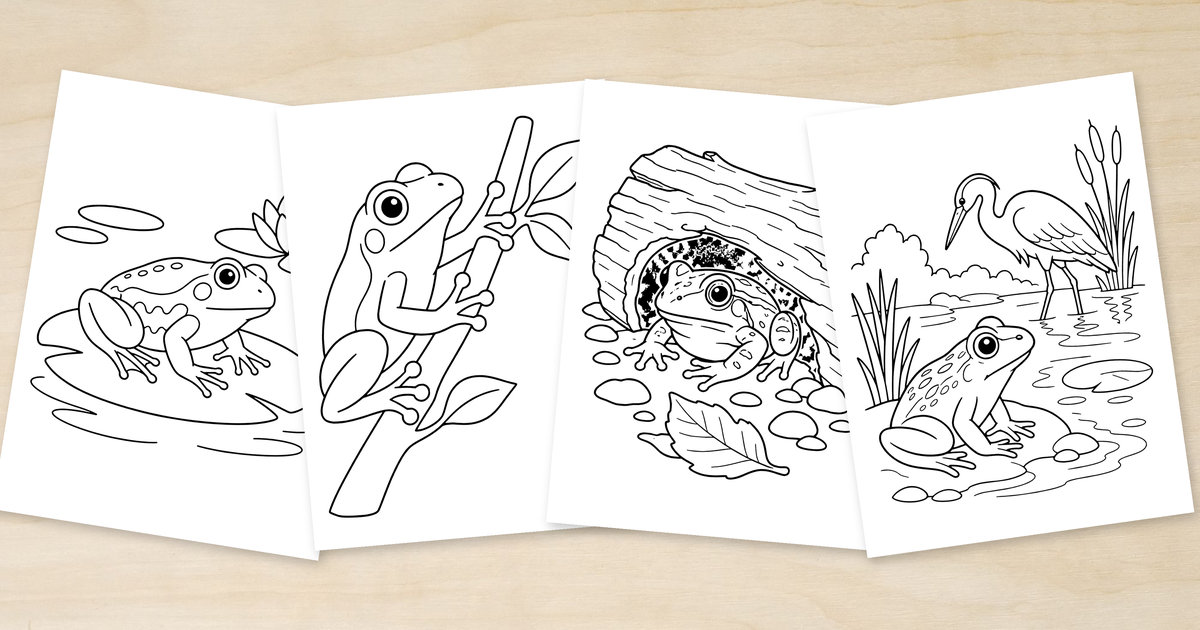
Click any coloring page image below to open its free PDF in a new tab. Download the PDF, then return here to choose another design. No email signup is required.
Frog Resting on a Lily Pad
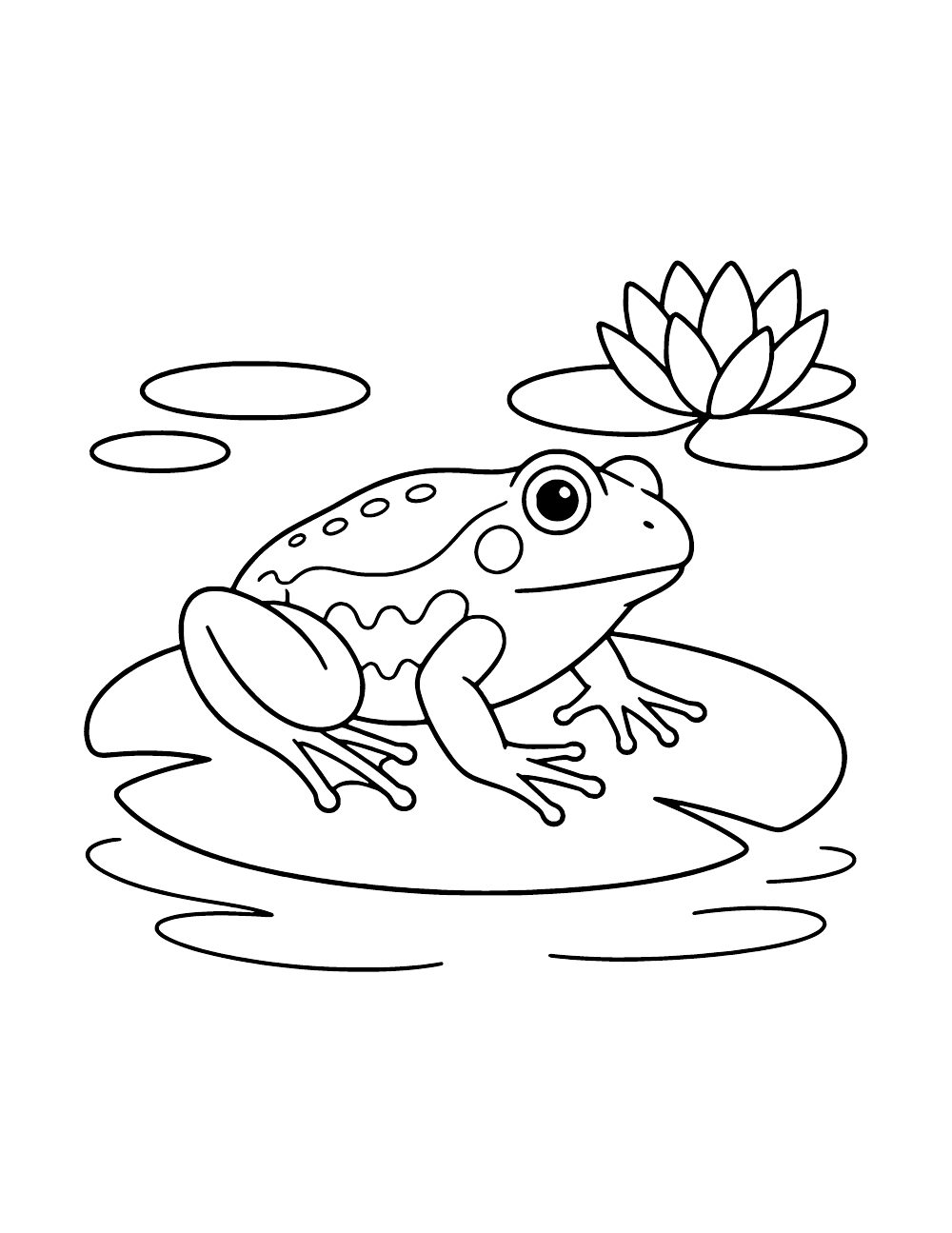
A broad lily pad forms a resting place for this frog. Frogs live in water, on land or in trees, depending on the species. A pond scene shows one kind of habitat, but frogs do not all spend their lives floating among lily pads.
More information: Frog and Toad — San Diego Zoo Wildlife Alliance
Frog Swimming Underwater
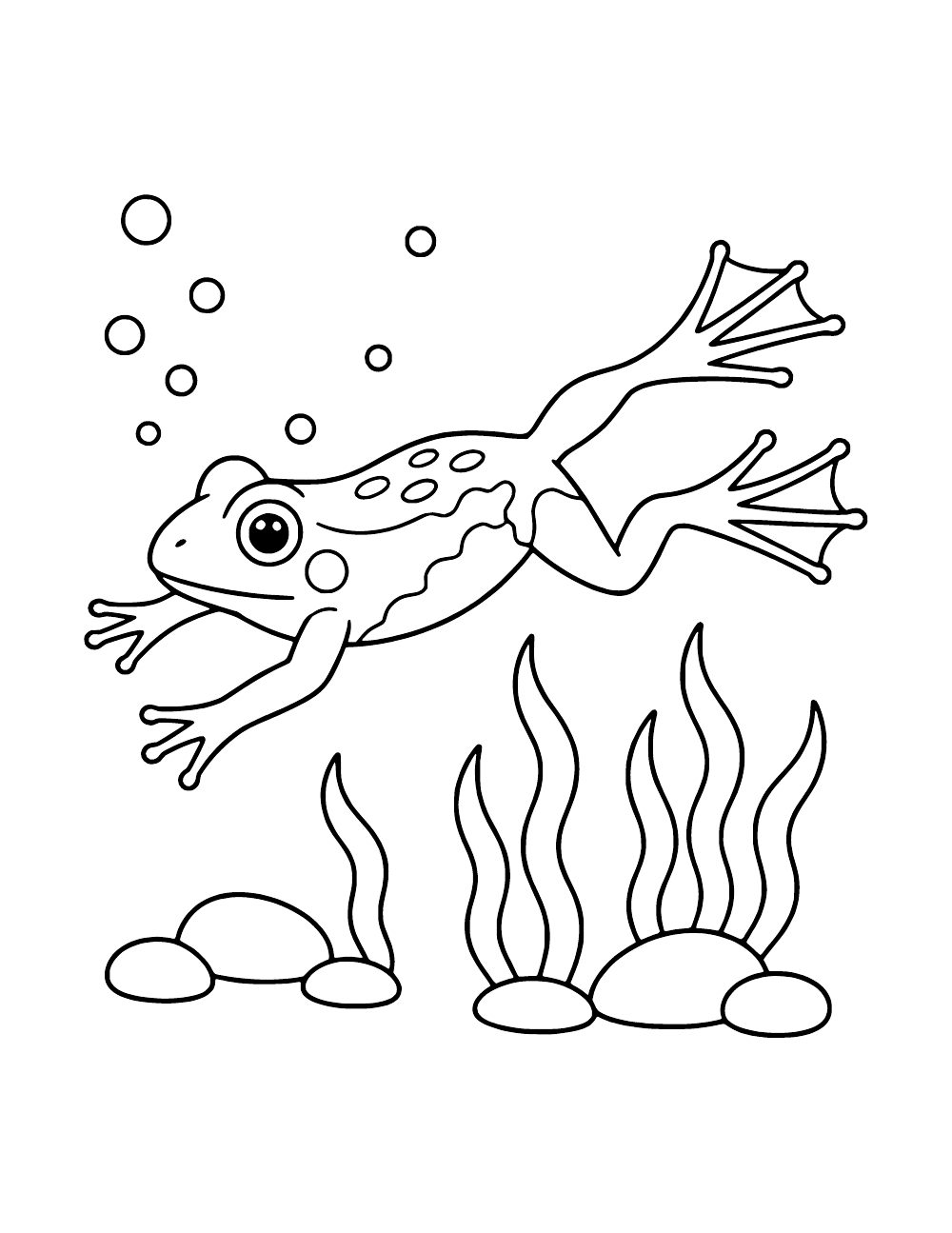
This swimming frog stretches its long hind legs behind its body. Aquatic frogs use their hind legs for swimming, while many frogs also use strong hind legs to leap. Compare the extended legs here with the folded legs of a resting frog.
More information: Frog and Toad — San Diego Zoo Wildlife Alliance
Frog Leaping Beside a Pond
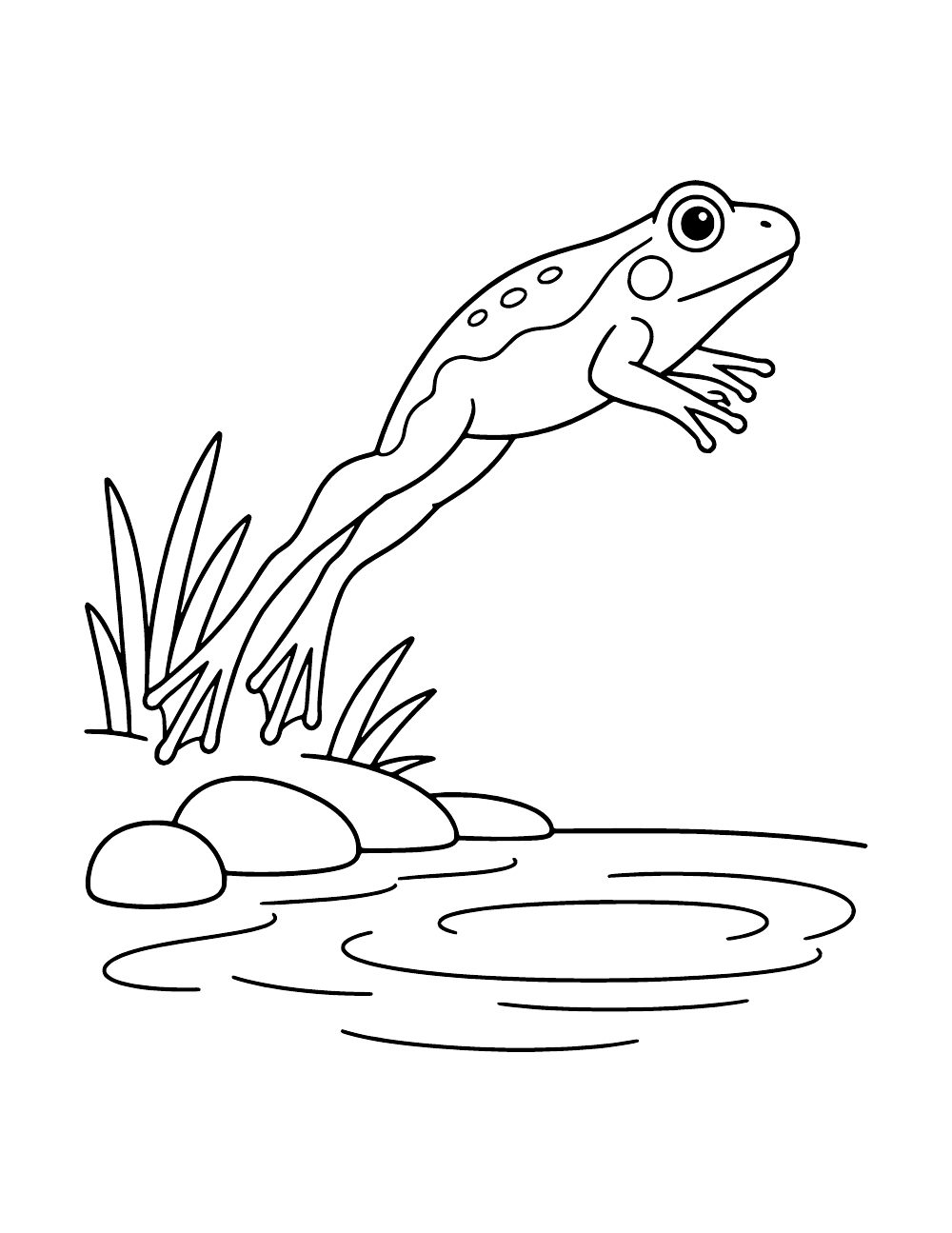
The frog is pictured in mid-leap, with its long back legs extended and its front legs held closer to its body. Strong hind legs help many frogs jump. Following the outline from the body to the back feet makes it easier to see how much of this frog's shape is taken up by its powerful legs.
More information: Frog and Toad — San Diego Zoo Wildlife Alliance
Climbing Frog on a Leafy Branch
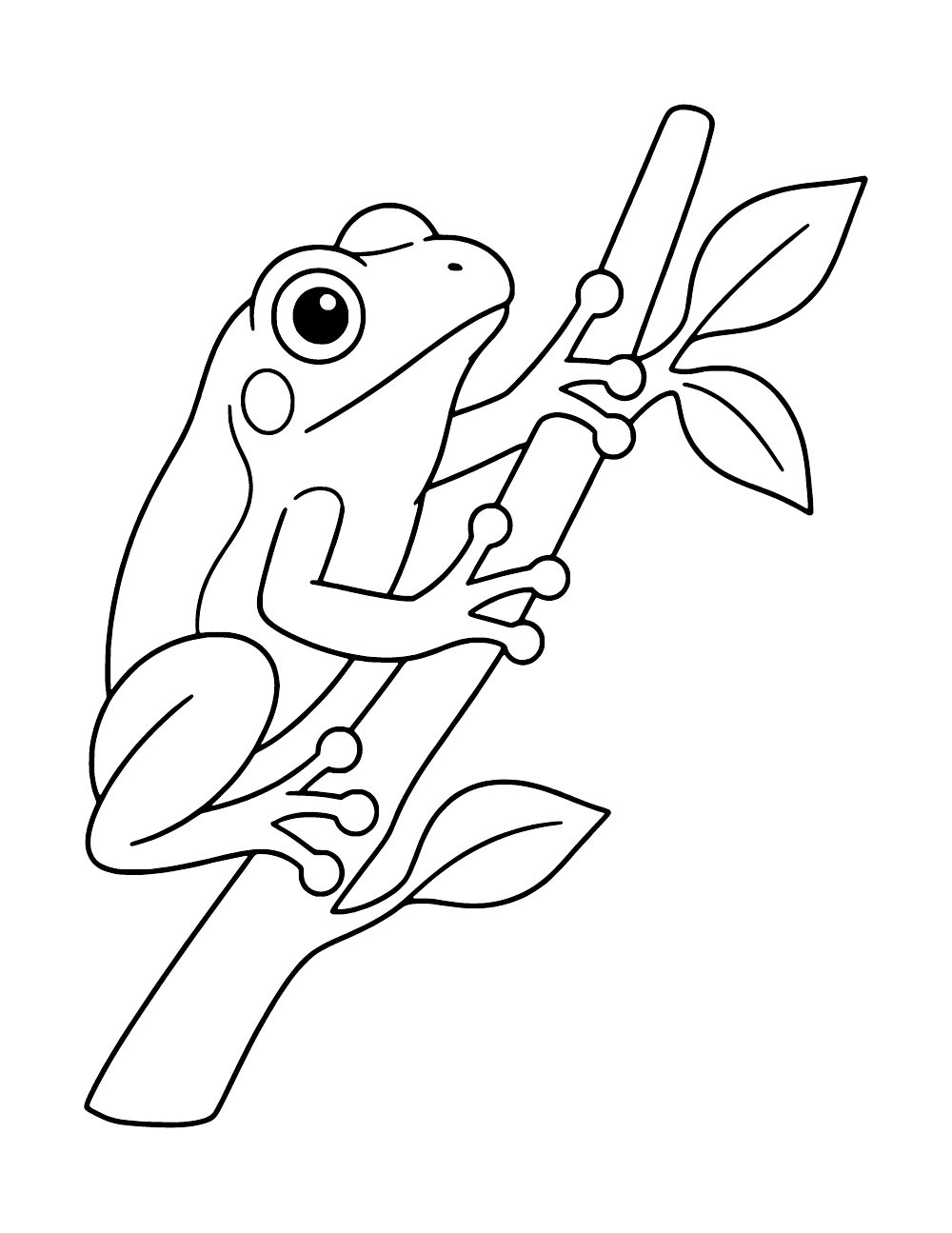
Look closely at the rounded toe tips wrapped around the branch. Some climbing frogs have toe pads, and trees are home to certain kinds of frogs. These features belong to some frogs rather than every frog, so compare this climber's toes with the webbed feet in the swimming picture.
More information: Frog and Toad — San Diego Zoo Wildlife Alliance
Frog Reaching for an Insect
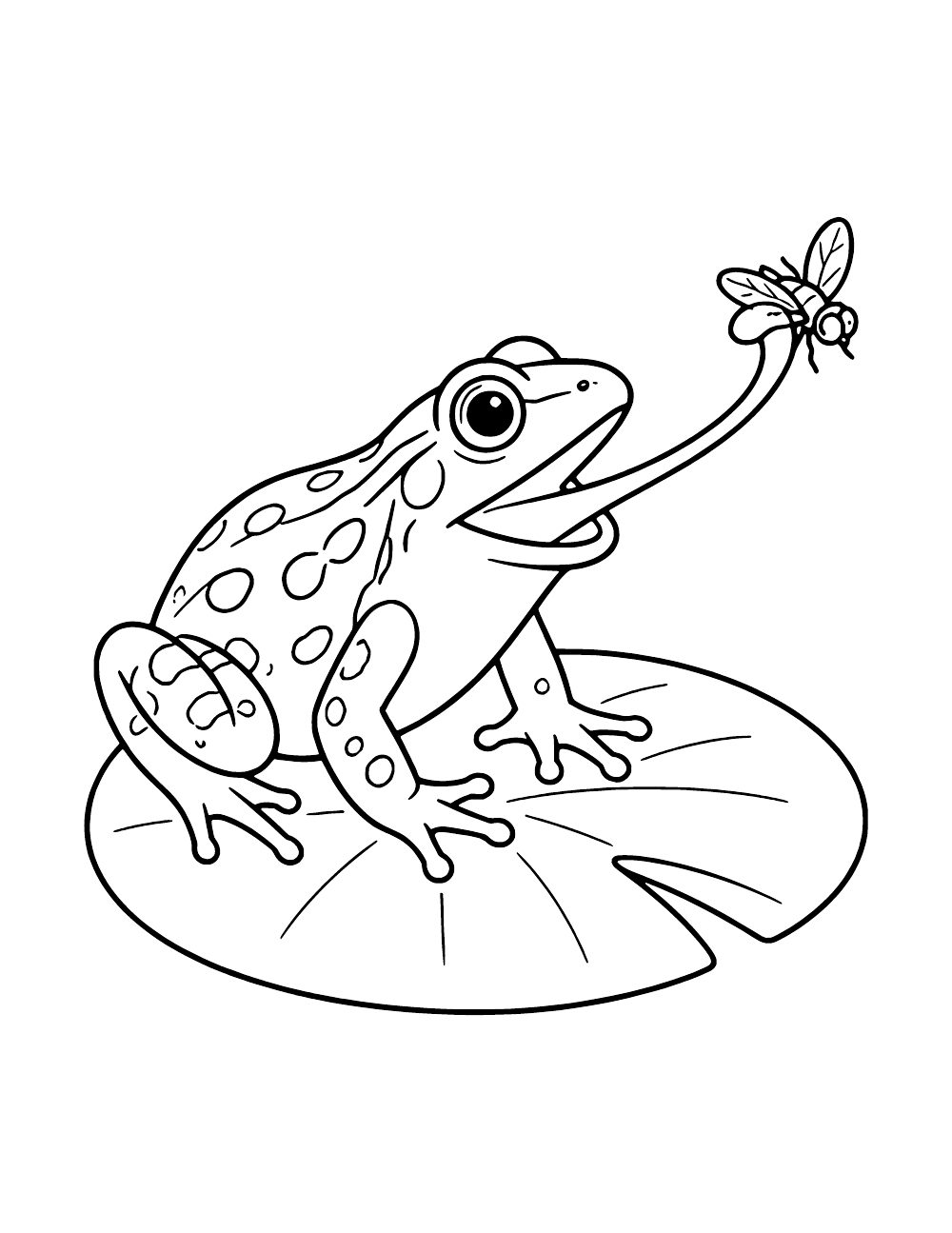
An insect is the focus of this feeding scene. Most adult frogs eat invertebrates—animals without backbones—including insects, spiders, worms and slugs. The insect shown here represents one possible meal, rather than the full variety of foods adult frogs eat.
More information: Frog and Toad — San Diego Zoo Wildlife Alliance
Calling Frog at the Water's Edge
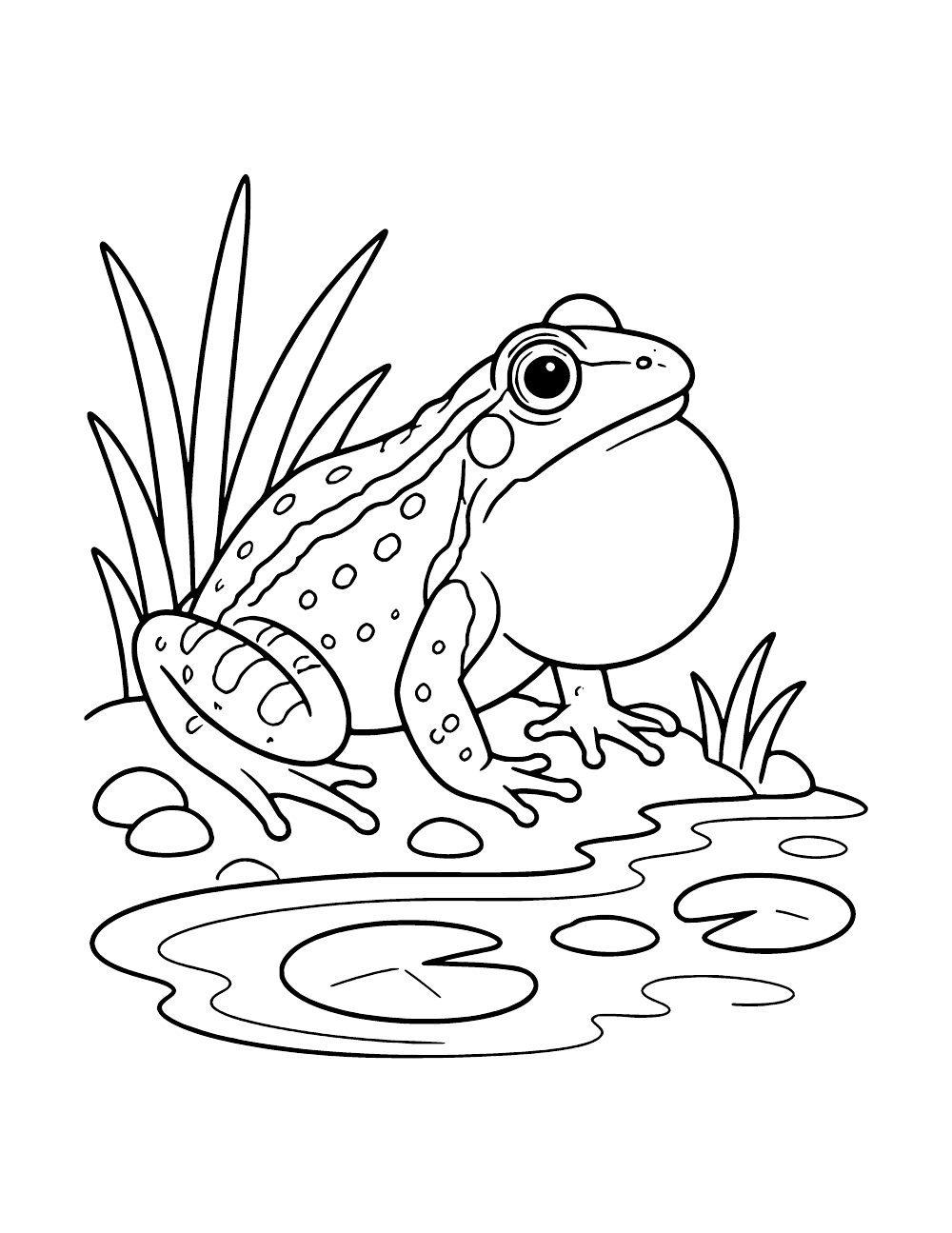
The large rounded shape beneath this frog's mouth makes its calling pose easy to notice. In many frog species, males call to attract mates and warn rival males. Frog calls are part of communication, even though we cannot hear the frog in a picture.
More information: Frog and Toad — San Diego Zoo Wildlife Alliance
Spotted Frog Among Fallen Leaves
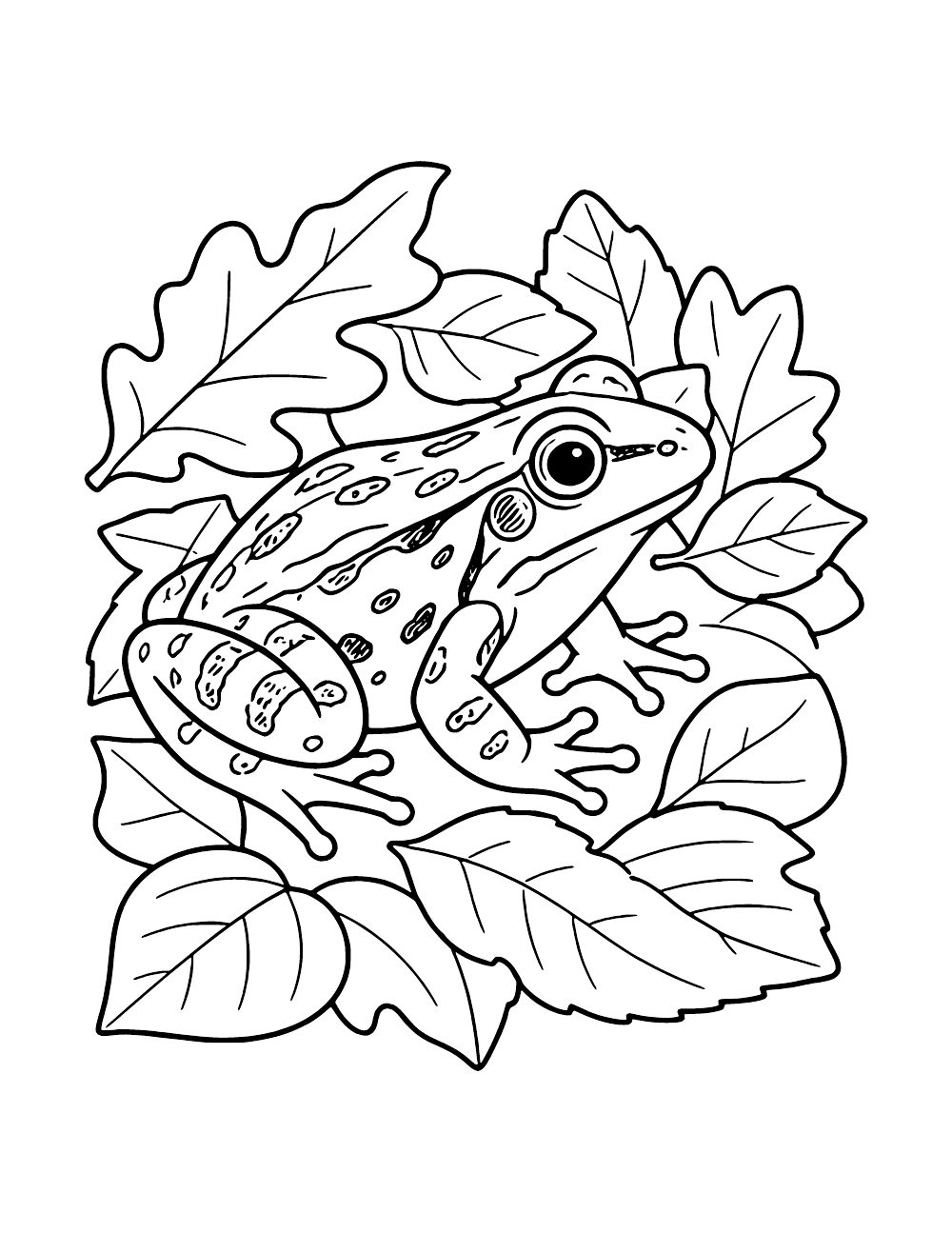
Leaves surround the frog, creating a busy background for its spotted body. Mottled green or brown coloring helps many frogs blend into their surroundings. Try choosing colors that connect the frog's markings with the leaves, then notice how easily you can still find its outline.
More information: Frog and Toad — San Diego Zoo Wildlife Alliance
Frog Sheltering Beneath a Log
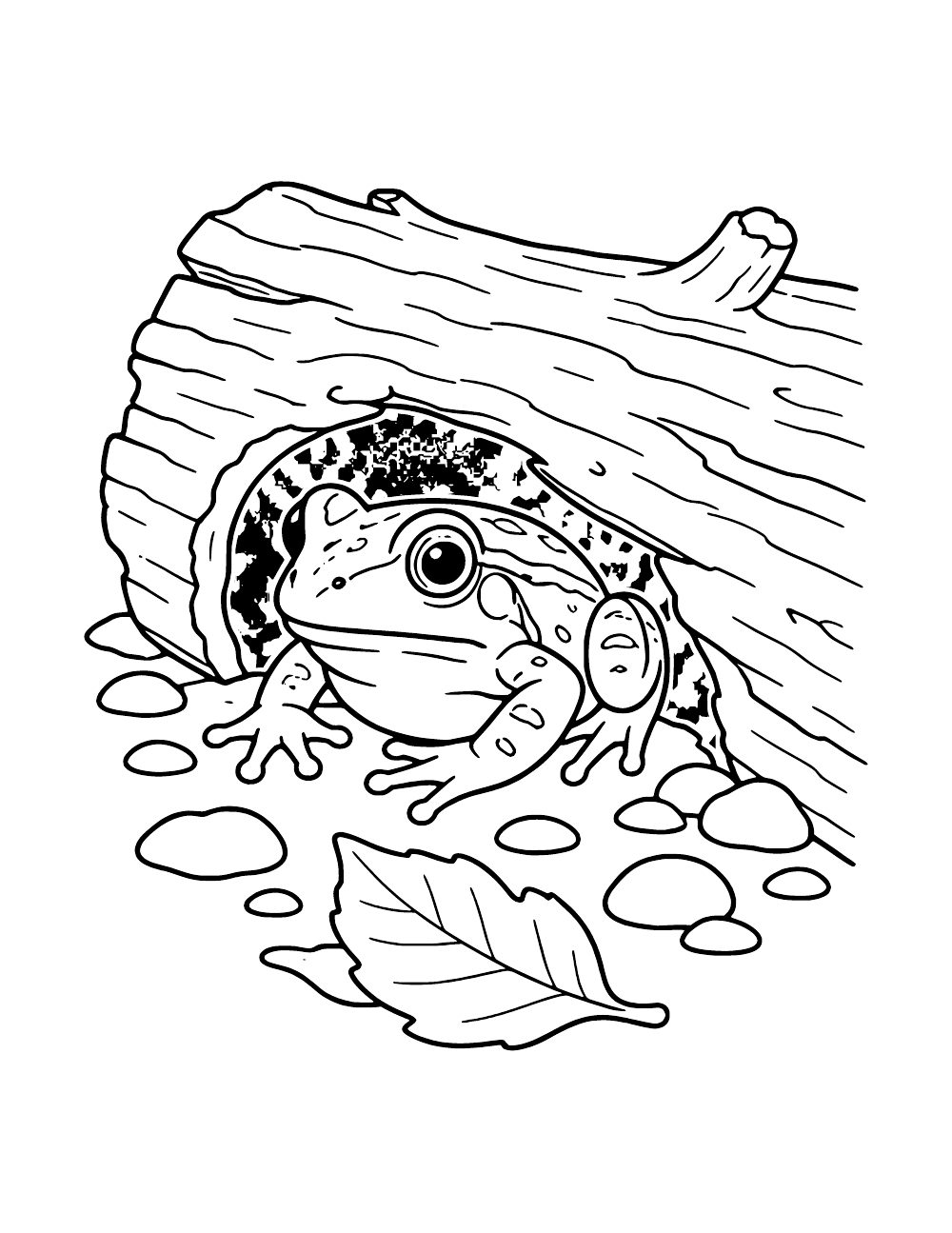
A fallen log provides a sheltered space around this frog. Frog habitats can include hiding places among logs, rocks and leaves. These small spaces are part of the habitat too; a frog's surroundings include more than the open water or plants we first notice.
More information: Frog and Toad — San Diego Zoo Wildlife Alliance
Frog Peeking Above the Pond
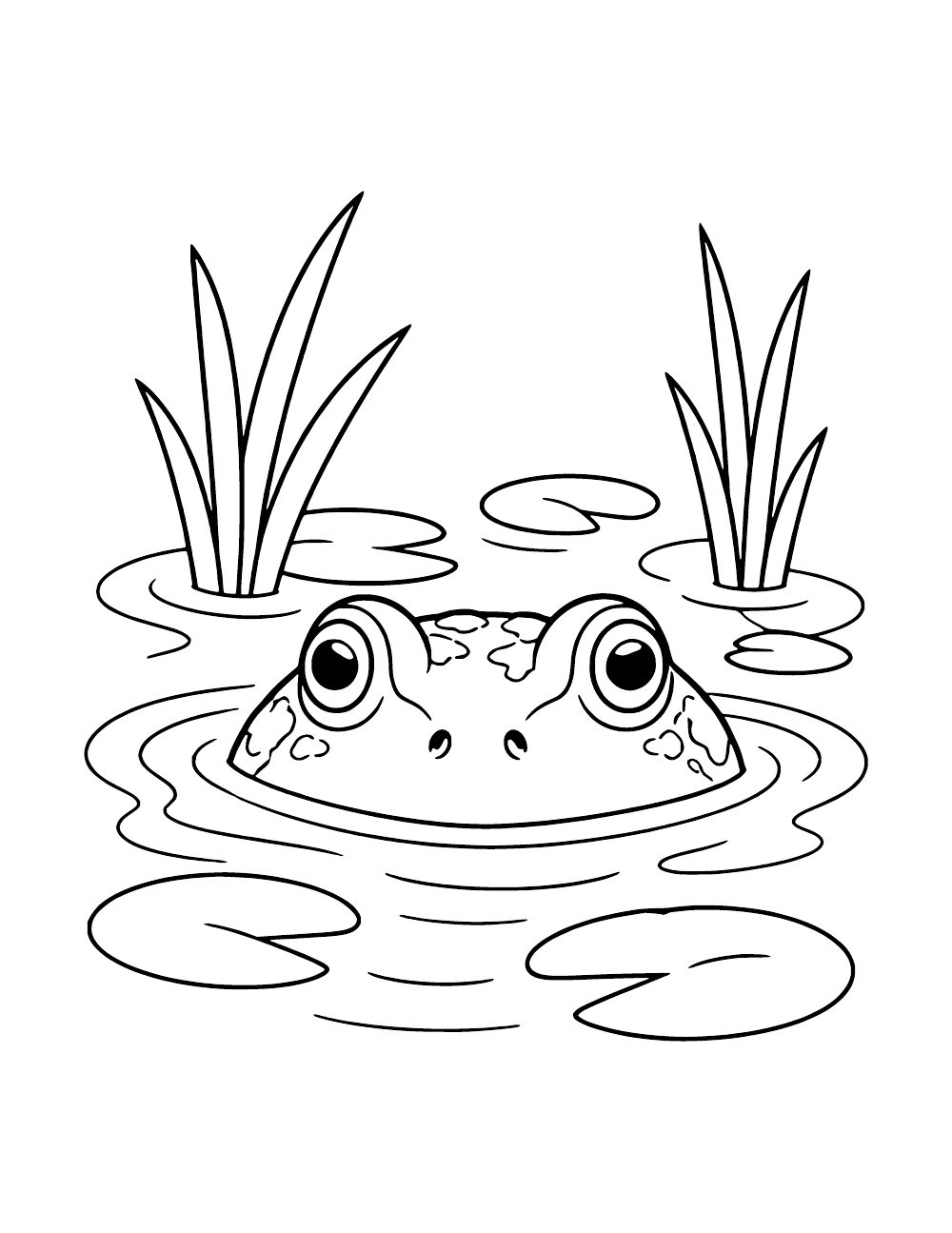
Only the upper part of the frog's head is visible above the water. Frogs have moist, permeable skin that allows gas exchange and water absorption. Drying out is a risk for them, which makes moisture an important part of understanding their habitats.
More information: Frog and Toad — San Diego Zoo Wildlife Alliance
Frog Beneath a Leaf in the Rain
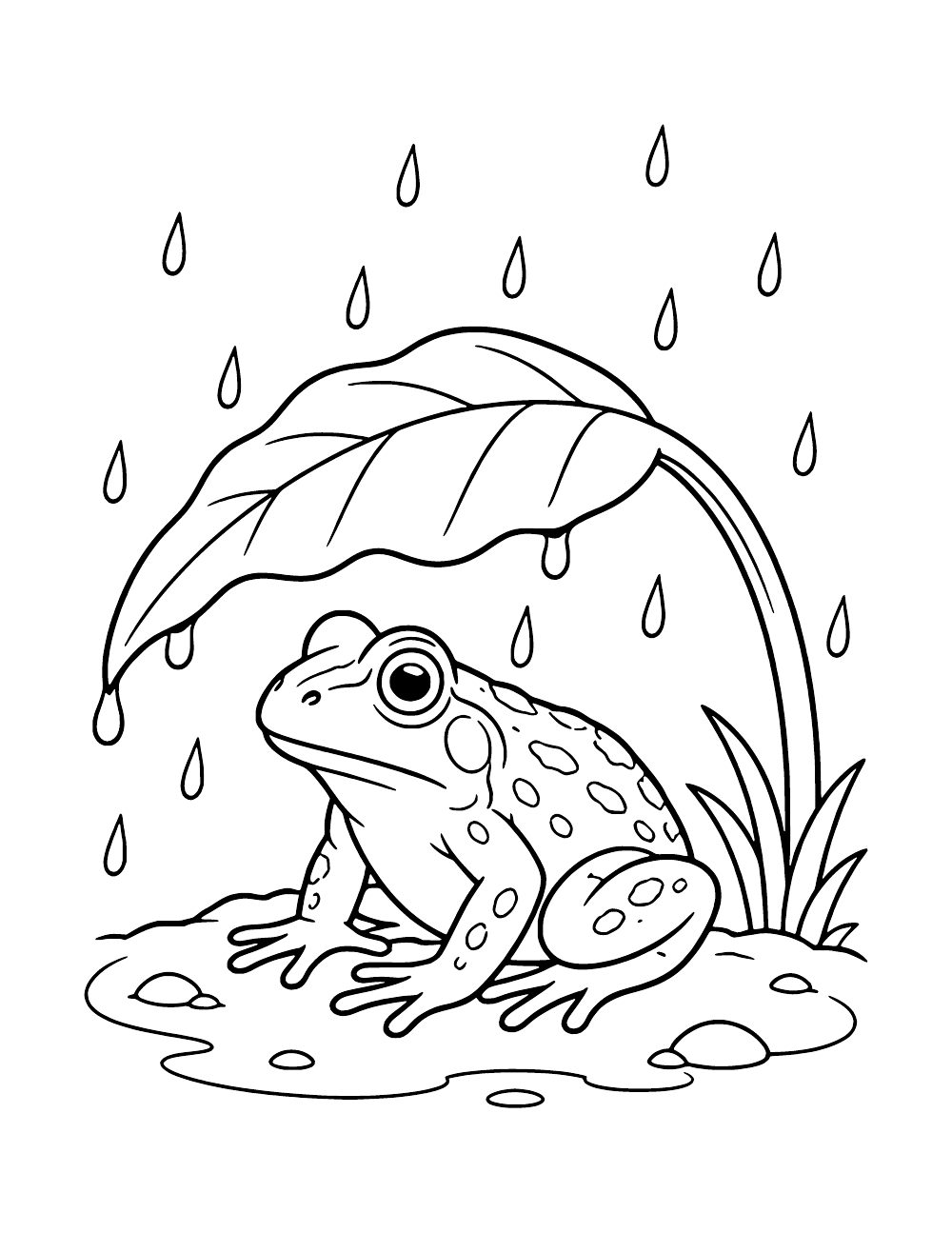
Raindrops surround a frog beneath an arching leaf. Moisture matters to frogs because their skin can absorb water and drying out is a risk. This scene offers a chance to talk about the damp conditions frogs need, even when they spend time on land.
More information: Frog and Toad — San Diego Zoo Wildlife Alliance
Frog Beside an Insect on a Reed
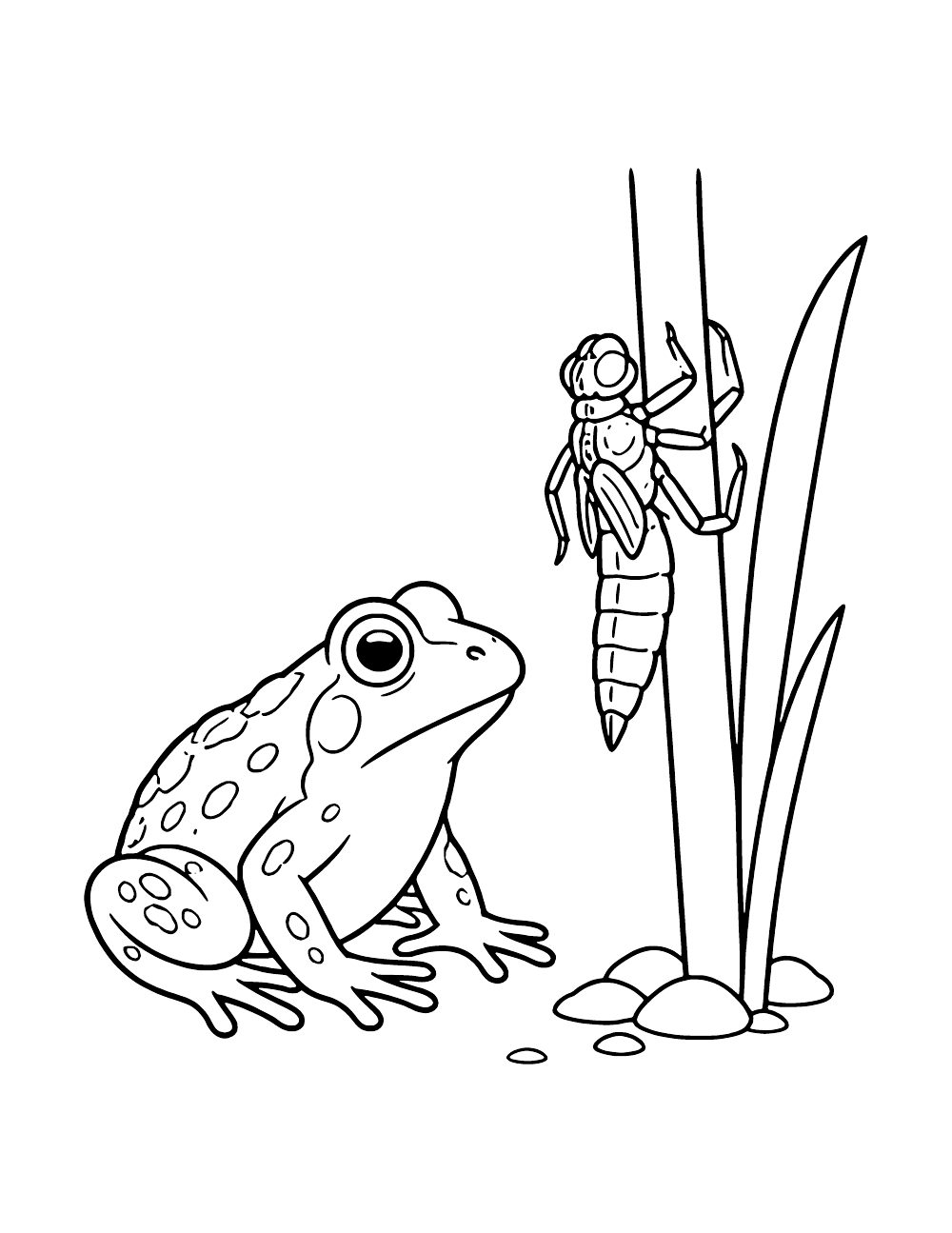
The frog faces an insect clinging to a tall plant stem. Insects are among the invertebrates eaten by most adult frogs, so this picture can prompt a conversation about food. The drawing shows the two animals near each other; it does not show the frog actually catching its neighbor.
More information: Frog and Toad — San Diego Zoo Wildlife Alliance
Frog and Wading Bird at the Pond
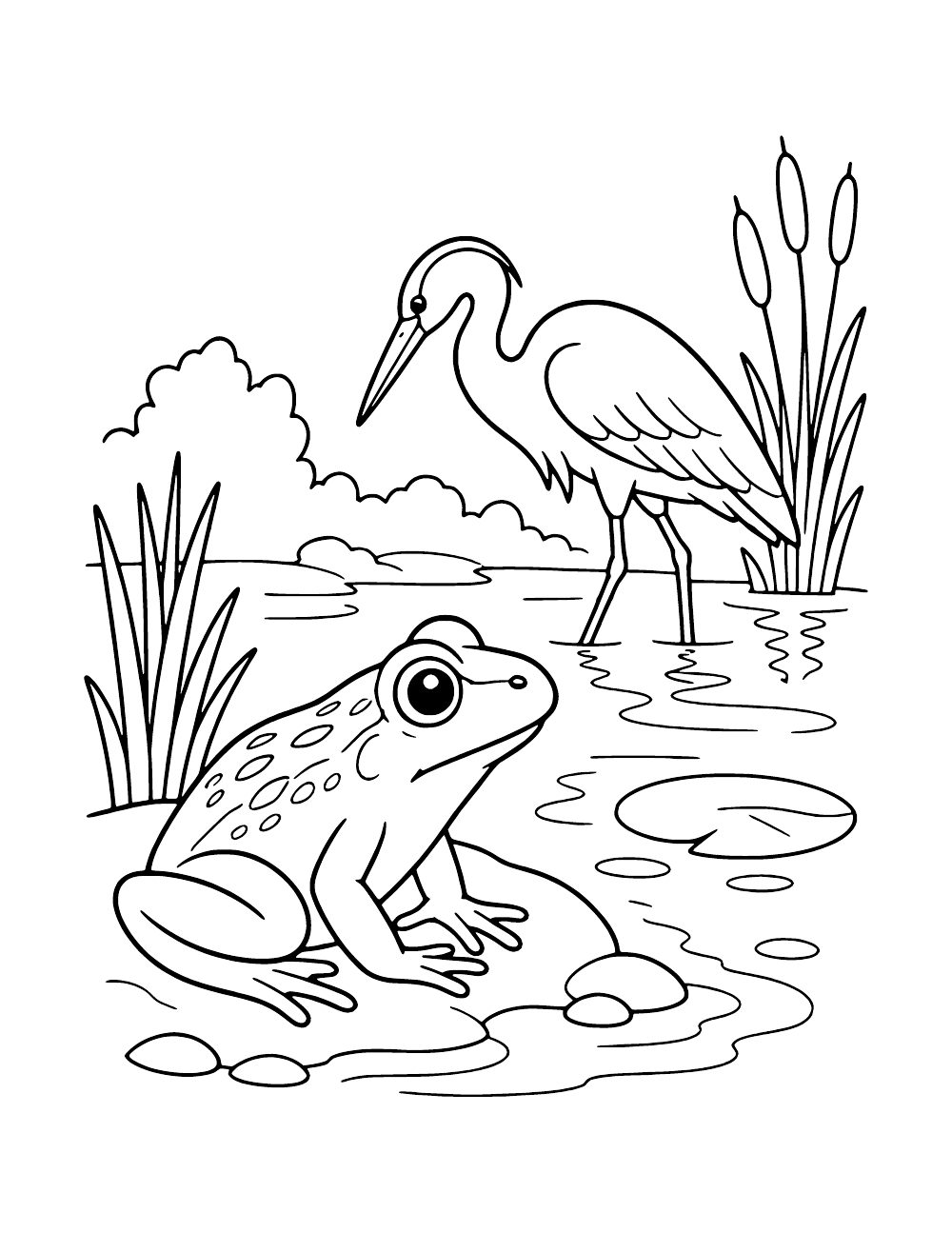
The pond scene includes a frog, a wading bird, shoreline plants and open water. Frogs depend on suitable habitats, and habitat loss and pollution threaten them. Looking at the whole scene helps children think about protecting the water, land and shelter that make up a frog's home.
More information: Frog and Toad — San Diego Zoo Wildlife Alliance
Developing Frogs Inside Eggs
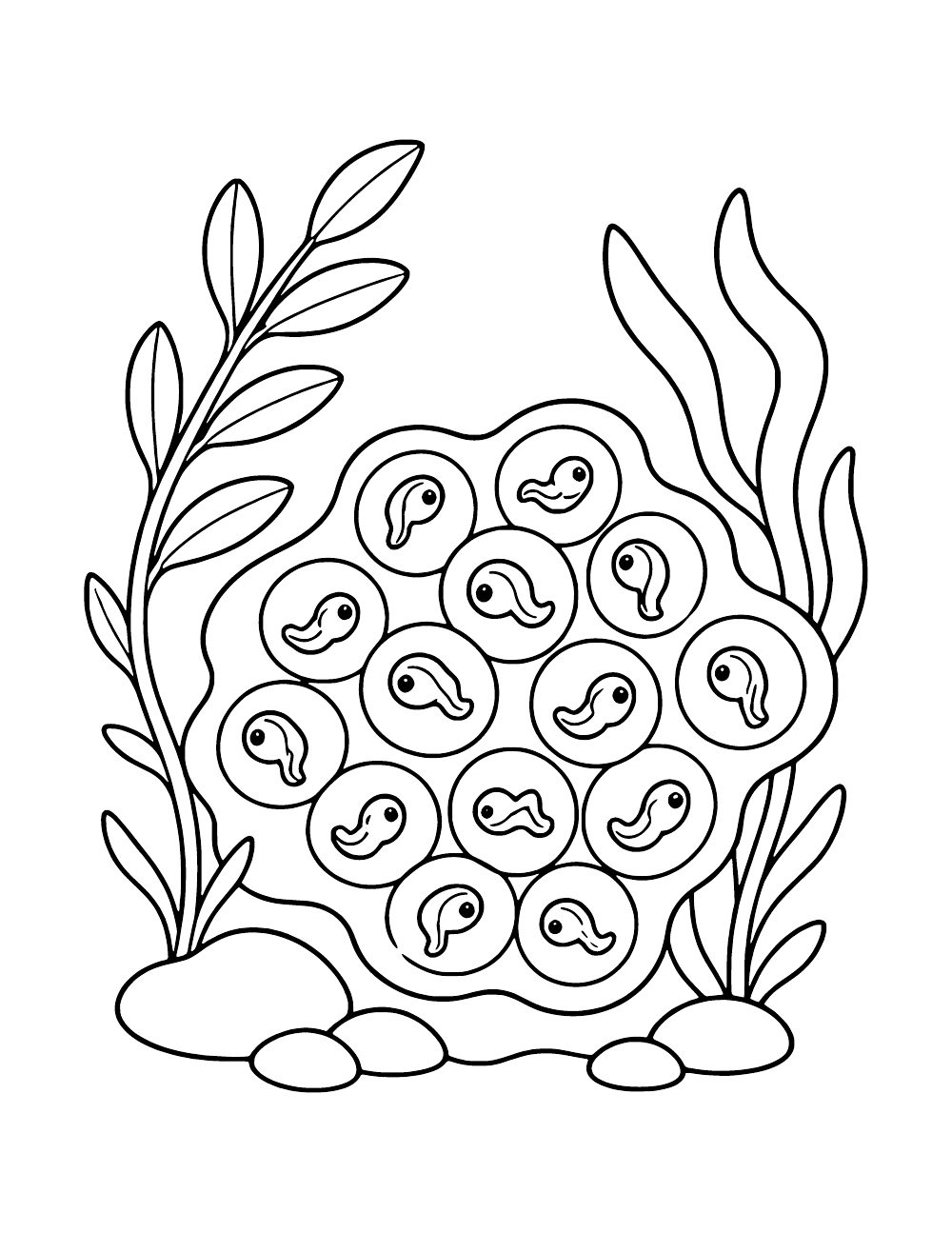
Each round egg in this cluster contains a curled developing frog. Most frogs begin life as eggs in water or another moist place. This picture focuses on an early stage of growth, before the free-swimming tadpole stage with its gills and tail.
More information: Frog and Toad — San Diego Zoo Wildlife Alliance
Tadpole Feeding on a Rock
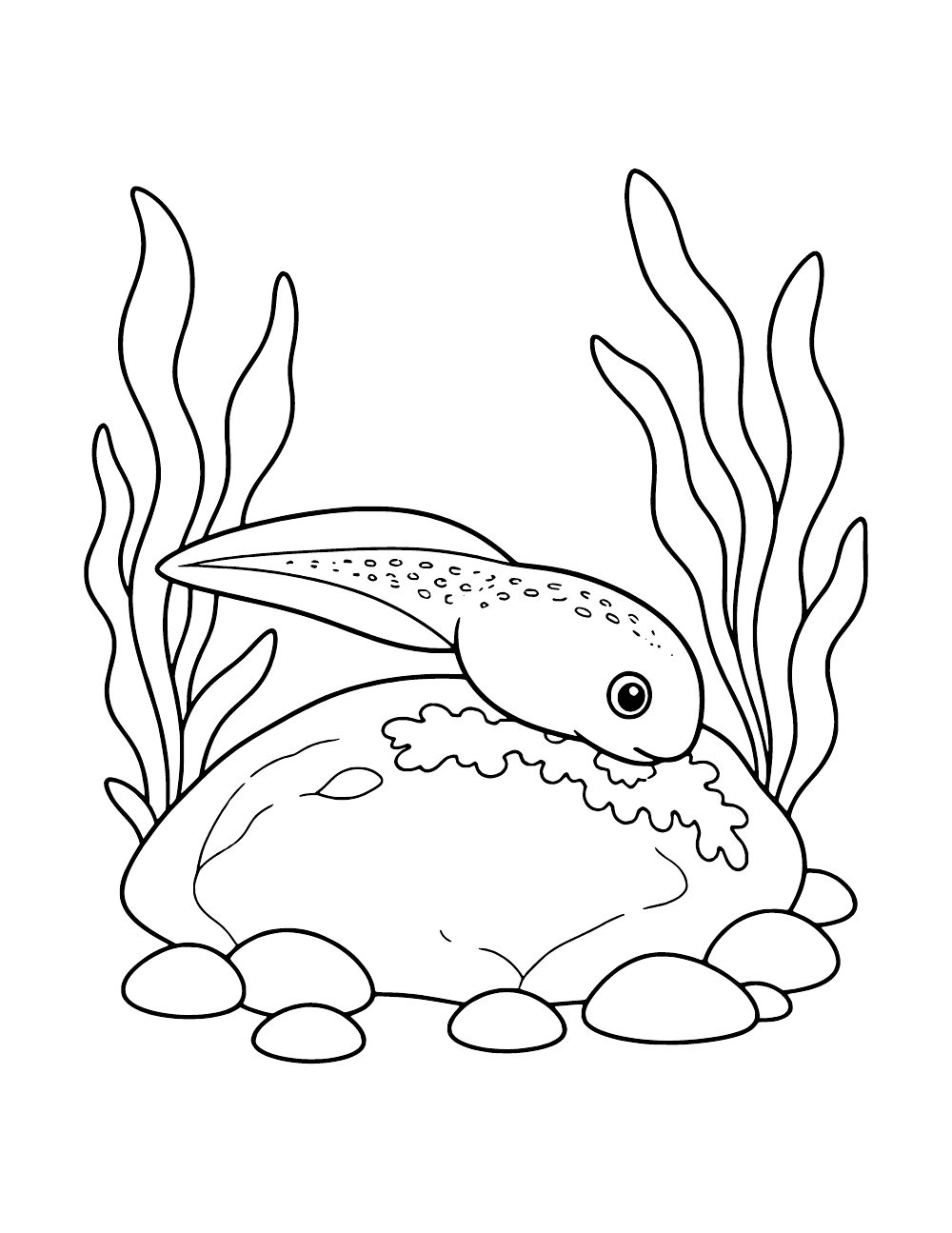
The tadpole's mouth is close to a patch of growth on the rock. Many tadpoles eat algae, plants and decaying matter, although diets vary by species. Its long tail and lack of visible legs make this stage look very different from the adult frogs in the collection.
More information: Frog and Toad — San Diego Zoo Wildlife Alliance
Young Frog with a Remaining Tail
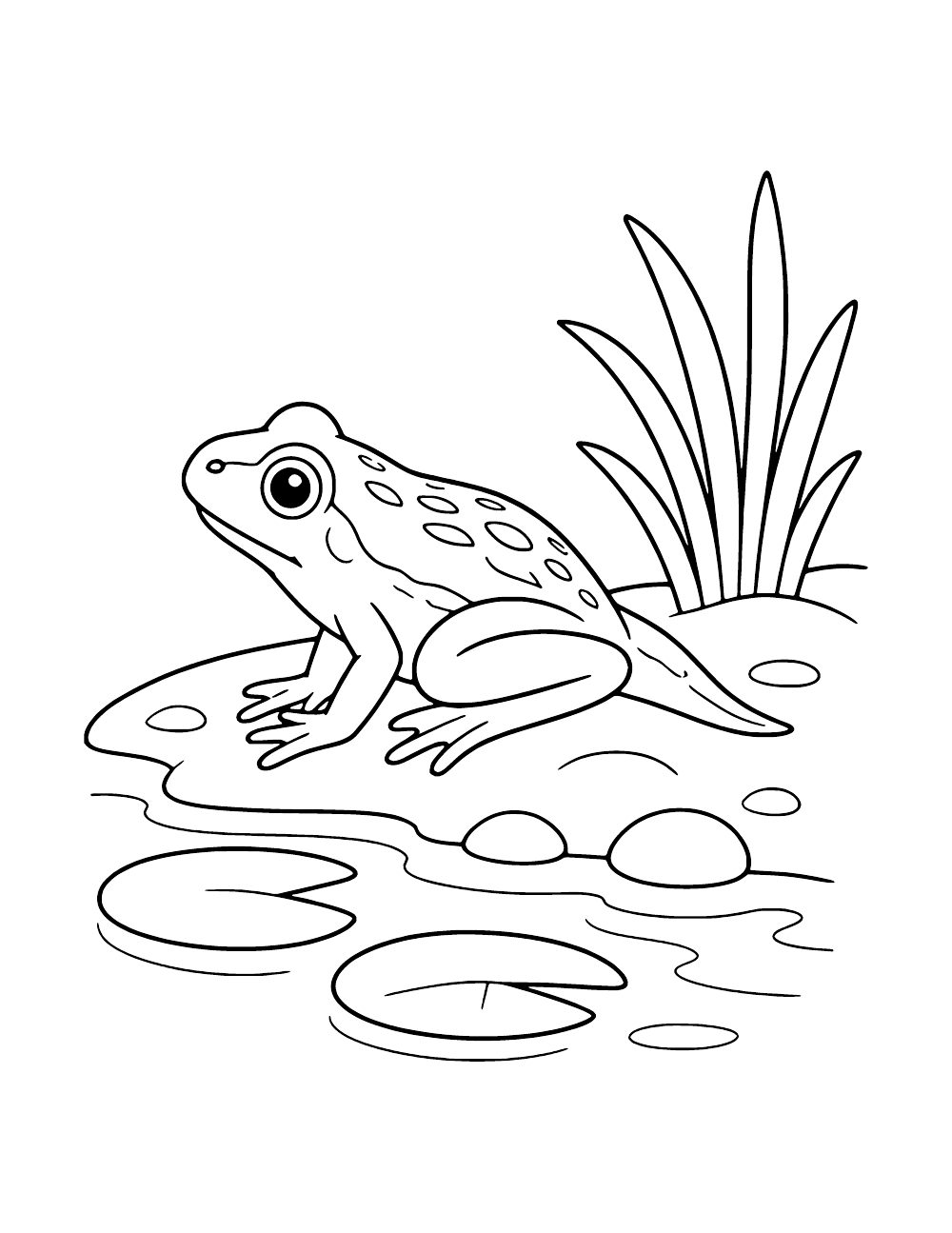
This young frog has four legs but still carries a tail. During metamorphosis, legs develop and the tail is absorbed. The combination of legs and a remaining tail shows a stage in the change from tadpole to adult frog.
More information: Frog and Toad — San Diego Zoo Wildlife Alliance
Printing Your Frog Pages
Each download is a separate single-page US Letter PDF. For printing, use US Letter paper and check the print preview to make sure the full design fits on the sheet.
Crayons work well for broad areas, while colored pencils can help with small spots, leaf veins and toes.
Color, Compare and Explore
Compare the folded legs of a resting frog with the stretched legs in the swimming and leaping scenes. For a growth activity, arrange the egg, tadpole and young-frog pictures in order and discuss the changes described with each page.
You may print these coloring pages for personal and classroom use.