Desert plants include cacti, wildflowers, shrubs, and trees adapted to scarce rainfall. Some store water in thick stems or leaves, while others survive with deep roots, small leaves, or short growing seasons. Examples include saguaro cacti, creosote bushes, mesquite trees, and desert poppies.

Deserts are not all hot or sandy. Their plants vary by region, but each must cope with limited water. The photographs and examples below show plants from deserts around the world and explain how their adaptations help them survive.
Use this guide to compare desert plants, their habitats, and their roles as food and shelter for wildlife.

Explore the intersection of Montessori education and environmental stewardship at all ages.
Examples of Desert Plants
Deserts support grasses, shrubs, trees, cacti, and other succulents. Plant communities differ between hot and cold deserts and other biomes. The examples below focus on arid and semi-arid regions outside Antarctica.
Barrel Cactus

Barrel cacti have thick, ribbed stems that store water. Their rounded shape and spines help them cope with dry conditions. They should not be treated as a source of emergency drinking water.
- Average Size: Varies depending on species; can range from small, round, barrel-shaped to large, columnar forms. Most are a few feet tall.
- Is Eaten by: Barrel cactus seeds and fruit are eaten by many animals. Depending on the specific region, these can include reptiles, rodents, birds, javelina, mule deer, and bighorn sheep. The Barrel cactus plant part is also often eaten by javelina plus giant cactus beetles and small rodents. Barrel cactus flowers are pollinated by bees.
- Region/Continent: The barrel cactus genera listed here are native to North America, particularly Mexico and the southwestern United States.
- Scientific Name: Some Barrel cacti are considered to be in the Ferocactus genus, such as Ferocactus cylindraceus (California Barrel Cactus) and Ferocactus wislizeni. Others are considered part of the Echinocactus genus, like Echinocactus grusonii (Golden Barrel Cactus, pictured above).
California Poppy
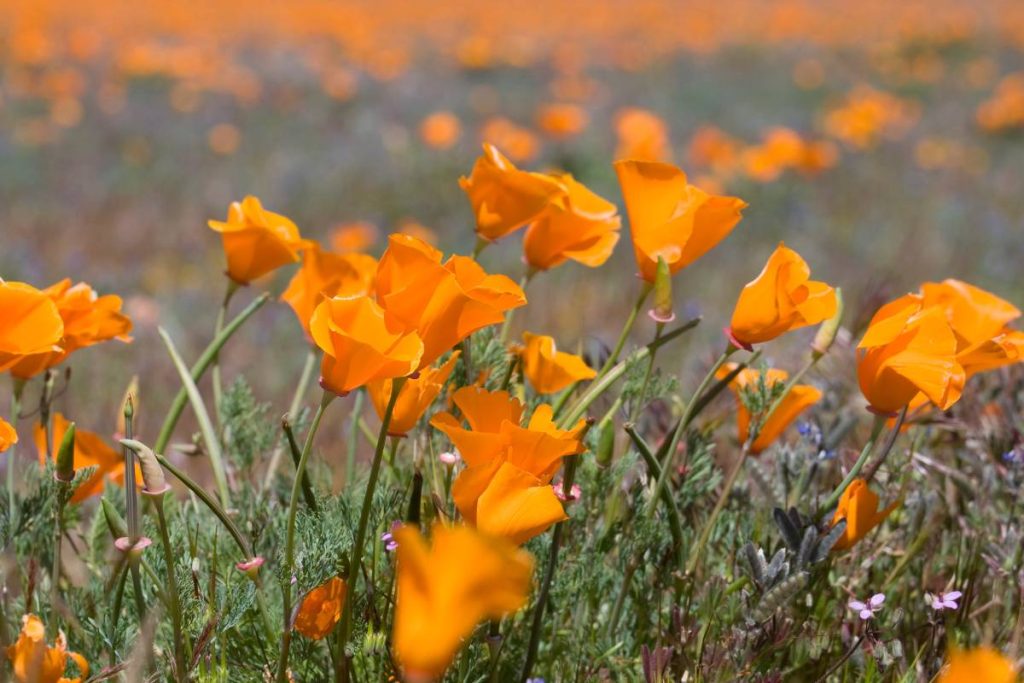
California poppies have bright orange or yellow cup-shaped flowers. Shallow roots and rapid growth cycles allow these flowering plants to take advantage of brief desert rainfall. The California poppy is the state flower of California and is celebrated for its bright orange blooms, which blanket hillsides during the springtime.
- Average Size: Herbaceous annual plant; typically grows up to 12-18 inches tall.
- Is Eaten by: California poppy leaves and stems are toxic to most animals, and its flowers do not produce nectar. However, the flowers do produce a fragrant pollen which bees use to feed their larva.
- Region/Continent: This species is native to arid and desert regions of the western United States, especially California.
- Scientific Name: Eschscholzia californica.
Century Plant

“Century Plant” is the common name for a particular type of agave. These plants have thick, fleshy leaves that grow in a rosette shape, with sharp, pointed edges and a tall flower spike that shoots up from the center. The leaves of the century plant have thick outer layers to minimize water loss. Despite its name, the plant typically lives for about 10 to 30 years. The century plant flowers once at the end of its life, dying soon after it blooms.
- Average Size: Large succulent; typically grows a rosette of leaves up to 6-8 feet tall. The Century Plant’s flower stalk can reach a height of 25–30 ft (8–9 m).
- Is Eaten by: Animals such as deer, bighorn sheep, javelinas and rodents may browse on century plant leaves, although the leaves are toxic to other animals. Agave weevils chew through the leaves and their larvae burrow into the center of the plant itself, often killing the plant as they feed on it. When the Century Plant produces its bloom, the resulting nectar is an important food source for pollinators such as bats, birds, and insects.
- Region/Continent: Native to arid regions of North and Central America, especially present-day Texas and Northern Mexico.
- Scientific Name: Agave americana.
Cholla

There are several types of cacti known as “chollas,” all in the Cylindropuntia genus. In general, cholla cacti have segmented stems covered in clusters of sharp, barbed spines that resemble fuzzy balls or branches covered in tiny needles. Chollas’ dense spines provide shade for its stems, helping reduce water loss by creating a “microclimate” around the plant that’s cooler than the surrounding area. Some cholla cacti have detachable stem segments, which easily cling to the fur of passing animals or to unsuspecting hikers. Because of this, these chollas are sometimes referred to as “jumping” chollas.
- Average Size: Varies depending on exact cholla species; can range from small shrubs to large, branching forms.
- Is Eaten by: Various animals such as desert rodents and birds may consume cholla fruits and seeds.
- Region/Continent: native to northern Mexico and the southwestern United States.
- Scientific Name: There are various species within the Cylindropuntia genus, such as Cylindropuntia bigelovii (Teddy Bear Cholla, pictured above), Cylindropuntia acanthocarpa (Buckhorn Cholla), and Cylindropuntia fulgida (Jumping Cholla).
Creosote Bush

Creosote bushes have small, dark green leaves and tiny yellow flowers that grow in clusters. These plants give off a distinctive, earthy scent after rain. (Many people find this distinctive scent to be quite similar to that of creosote, which is where this plant gets its name.) Creosote bushes produce chemicals in their leaves that inhibit the growth of competing plants, allowing them to maximize use of available water and thrive in the desert biome.
- Average Size: Medium-sized shrub; typically grows up to 4-8 feet tall.
- Is Eaten by: Since its leaves are bitter, most mammals avoid eating the leaves of creosote bushes. Desert iguanas and chuckwalla lizards sometimes eat creosote bush leaves, and kangaroo rats and desert woodrats will eat creosote bush seeds. Bees and other pollinators feed on nectar from the creosote bush’s flowers.
- Region/Continent: Native to arid regions of North America, particularly in the southwestern United States and Mexico.
Scientific Name: Larrea tridentata.
Desert Grevillea
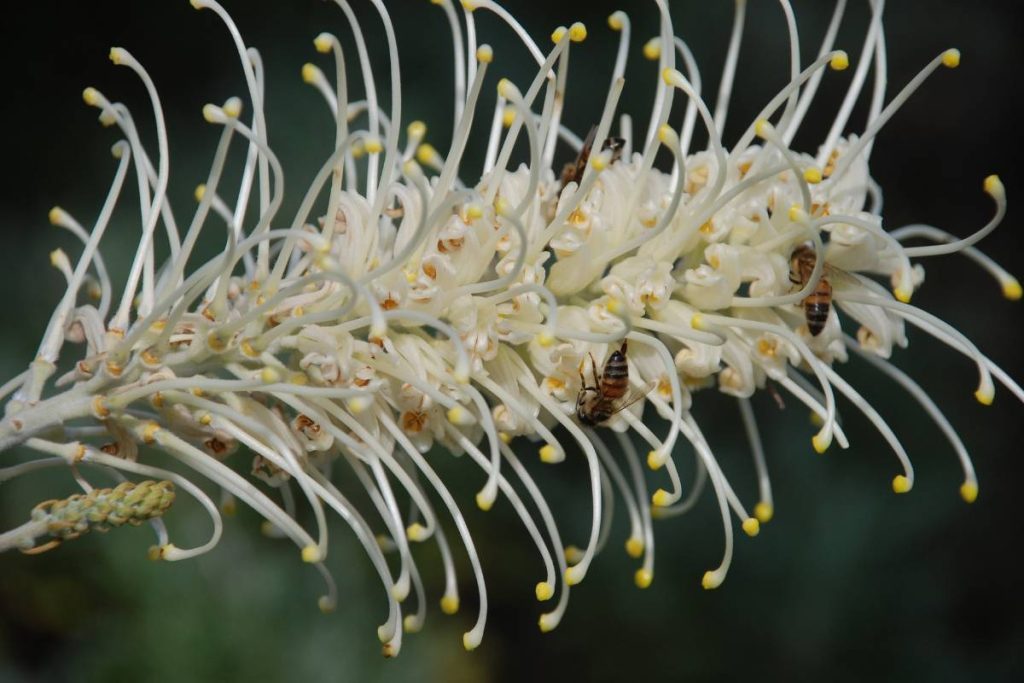
This Australian plant is sometimes called Desert Spider Flower. Desert grevilleas have long, narrow leaves that look like slender fingers and clusters of small, tube-shaped flowers in shades of red, orange, white, or yellow. The leaves on this plant have a waxy coating that reduces water loss and reflects sunlight to prevent overheating in the desert’s soaring temperatures. Desert Grevillea flowers (pictured in the close-up photo above) are rich in nectar and attract a variety of pollinators, including birds, bees, and butterflies, making them important contributors to desert ecosystems in Australia.
- Average Size: Grows to be around 1 to 3 meters (3 to 10 feet) tall and wide.
- Is Eaten by: Birds and insects feed on desert grevillea nectar and pollen.
- Region/Continent: Found in arid regions of Australia.
- Scientific Name: Grevillea pterosperma.
Desert Ironwood Tree
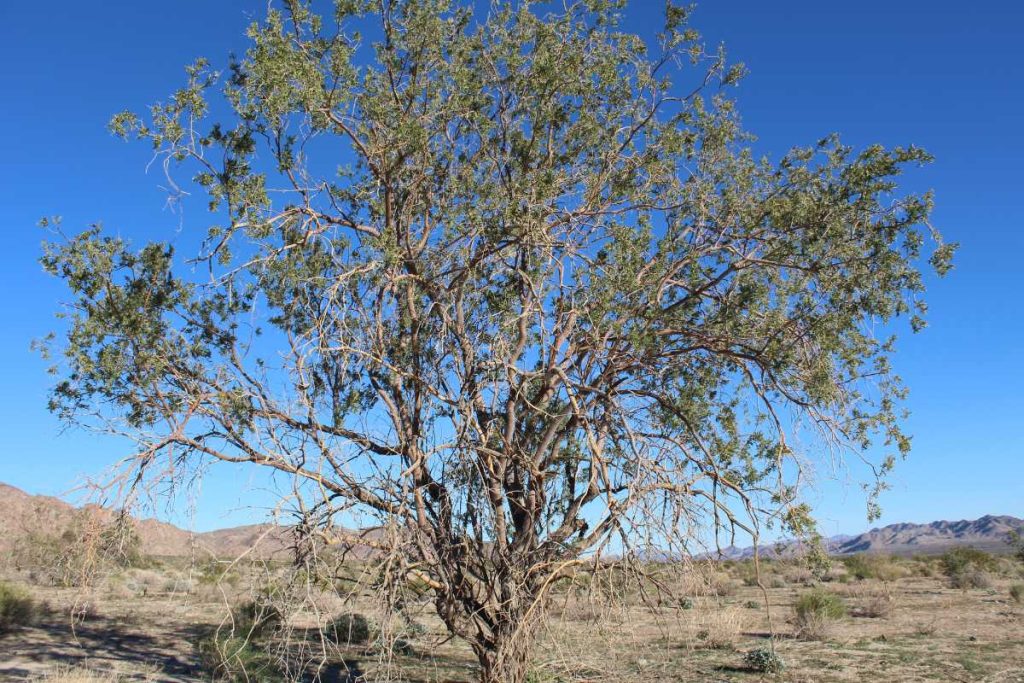
Desert ironwood trees have gray bark, small compound leaves, and clusters of pale pink to lavender flowers. Native to the Sonoran Desert, they provide shade and shelter for other plants and animals. Their exceptionally dense wood gives the trees their common name.
- Average Size: Medium-sized tree; typically grows up to 30-40 feet in height.
- Is Eaten by: Ironwood tree foliage may be browsed by native herbivores such as desert-adapted ungulates and rodents.
- Region/Continent: Found in arid and semi-arid regions of North America, including the southwestern United States and northern Mexico.
- Scientific Name: Olneya tesota.
Desert Sage
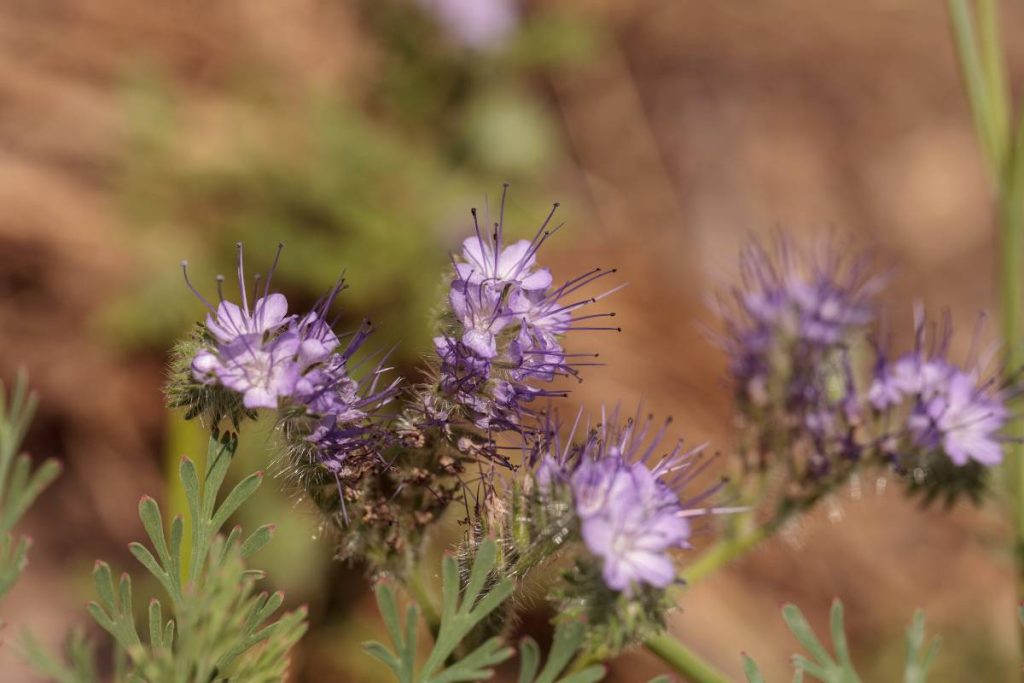
Desert sage plants have silvery-gray leaves that are narrow and fuzzy, with small, purple or blue flowers that grow in clusters along tall, slender stems. The leaves on this plant are highly aromatic, with a high oil content that reduces water loss through evaporation and deters desert herbivores. Also known as purple sage, desert sage has a long history of use for medicinal and ceremonial purposes by indigenous peoples in southwestern North America.
- Average Size: Typically grows as a small to medium-sized shrub, ranging from about 1 to 3 feet in height.
- Is Eaten by: desert-adapted herbivores such as rabbits and deer sometimes eat the plant’s leaves, and its flowers attract pollinators like bees and butterflies.
- Region/Continent: Found in arid regions of North America, including the southwestern United States and northern Mexico.
- Scientific Name: Salvia dorrii.
Desert Senna

Desert senna has divided leaves and bright yellow flowers. Its relatively small leaflets help limit water loss. This low-growing perennial is found in dry habitats of the southwestern United States and northern Mexico.
- Average Size: Desert Senna is a shrub-like plant that grows to 30–60 cm tall.
- Is Eaten by: Sulphur butterfly caterpillars feed on senna foliage, and bees visit the flowers for pollen.
- Region/Continent: Native to desert regions in northern Baja California in Mexico and the southwestern United States; also very common in Joshua Tree National Park.
- Scientific Name: Senna covesii.
Ephedra
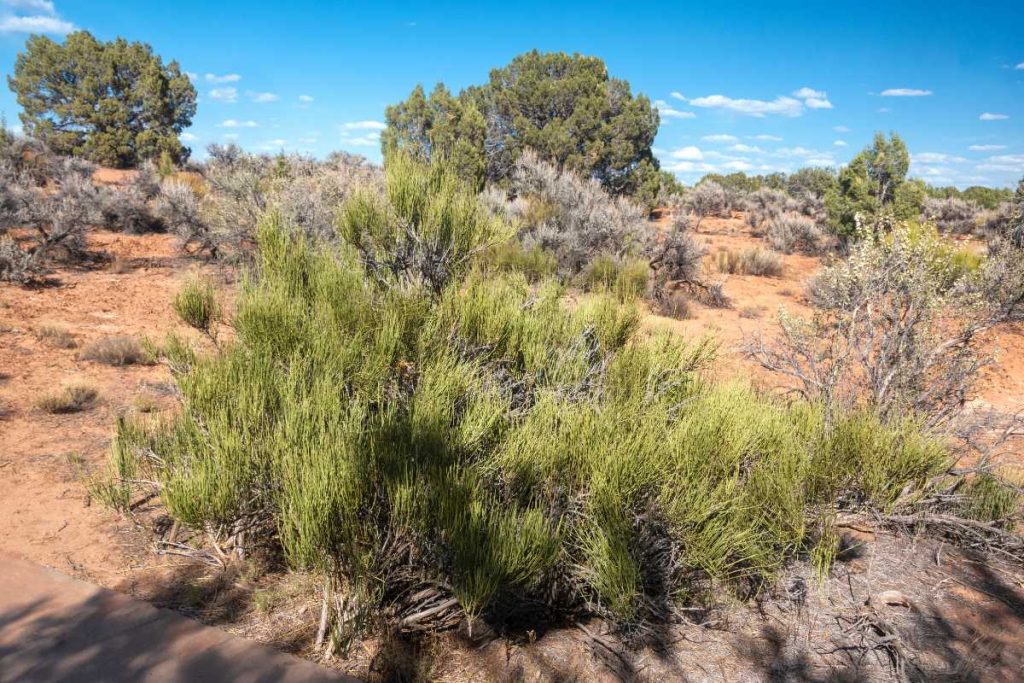
Ephedra plants have slender green stems and tiny, scale-like leaves. Their green stems carry out photosynthesis, while the small leaves help limit water loss. The genus includes several species adapted to dry climates; green ephedra (Ephedra viridis) is one North American example.
- Average Size: Ephedra plants vary in size depending on the species. They can range from small shrubs to larger bushes or even small trees. Some species can grow up to 1-3 meters (3-10 feet) in height.
- Is Eaten by: Ephedra is not typically a primary food source for many animals due to its tough and bitter-tasting foliage. However, certain species of insects, such as aphids and scale insects, may feed on Ephedra plants. Additionally, some browsing animals like camels and certain species of desert rodents may consume Ephedra leaves when other food sources are scarce.
- Region/Continent: Ephedra species grow throughout the world. Ephedra is especially common in the southwestern United States, Mexico, Central Asia, the Mediterranean region, and parts of Africa and Australia.
- Scientific Name: There are several species within the Ephedra genus, including Ephedra sinica, Ephedra nevadensis, Ephedra viridis (pictured above), and Ephedra distachya.
Haloxylon
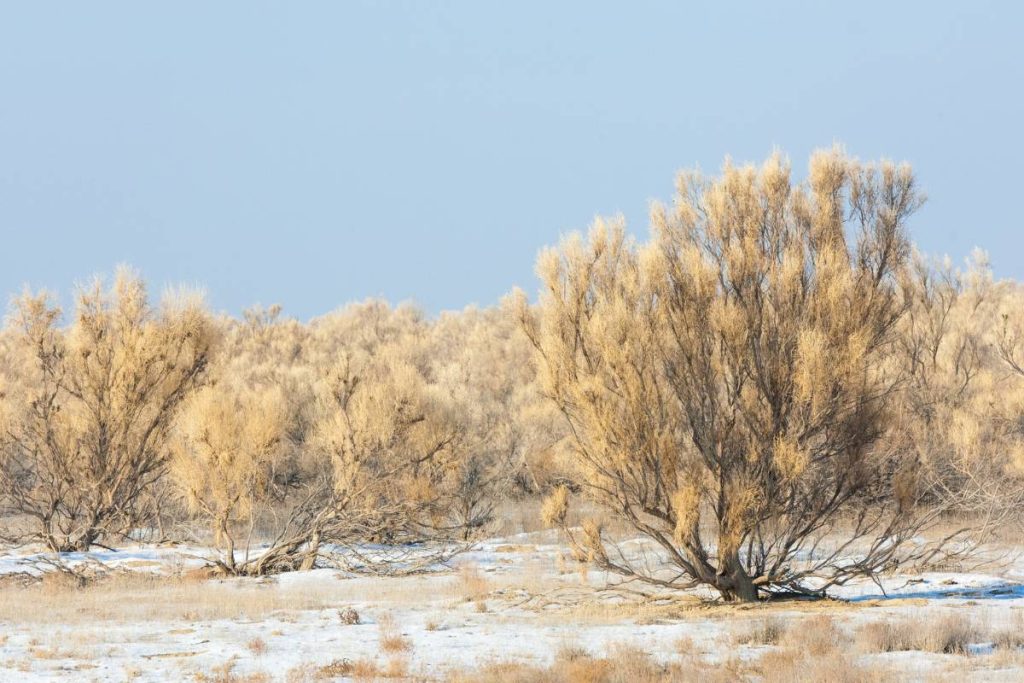
Haloxylon plants, often called saxaul, are shrubs or small trees adapted to dry regions of Asia. Their small leaves and green shoots help limit water loss. Extensive root systems anchor them in desert soils and help stabilize sand.
- Average Size: Varies; can range from small shrubs to medium-sized trees.
- Is Eaten by: Haloxylon foliage may be browsed by camels, ibex, and other desert-adapted herbivores, as well as livestock.
- Region/Continent: Found in arid regions of Northern Africa and Western and Central Asia.
- Scientific Name: There are various species within the Haloxylon genus. Some examples include Haloxylon persicum (White Saxaul), and Haloxylon ammodendron (Black Saxaul).
Hedgehog Cactus

Hedgehog cacti, also known as Echinocereus, have rounded, spiny stems with clusters of colorful flowers that bloom in shades of pink, red, purple, or yellow. Their extremely spiny stems provide protection from desert herbivores and help reduce water loss by shading the plant’s surface. Often prized by cactus enthusiasts, some species of hedgehog cactus are endangered in the wild due to illegal specimen collection and poaching.
- Average Size: Typically grows as a small to medium-sized cactus, ranging from about 1 to 3 feet in height.
- Eaten by: Various desert wildlife, including birds, rodents, and insects, eat hedgehog cactus fruits and seeds.
- Region/Continent: Native to North America, especially Mexico and the southwestern United States.
- Scientific Name: There are various species within the Echinocereus (Hedgehog cactus) genus, such as Echinocereus engelmannii (Strawberry Hedgehog Cactus, pictured above) and Echinocereus triglochidiatus (Claret Cup Hedgehog Cactus).
Hoodia

Hoodia plants have thick, fleshy stems that grow in clumps, with small, tooth-like protrusions along the edges and clusters of star-shaped flowers. Hoodia’s thick stems allow the plant to store water for long periods, allowing for survival in arid desert environments. Despite its bitter taste, the hoodia plant has been traditionally used by indigenous peoples of southern Africa to suppress hunger during long hunting trips in the desert.
- Average Size: Typically grows as a small succulent, with stems reaching up to 1 foot in height.
- Eaten by: Hoodia foliage is not commonly eaten by animals due to its bitter taste, though it is occasionally consumed by humans.
- Region/Continent: Native to arid regions of southern Africa, particularly in Namibia and South Africa.
- Scientific Name: Hoodia gordonii.
Jojoba
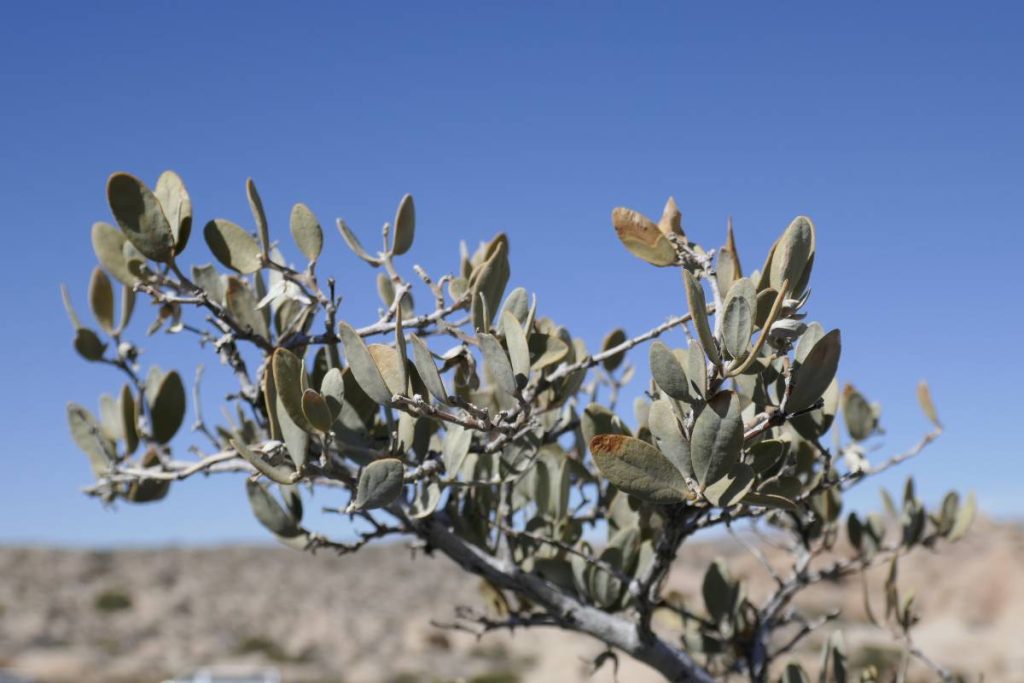
Jojoba plants have dark green, oval-shaped leaves and small, greenish-yellow flowers that grow in clusters. The flowers eventually turn to round, olive-like fruits that ripen to a brown color. These plants produce a waxy substance that helps retain moisture and protect the plant from drying out when water is scarce. Jojoba oil (extracted from the seeds of the jojoba plant) is widely used in cosmetics and skin care products due to its moisturizing and nourishing properties. Jojoba oil closely resembles the natural oils produced by human skin.
- Average Size: Typically grows as a medium-sized shrub, ranging from about 3 to 10 feet in height.
- Eaten by: Jojoba is an important food for bighorn sheep. Other animals that feed on jojoba leaves include mule deer and jackrabbits. Domestic animals like sheep, cattle, and goats also eat jojoba leaves. Javelinas, deer, rodents, and birds eat jojoba seeds.
- Region/Continent: Jojoba is native to arid regions of North America, particularly the southwestern United States and northern Mexico.
- Scientific Name: Simmondsia chinensis.
Mesquite Tree
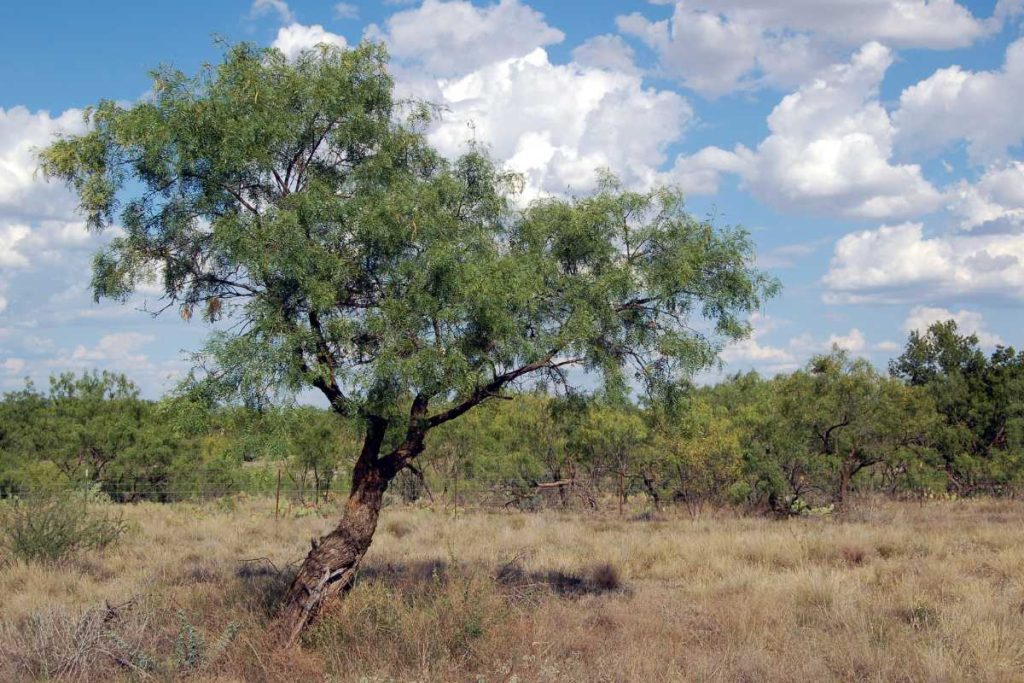
Mesquite trees have feathery, light green leaves and rough, gray-brown bark, with clusters of small, cream-colored flowers that bloom in spring. These trees have deep taproots that enable them to access groundwater below the desert soil, providing them with a reliable water source during dry periods. Mesquite trees also have nitrogen-fixing nodules on their roots, allowing them to thrive in nutrient-poor soils. Mesquite pods (the fruit of the tree) have a long history of use by humans as a food source and can even be ground into flour.
- Average Size: Varies depending on species; can range from small shrubs to medium-sized trees, with heights typically ranging from 10 to 30 feet.
- Eaten by: Both the leaves and pods of mesquite are readily edible. Animals like deer and goats will eat young mesquite leaves, and many animals eat mesquite pods, including rabbits, rats, mice, squirrels, ravens, quail, bighorn sheep, and even coyotes. However, in excessive amounts, these pods can be toxic to cattle, horses, sheep, and goats.
- Region/Continent: Mesquite trees are native to arid and semi-arid regions of North and South America.
- Scientific Name: There are various species within the Prosopis (Mesquite tree) genus, such as Prosopis glandulosa (Honey Mesquite) and Prosopis velutina (Velvet Mesquite).
Mexican Poppy
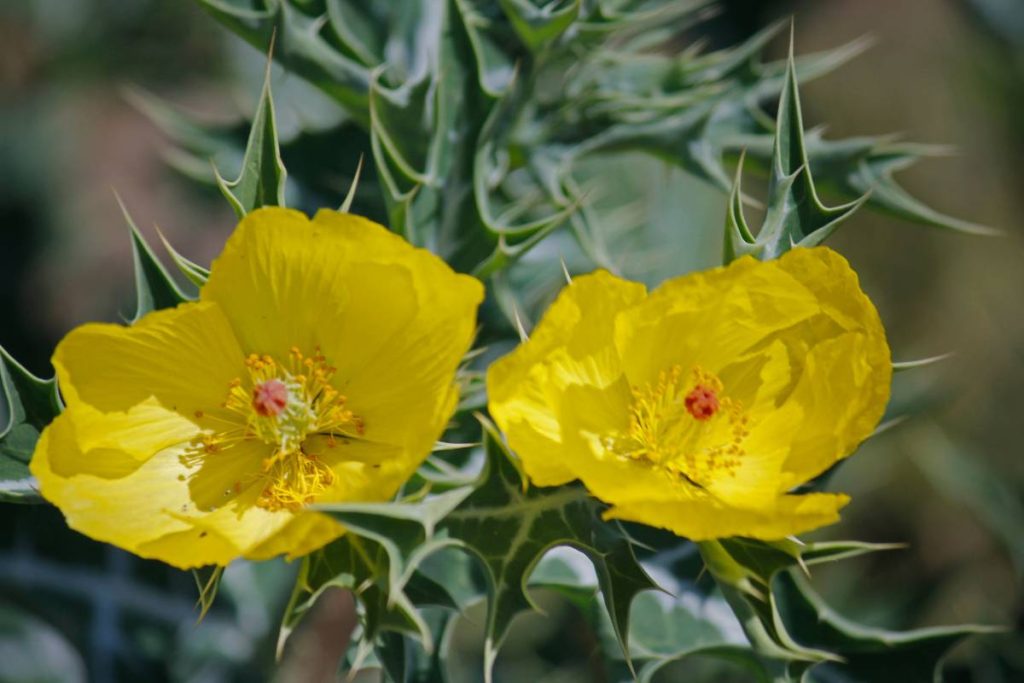
Mexican prickly poppy (Argemone mexicana) has yellow flowers, prickly leaves, and yellow sap. It grows in dry, disturbed places. All parts are toxic if eaten; it should not be presented as an edible desert plant or a home remedy.
- Average Size: Typically grows as a small herbaceous plant, ranging from about 1 to 2 feet in height.
- Eaten by: Some insects visit the flowers or feed on the plant. It is toxic to people and grazing animals, so its leaves and seeds are not suitable forage.
- Region/Continent: Native to arid regions of North America, including the southwestern United States and northern Mexico.
- Scientific Name: Argemone mexicana.
Muhlenbergia
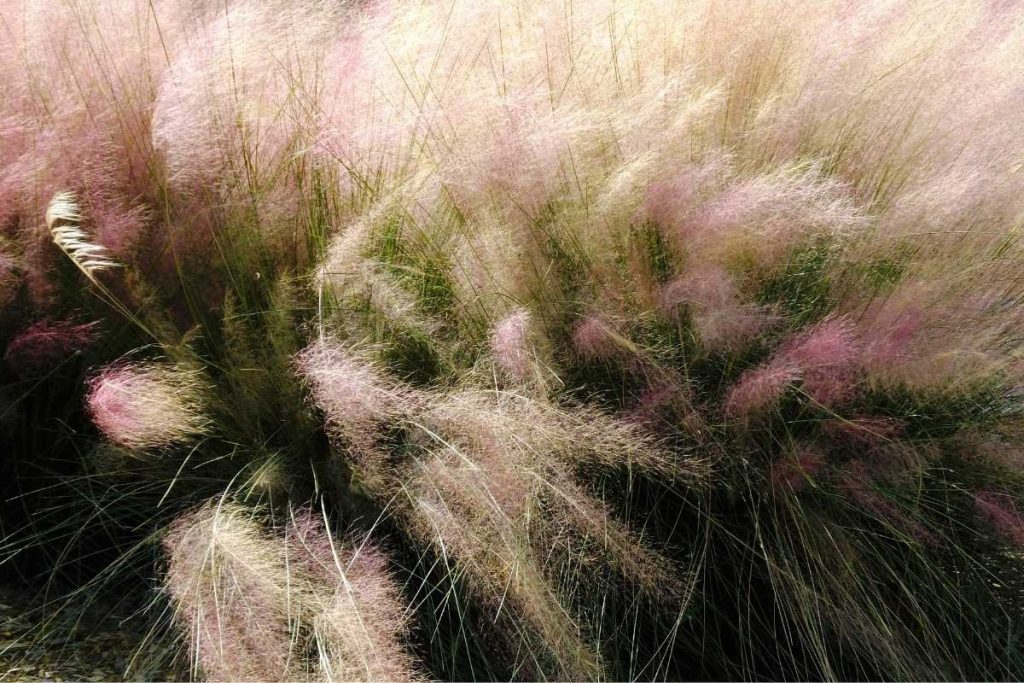
Muhlenbergia grasses grow in various arid and desert regions around the world. Sometimes known as “muhly” grasses, these plants have long, slender stems with narrow, green leaves and tiny flowers that form feathery plumes atop the stems. These grasses have deep, fibrous root systems that help maximize water absorption in dry climates while also stabilizing the desert soil and preventing erosion. Some muhlenbergia species are cultivated as ornamental plants for landscaping.
- Average Size: Varies by species; these are grasses that commonly form clumps, sometimes topped by airy flowering plumes.
- Eaten by: While Muhlenbergia foliage is not typically consumed, its seeds are important food for birds and other small animals.
- Region/Continent: The Muhlenbergia genus is widespread, with native species distributed across North America, South America, and Asia.
- Scientific Name: Muhlenbergia is a genus in the grass family, Poaceae. Examples include Muhlenbergia pungens, M. porteri, and M. andina.
Ocotillo

Ocotillo has long, spiny stems that produce small leaves after rain. It sheds those leaves when conditions become dry, reducing water loss; its green stems can continue photosynthesis. Clusters of red-orange flowers provide nectar for hummingbirds and insects.
- Average Size: 6 to 20 feet (1.8 to 6 meters).
- Eaten by: desert mammals and insects.
- Region(s)/Continent(s): arid and semi-arid regions of North America, particularly the southwestern United States (including Arizona, California, Nevada, New Mexico, Texas, and Utah) and northern Mexico.
- Scientific Name: Fouquieria splendens.
Organ Pipe Cactus

Organ pipe cacti have tall, columnar stems that resemble the tall, upright pipes on a pipe organ. These cacti have numerous ribs running down their sides and clusters of white or pink flowers. Organ pipe cacti have stems and root systems that maximize water absorption and storage in very dry desert conditions. This slow-growing cactus can live for 150 years, and typically does not produce its first bloom until it’s about 35 years old.
- Average Size: Typically grows as a medium to large-sized cactus, ranging from about 10 to 20 feet in height.
- Eaten by: fruits and seeds are food for a range of desert wildlife, including bats, birds, rodents, insects, and bighorn sheep. Bats, birds, and insects pollinate the Organ Pipe cactus. The fruit of the organ pipe cactus has been an important food source for humans living in the Sonoran Desert for hundreds of years.
- Region/Continent: Found primarily in the Sonoran Desert of North America, particularly in the southwestern United States and northern Mexico.
- Scientific Name: Stenocereus thurberi.
Palo Verde Tree
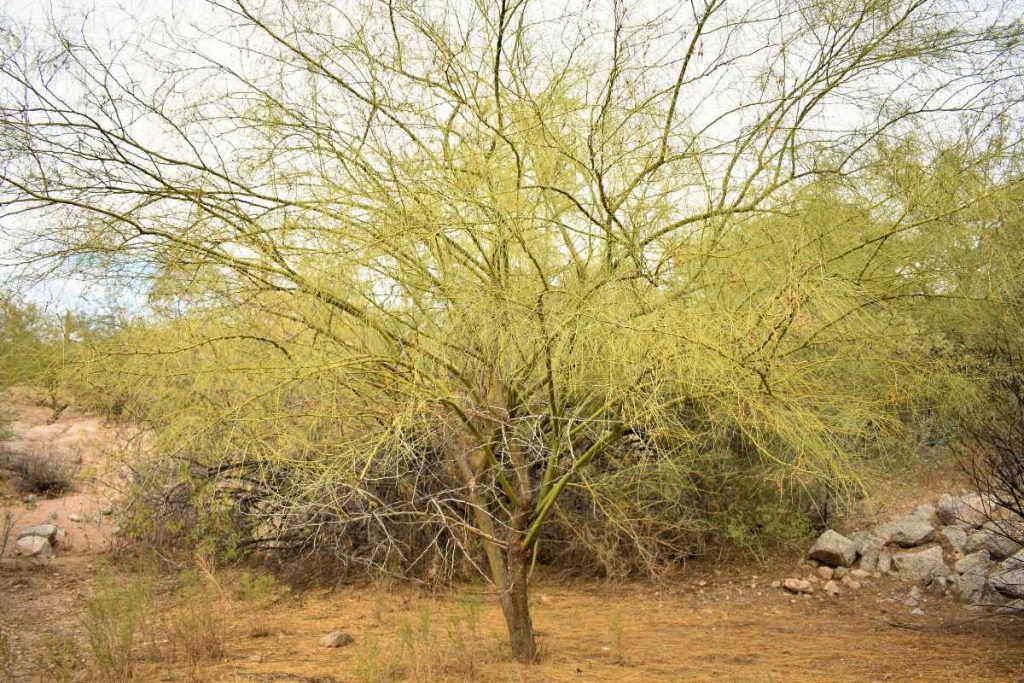
Palo verde trees have smooth, greenish-brown bark and tiny, green leaves – so tiny that at times the leaves are barely noticeable. These trees also produce small, yellow flowers that bloom profusely in spring. As an adaptation to the desert biome, palo verde trees’ chlorophyll-rich bark and branches allow them to photosynthesize even when their leaves are dropped during periods of drought. The name “Palo Verde” comes from the Spanish words for “green tree.”
- Average Size: Typically grows as a small to medium-sized tree, ranging from about 10 to 30 feet in height.
- Eaten by: Palo verde foliage is browsed by various desert-adapted herbivores such as jackrabbits, mule deer, and bighorn sheep. Various animals like birds and javelinas forage for palo verde seeds.
- Region/Continent: Palo Verde trees are native to arid and semi-arid regions North and South America
- Scientific Name: Parkinsonia is a genus in the legume family, Fabaceae. Species include blue palo verde (Parkinsonia florida), foothill palo verde (P. microphylla), and Texas palo verde (P. texana).
Prickly Pear Cactus

Prickly pear cacti have flat, oval-shaped pads covered in clusters of sharp spines, with colorful flowers that bloom in shades of yellow, orange, pink, or red. The flat pads of this cactus are adapted to store water, conserving moisture during especially dry periods in the desert. Prickly pear cacti are not only valued for their edible fruits (prickly pears) but also for their edible pads. They have been used as a food source by indigenous peoples for centuries.
- Average Size: Varies depending on species; can range from small, low-growing plants to large, tree-like forms.
- Eaten by: Prickly pear cactus fruits and pads are consumed by a wide range of desert wildlife, including mammals, birds, reptiles, and insects. Both the pads and fruit are also eaten by humans.
- Region/Continent: Native to arid and semi-arid regions of North, Central, and South America. Prickly pear cacti are now found growing wild throughout the world, especially in arid regions of Africa, Europe, and Australia.
- Scientific Name: There are various species within the Opuntia (Prickly Pear) genus, such as Opuntia ficus-indica (pictured above) and Opuntia engelmannii (Engelmann’s Prickly Pear).
Saguaro Cactus

Saguaro cacti have tall, columnar stems that resemble arms reaching up to the sky, with white flowers that bloom at night and red fruits that ripen in summer. These cacti have special accordion-like pleats that allow them to expand and contract to store large amounts of water during periods of desert rainfall and conserve energy when resources are scarce. Saguaro cacti can live for over 150 years, sometimes taking up to 75 years to develop their first arm. They provide important nesting sites for birds such as Gila woodpeckers and Gilded flickers, which excavate cavities in the saguaro’s trunk.
- Average Size: Saguaro is a large cactus species that can grow up to 40-60 feet in height, with arms extending outward.
- Eaten by: Saguaro cactus fruits are an important food source for desert wildlife, including birds, bats, and mammals such as javelinas and desert rodents.
- Region/Continent: Found primarily in the Sonoran Desert of North America, particularly in the southwestern United States and northern Mexico.
- Scientific Name: Carnegiea gigantea.
Shepherd’s Tree
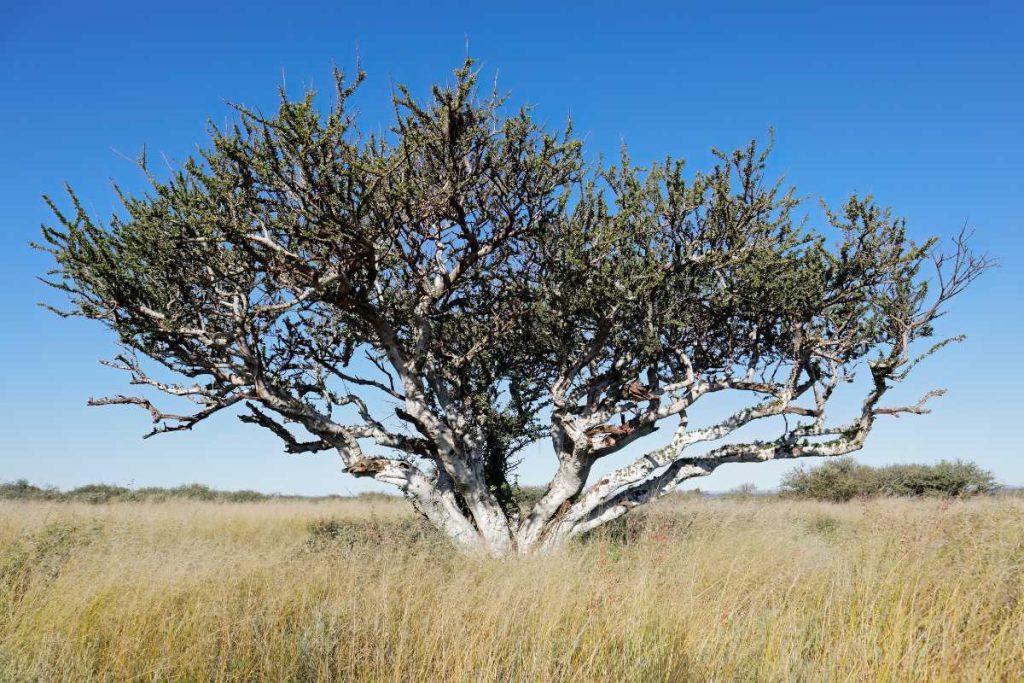
Shepherd’s trees have thick, grayish bark and oval-shaped leaves that are dark green and glossy, with clusters of small, white flowers that bloom in spring. These trees have deep taproots (sometimes reaching over 200 feet underground!) to maximize water collection and a dense canopy that provides shade, reducing water loss through evaporation from the soil’s surface.
- Average Size: Medium to large-sized tree; can grow up to 20-30 feet in height but is usually much shorter.
- Eaten by: Shepherd’s Tree foliage and fruits are consumed by various desert-adapted herbivores such as birds, antelope, and cattle.
- Region/Continent: Found in arid and semi-arid regions of Africa, particularly in the Kalahari Desert.
- Scientific Name: Boscia albitrunca.
Yucca

Yucca plants have stiff, sword-shaped leaves arranged in rosettes and tall stalks of pale flowers. Waxy leaves help conserve water. Many yuccas depend on specialized yucca moths for pollination: the moths pollinate the flowers and their larvae eat some developing seeds. The relationship is not always a one-to-one pairing of a single plant species with a single moth species.
- Average Size: Varies depending on species; can range from small, low-growing plants to large, tree-like forms.
- Eaten by: Yucca flowers, fruits, and seeds are food for various desert wildlife including birds and mammals such as bats, deer, and rodents.
- Region/Continent: Found in arid and semi-arid regions of North and Central America, as well as parts of South America.
- Scientific Name: There are various species within the Yucca genus, such as Yucca elata (Soaptree Yucca, pictured above), Yucca brevifolia (Joshua Tree), and Yucca filamentosa (Adam’s Needle).
Learn About the Desert Biome
Printable learning activities for preschool- elementary students.
Adaptations of Desert Plants
Desert plants have evolved many adaptations to survive their arid environments. These adaptations collectively allow desert plants to thrive in some of the harshest environments on Earth. Here are some notable adaptations:
Water Storage

Many desert plants have developed special strategies to store water efficiently. Adaptations like these enable desert plants to survive during extended periods of drought.
Cacti are some of the most famous water-storing desert plants. Other examples of plants with water-storing adaptations include succulents like agaves and aloes. These plants store water in their fleshy leaves or rosettes. Other plants may store water in their stems, trunks, or leaf structures.
Reduced Leaves
Some desert plants have modified or reduced leaves. Many cacti, for instance, have cylindrical stems with very small leaves (or no leaves at all). Without leaves for photosynthesis, these plants use their stems to carry out the process.
Having few (or no) leaves also minimizes the surface area exposed to sunlight, which in turn helps to reduce water loss during the day.
Extreme Root Adaptations
Desert plants use a range of root adaptations to access scarce water resources. Some species, like Mesquite trees and Shepherd’s trees, develop very deep taproots. In some cases, these roots can be hundreds of feet deep! These deep roots allow the plant to reach groundwater reserves.
At the other extreme, some desert plants have very shallow, widespread root systems. These roots allow the plants to quickly absorb moisture from rainfall or dew before the water evaporates.
Special Surfaces or Coating
Many desert plants have a waxy surface that helps reduce water loss. The waxy layer acts as a waterproof barrier, preventing evaporation.
Additionally, some desert plants produce special substances that coat their leaves. The Creosote bush is one such plant. These special coatings help reduce water loss. They also offer protection against desert herbivores and extreme temperatures.
Hairy or Spiny Surfaces
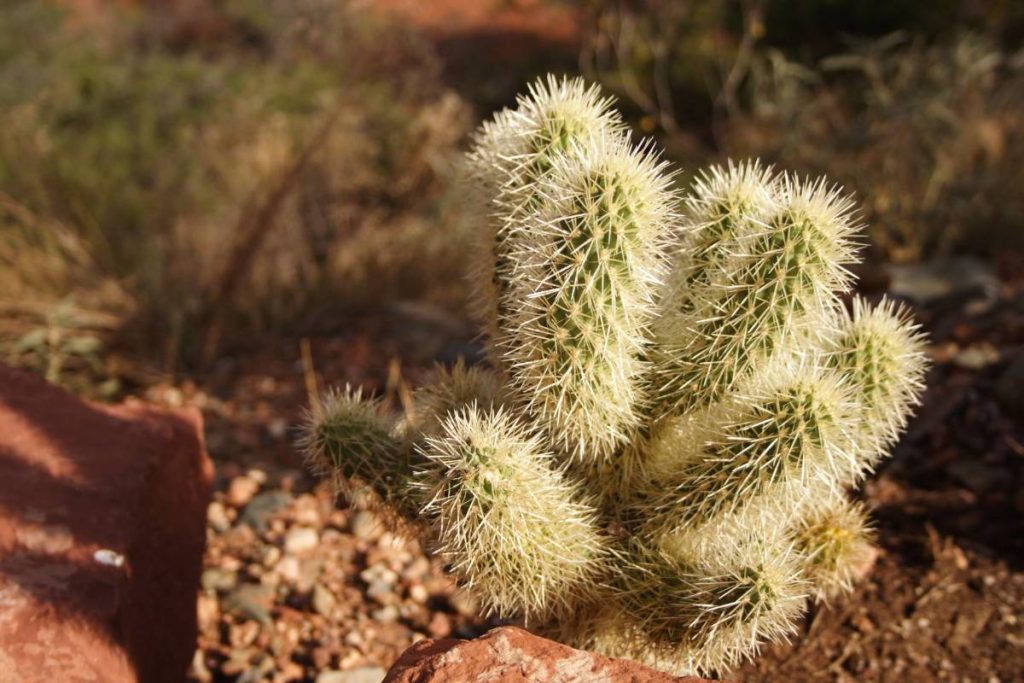
Many desert plants are known to have hairy or spiny surfaces. Cacti, agaves, and some grasses are examples of plants with such adaptations.
Of course, hair and spines are useful in deterring herbivores from eating the plant. These structures also interrupt the flow of air near the plant’s surface, lowering its rate of water loss. Finally, hairs and spines also create shade for the plant’s surface, protecting it from extreme desert heat.
Quick Growth Cycles

Many desert plants have rapid growth cycles to capitalize on brief moisture availability. This strategy allows plants to complete their life cycles in a short timeframe following rainfall events.
Some desert poppies and other wildflowers demonstrate this behavior. After rain, these plants germinate, flower, and set seed rapidly, all before the soil dries. The result can be dramatic, with barren areas bursting into bloom after rainfall.
Dormancy
Some desert plants go dormant during times of drought or other unfavorable conditions. When plants go dormant, they slow or stop their growth and other processes for a time. By entering a dormant state, plants can conserve resources until conditions improve.
One example is the Ocotillo, which sometimes remains dormant for extended periods. Ocotillo plants will resume growth and leaf production in response to rainfall. Some desert seeds stay dormant in the soil for years – even decades. These seeds wait for the right environmental signals to germinate and establish new plants.
Drought-Deciduous Behavior
Deciduous behavior is when a plant sheds its leaves (like some trees do in the fall). During extended dry periods, “drought-deciduous” plants shed their leaves to reduce water loss and conserve moisture. This strategy allows plants to survive in water-limited environments and recover rapidly when conditions become favorable.
Many Palo Verde trees are drought-deciduous. These trees will drop their leaves in response to drought, but can rapidly regrow foliage following rainfall.
Modified Photosynthesis
Some desert plants use specialized versions of photosynthesis to help maximize water use. CAM (Crassulacean Acid Metabolism) is one example of a modified version of photosynthesis.
CAM enables plants like cacti and agaves to gather carbon dioxide at night, when cooler temperatures help minimize water loss. During the day, the stored carbon dioxide is released for photosynthesis. This process allows the plants to thrive in arid environments with limited water availability.
Frequently Asked Questions: Desert Plants
How do desert plants survive in such harsh environments with little water?
Desert plants survive in harsh environments with little water by using special adaptations. For example, some store water in their stems or leaves, like cacti and succulents. Others have deep roots to find underground water, while some reduce water loss by having small or no leaves. These adaptations help desert plants thrive even when water is scarce.
What is a tumbleweed?

A tumbleweed is not a specific species of plant. Instead, the word “tumbleweed” is used to describe a dried, sphere-shaped mass of vegetation that detaches from its root system and is blown by the wind, dispersing seeds as it travels.
Tumbleweeds are iconic symbols of desert landscapes, particularly in regions with dry, open terrain where windblown plants can travel freely. While they may be visually striking, tumbleweeds can also pose hazards, such as blocking roadways or accumulating in urban areas, especially during windy conditions.
Are there any edible or medicinal desert plants?

Some desert plants have edible parts, including properly prepared prickly pear fruits and pads and the pods of certain mesquite species. Other plants are toxic or require careful identification and preparation. Traditional medicinal use is not proof that a plant is safe or effective; this identification guide is not a foraging or treatment guide.
How do desert plants contribute to their ecosystems?
Desert plants play important roles in their ecosystems. They provide food and shelter for animals, including insects, birds, and mammals. Their roots help stabilize the soil and prevent erosion, while their shade can create microhabitats for other plants and animals. Desert plants also help cycle nutrients and water through the ecosystem, contributing to its overall health and stability.
How do desert plants reproduce in such challenging conditions?
Desert plants have evolved various strategies to reproduce in challenging conditions. For instance, some produce seeds that can remain dormant in the soil until conditions are right for germination, such as after a rainfall. In other species, reproduction relies on pollinators like bees, birds, or bats to transfer pollen between flowers, ensuring successful reproduction even in arid environments. Some plants, like agaves, even reproduce by producing offsets or “pups” that grow from the base of the parent plant.
How do human activities impact plants in the desert?

Notably, urbanization, agriculture, and land development can disrupt natural habitats and fragment plant populations, making it harder for them to survive. Overgrazing by livestock can also damage desert vegetation, leading to soil erosion and loss of biodiversity. Climate change is also significant, altering rainfall patterns and temperature regimes, which can affect the distribution and survival of desert plants.
However, humans also have the capacity to help restore desert environments. Humans can play a crucial role in restoring desert plants and their habitats through various efforts such as water conservation, habitat restoration projects, and invasive species management. By taking thoughtful actions like these, humans can contribute to the preservation of these unique and valuable ecosystems for future generations.