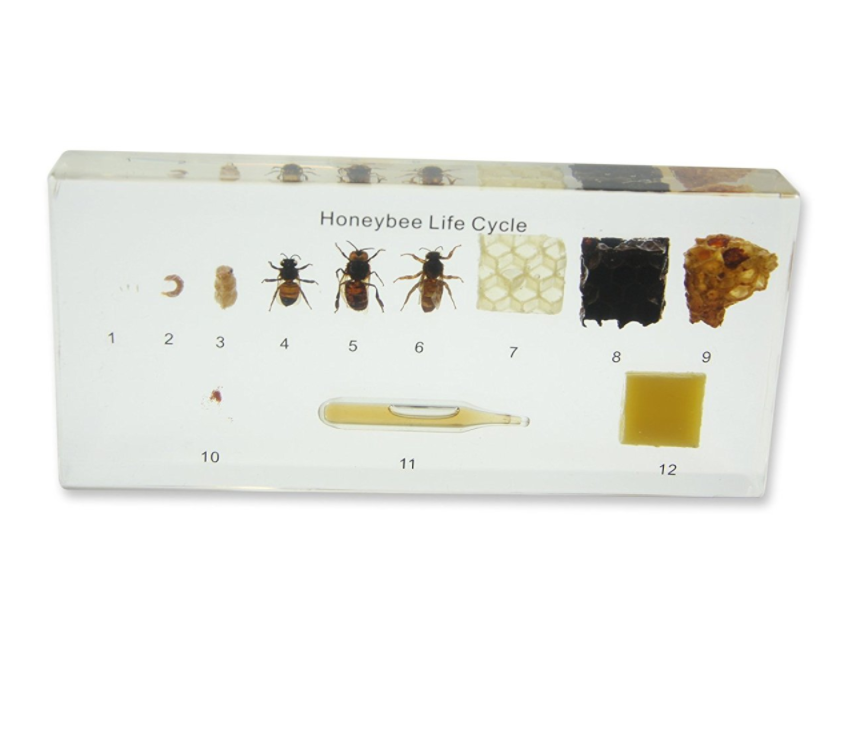
The bee life cycle consists of four main stages: egg, larva, pupa, and adult. Bees are fascinating creatures that play a crucial role in our ecosystem. They pollinate plants and produce honey, which is not only delicious but also has many health benefits. In this post, we will explore the life cycle of a bee and provide a free downloadable printable for children to learn the names of the various stages. The blacklines are realistic, and the colored illustrations are glittery. Scroll down for details about how to get this printable.

The Life Cycle of a Bee
1. Egg Stage
The life cycle of a bee begins with the egg stage. The queen bee is responsible for laying all the eggs in the hive. She carefully deposits each tiny egg, which is about the size of a grain of rice, into a cell within the honeycomb. The type of egg she lays determines the bee’s future role: fertilized eggs will develop into female worker bees or potential queens, while unfertilized eggs will become male drones.
During this stage, the queen can lay up to 2,000 eggs per day, ensuring the hive’s growth and sustainability. Each egg remains in this stage for about three days. The temperature and humidity within the hive are meticulously regulated by worker bees to ensure optimal conditions for the eggs to hatch. Once the egg hatches, it marks the beginning of the larval stage, where significant growth and development occur.
2. Larva Stage
After hatching from the egg, the bee enters the larva stage, a period marked by rapid growth and significant development. Bee larvae are small, white, and worm-like in appearance. During the first few days, worker bees feed the larvae a nutrient-rich substance called royal jelly. This exclusive diet is vital for their initial growth. After three days, the diet changes to a mixture of pollen and nectar known as “bee bread,” which supports further development. The larvae are voracious eaters, consuming large amounts of food provided by worker bees.
Throughout this stage, which lasts approximately six days, the larvae undergo multiple molts, shedding their skin to accommodate their increasing size. The hive maintains a carefully controlled environment, ensuring the larvae develop in optimal conditions of temperature and humidity.
3. Pupa Stage
When the larva is fully grown, it spins a cocoon around itself, marking the end of the larva stage and the beginning of the pupa stage.
The cell is capped with wax by worker bees just before the larva begins its transformation into a pupa. This capping provides a sealed environment, ensuring the pupa is safe from external threats and maintains the appropriate temperature and humidity.
Inside the cocoon, the bee undergoes a remarkable transformation called metamorphosis. During this stage, the larva’s body changes significantly, developing into an adult bee. This includes the formation of wings, legs, eyes, and other adult features.
The pupa stage varies in duration depending on the type of bee. For worker bees and drones, this stage lasts about 12 days. Queen bees, however, may take a few extra days to fully develop.
During pupation, the bee does not eat; it relies on the nutrients it consumed during the larval stage to fuel its metamorphosis. The sealed cell creates a controlled space where the pupa can undergo its transformation undisturbed.
Once the bee has fully developed, it will chew its way out of the cell, emerging as an adult ready to fulfill its role in the hive.
4. Adult Stage
After the pupa stage, the fully developed bee emerges from its cell as an adult. The transition from pupa to adult marks the final stage in the bee life cycle. The newly emerged adult bee immediately begins to take on its role within the hive.
For the first few days, worker bees, which are female, typically perform housekeeping duties such as cleaning cells and feeding larvae. As they mature, they progress to tasks like guarding the hive and foraging for nectar and pollen. Worker bees have a lifespan of about six weeks during the busy summer months but can live longer during the winter when the hive is less active.
Male drones have a different role. Their primary purpose is to mate with a queen, usually from another hive. After mating, drones die. Those that do not mate are often expelled from the hive as winter approaches, as they do not contribute to the hive’s maintenance or defense.
Queen bees have the longest lifespan among bees, living up to several years. The queen’s main role is to lay eggs. She can lay up to 2,000 eggs per day during peak seasons. The queen is the hive’s central figure, and her pheromones help regulate the hive’s activities.
This adult stage is vital for the survival and productivity of the bee colony. Each type of bee has specific duties that ensure the hive functions smoothly, highlighting the highly organized and cooperative nature of bee communities.
Fun Facts About Honey Bees for Kids
- Honey bees have five eyes and three pairs of legs.
- Worker bees are all female and do all the work in the hive, while drones are male and their only job is to mate with the queen bee.
- Honey bees can fly up to 15 miles per hour.
- Honey bees have a special dance language that they use to communicate with each other.
- One honey bee can make about 1/12th of a teaspoon of honey in its lifetime.
Life Cycle of a Bee: Free Printable
As you explore the life cycle of bees with your students, use our free downloadable printable to help children learn the names and sequence of the various stages. The printable includes 3-part cards and a sorting mat for children to sequence the stages of the life cycle. The printable also includes both color and black-line images, making it suitable for a variety of learning styles and abilities.
How To Get This Printable
This printable is available in the Resource Library. The Library is a free resource for our newsletter subscribers. If you’re not a subscriber yet, please sign up below and we’ll send you the password to access the Library!
More Resources for Learning About Bees
Affiliate links may be used at no additional cost to you


In the Trillium Montessori Shop


