Yellow jackets are a group of social wasps, not a separate kind of insect from wasps. They are usually compact, with black-and-yellow markings. This comparison focuses on differences between yellow jackets and other familiar wasps, especially slender paper wasps.
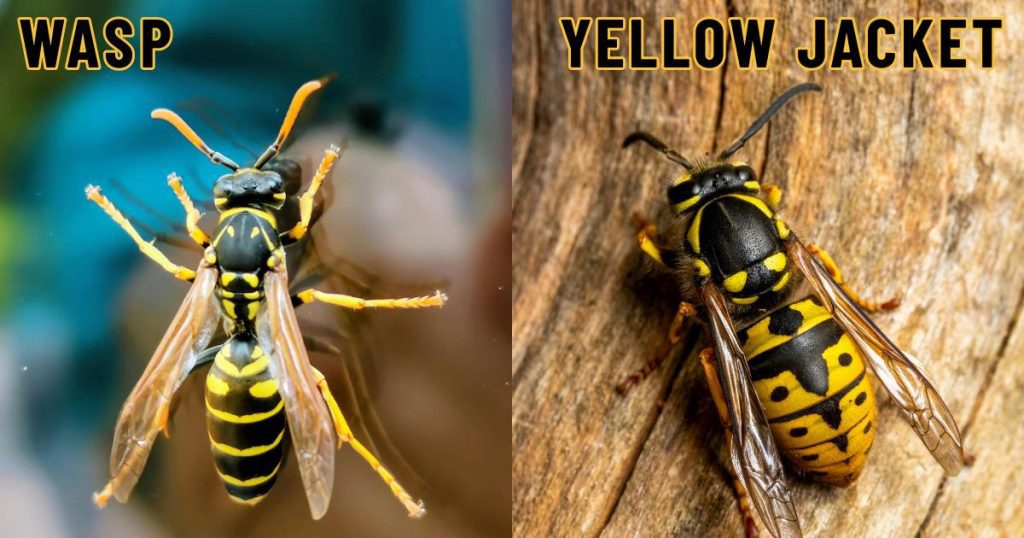
Wasp vs Yellow Jacket: What is the Difference?
- Yellow jackets comprise several species of social wasps, mainly in the genera Vespula and Dolichovespula. Wasp is a much broader common name.
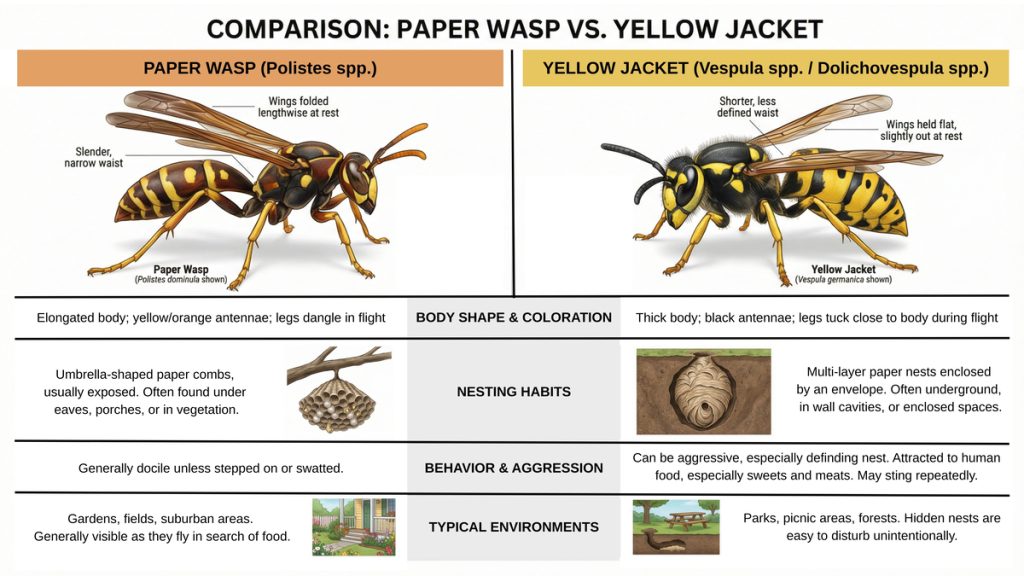
- Most wasps are identifiable by their thin waists and long, dangling legs during flight; yellow jackets have a thicker build and tuck their legs tight while flying.
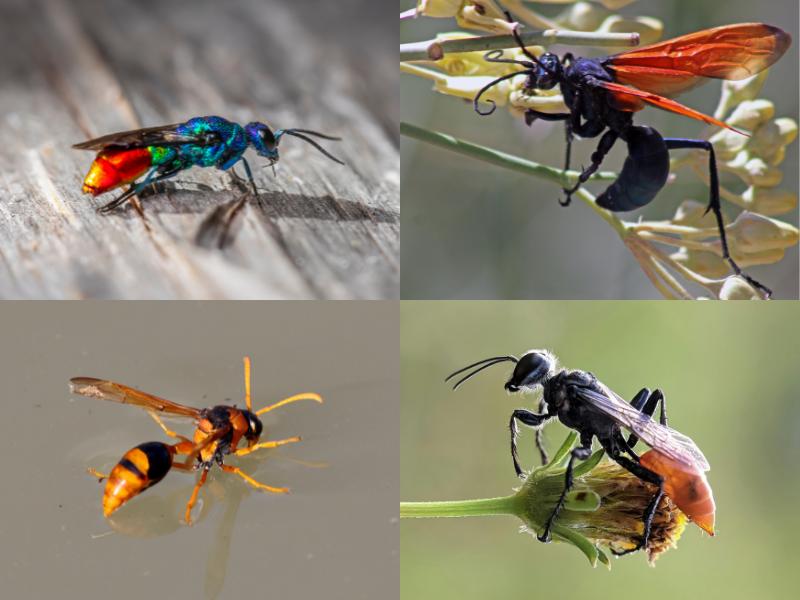
- A yellow jacket is black and yellow, but wasps can display a range of colors like blue, orange, black, or red.
- Wasp antennae can be a variety of colors; yellow jacket antennae are consistently black.
- While many wasps build communal nests, they are often solitary hunters; yellow jackets are highly social, and famous for living in large, coordinated colonies.
- Most wasps prefer to avoid humans; yellow jackets are more aggressive and territorial.
Physical Appearance
Size and Body Shape
The wasp family includes a wide range of sizes. Common wasp species usually falling between 1/2 and 1 inch long. Yellow jackets are generally small, stocky wasps, with workers growing to around 1/2 inch and queens reaching 3/4 inch to 1 inch.
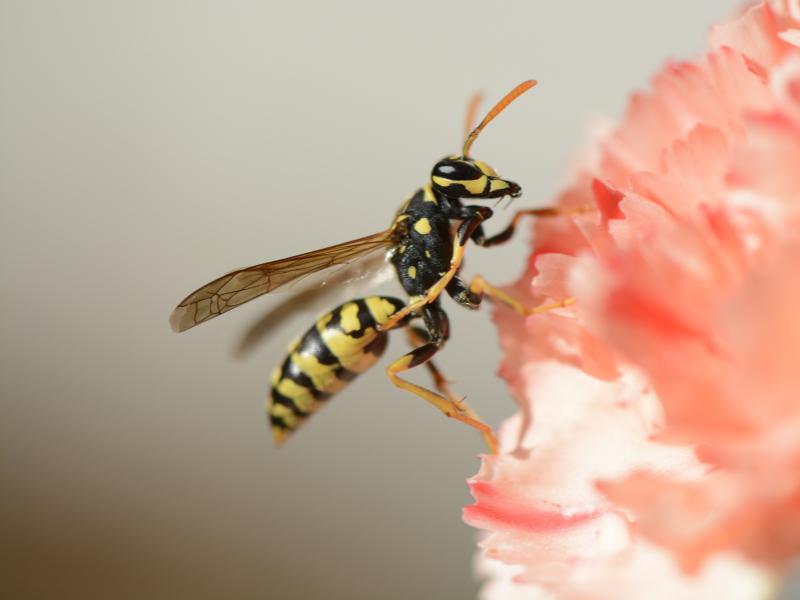
Most wasps are easily recognized by an extremely thin, needle-like waist that separates their body segments. In contrast, the yellow jacket is more cylindrical or “bullet” shaped.
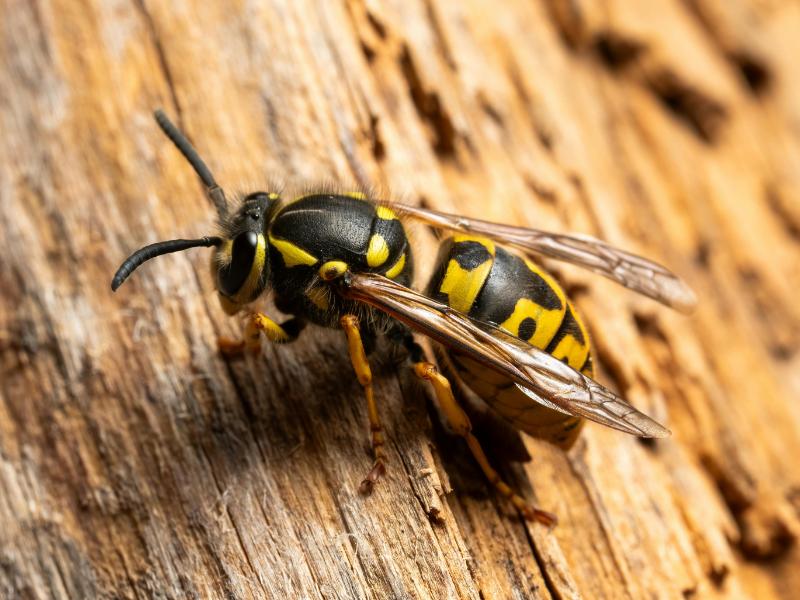
While many wasps are known to fly with long legs hanging down beneath them, yellow jackets tuck their legs in during flight and maintain a more compact appearance.
Color and Markings
Wasps can appear in a variety of patterns, including black and yellow bands and stripes as well as solid colors like metallic blue, orange, or jet black. Yellow jackets are famous for the jagged bright yellow and black bands that wrap around their abdomen. Wasps may have a variety of antennae colors; yellow jacket antennae are black.
Habitat and Range
Geographical Range
Wasps are found on every continent on Earth except for Antarctica. Yellow jackets are a more localized subgroup, with most species living across North America and Europe. They also inhabit temperate parts of Asia and have been introduced to parts of Australia. Their specific range usually depends on the availability of food and safe nesting sites.
Preferred Habitat
Wasps in general are very adaptable and thrive in environments as varied as tropical forests, dry deserts, and high mountain ranges. Wasps are found in both developed and undeveloped areas. In general, regardless of environmental factors, wasps prefer to nest in sheltered, dry locations. Many solitary wasp species prefer to nest in hollow plant stems or small holes they dig in sandy soil. Social wasp species (such as yellow jackets) build large, multi-chambered nests, sometimes in exposed areas and sometimes in underground burrows or hollow wall spaces, depending on the species. Whether large or small, these protected areas help the wasps keep their developing larvae at a steady temperature.
Nest Identification
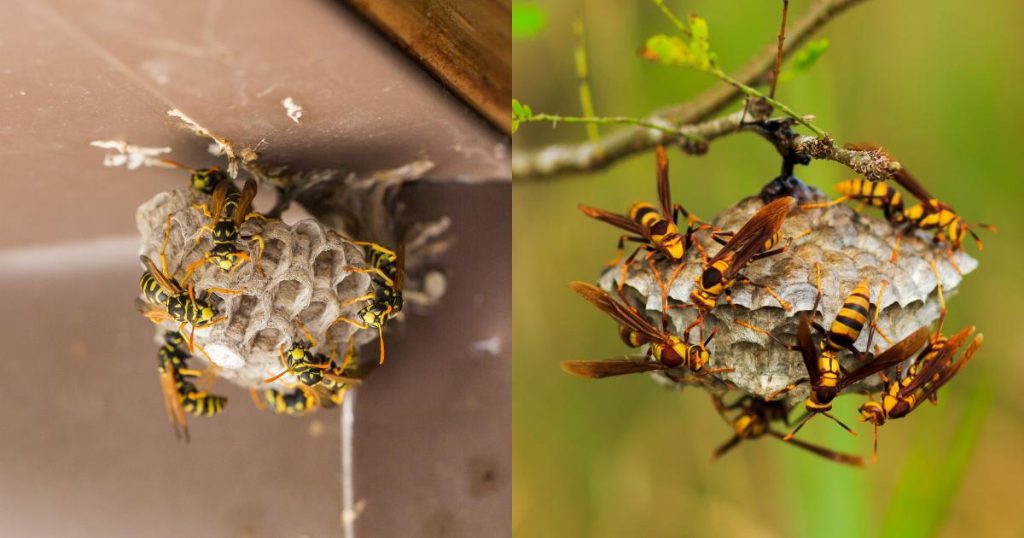
You can often identify a wasp species by its visible nest shape, like the open-faced “umbrella” nests of paper wasps. Other types may appear as small mud tubes or single holes in old timber.
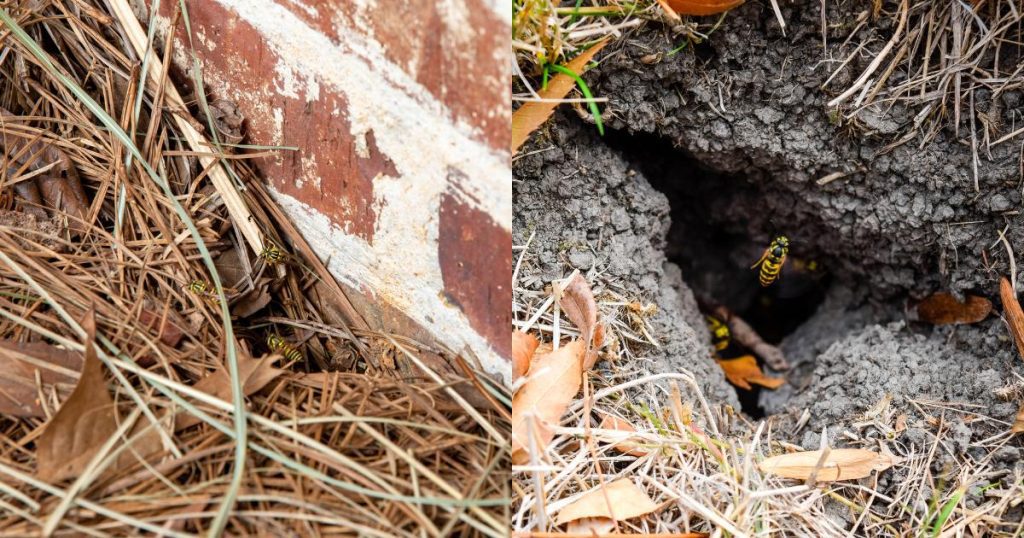
In contrast, a yellow jacket nest is usually hidden from view, appearing only as a small hole in a wall or in the ground. You might also see yellow jackets entering through a narrow crack in a building’s exterior. Inside, these wasps build complex, multi-tiered combs wrapped in a thick, grey paper envelope.
Human Interaction and Territoriality
Stinging Behavior
Most wasps are not aggressive and rarely sting unless they are handled or stepped on. In contrast, due to their highly social and territorial nature, yellow jackets are more likely to interpret humans as a threat and respond aggressively.
One major reason for this is the nature of yellow jacket nests. While other types of wasp nests are easy to spot and avoid, yellow jackets’ hidden nests are often accidentally disturbed by foot traffic, lawn equipment, or other vibrations. When their nest is disturbed, yellow jackets can release an “alarm” pheromone that recruits the rest of the colony to defend the area.
Health Risks and Allergies
Like other wasps, yellow jackets can sting multiple times without losing their stinger. This means yellow jackets (and wasps in general) can deliver a high dose of venom during an encounter. Yellow jackets in particular present a risk for multiple stings because of their tendency to attack as a coordinated group.
For most people, a sting causes temporary pain, redness, and swelling that goes away within a few days. However, a small percentage of people have a severe reaction called anaphylaxis, which requires immediate medical help.
Behavior and Diet
Behavior
The vast majority of wasp species are actually quite shy and prefer to hunt for food in solitude. An exception to this rule, yellow jackets are highly social insects that communicate and work together to find food for their colony.
Diet
Most adult wasps survive by drinking nectar and other sweet liquids like fruit juice. Wasps – including yellow jackets – hunt other insects (often the larvae of other insects, like caterpillars) to provide protein for their young, but they do not usually consume these insects themselves. Yellow jackets follow this diet but are also known to be scavengers that will actively seek out human food, especially sweets and meat, at outdoor gatherings.
Reproduction and Lifespan
Reproduction
To start a hive, a queen wasp lays eggs in small, protected cells and provides a single meal for each larva. When that generation matures, they become worker wasps to support the subsequent generations of larvae. Large wasp colonies can have multiple queens, each laying eggs.
Lifespan
Worker wasps typically live short, busy lives of only 12 to 22 days in the wild. Wasp queens are the exception, as they can live for a full year to ensure the survival of the next generation.
Economic Importance
Wasps are an essential part of the global economy because they act as a free, natural form of pest control for farmers. Yellow jackets and other types of wasps are responsible for hunting vast quantities of caterpillars and other larvae that threaten to damage crops. Wasps also serve as pollinators, with some plant species depending almost entirely on the activity of wasps for pollination.
Cultural Significance
Wasps are frequently used as mascots for sports teams. Yellow jackets in particular are often used to evoke strong social bonds and focused aggression coordinated towards a shared goal.
Conservation Status
Most common species in the wasp family are currently classified by scientists as Least Concern. Although wasp populations are generally stable, protecting the environments where yellow jackets and other wasps thrive – and finding ways to peacefully coexist with these insects – also helps protect ecosystems in general.