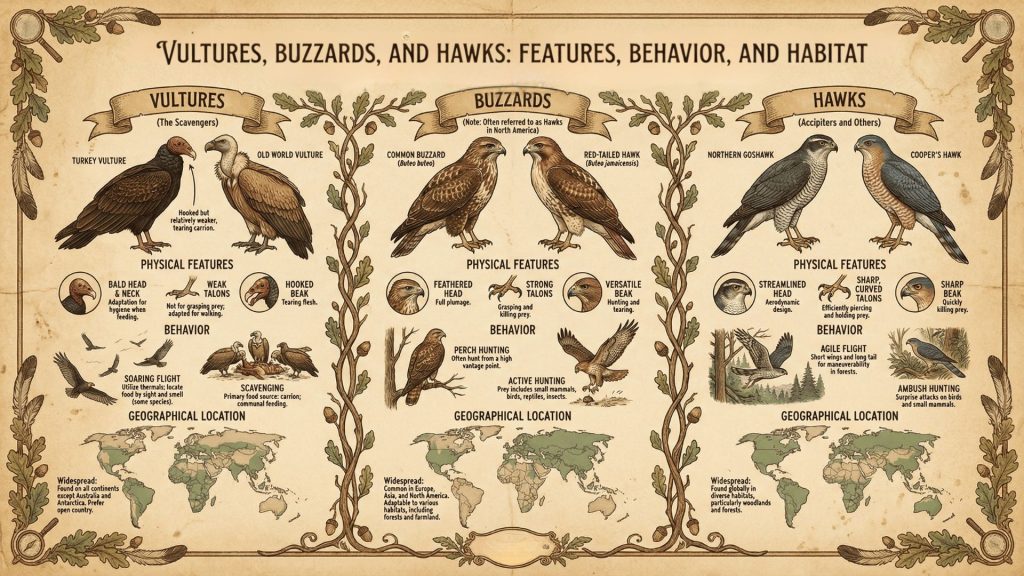
Vulture vs buzzard depends partly on where the name is used. In North America, buzzard is an informal name for a vulture. In Britain and much of Europe, a buzzard is a hawk in the genus Buteo. This comparison uses the European meaning of buzzard.

What is the Difference Between Vultures and Buzzards?

- In North America, buzzard is a regional common name for a vulture. In this article, buzzard means a Buteo hawk, as the word is commonly used in Britain and Europe.
- Vultures are specialized scavengers that eat dead animals, whereas buzzards are hawks that primarily hunt live prey.
- The confusion primarily stems from European settlers who arrived in North America and saw large birds flying. The large birds they were used to seeing in Europe were buzzards, so they called the birds they saw in North America “buzzards” as well (even though the birds turned out to be very different) and this name stuck.
- Buzzards are typically called hawks in North America.
Physical Appearance
Size and Build
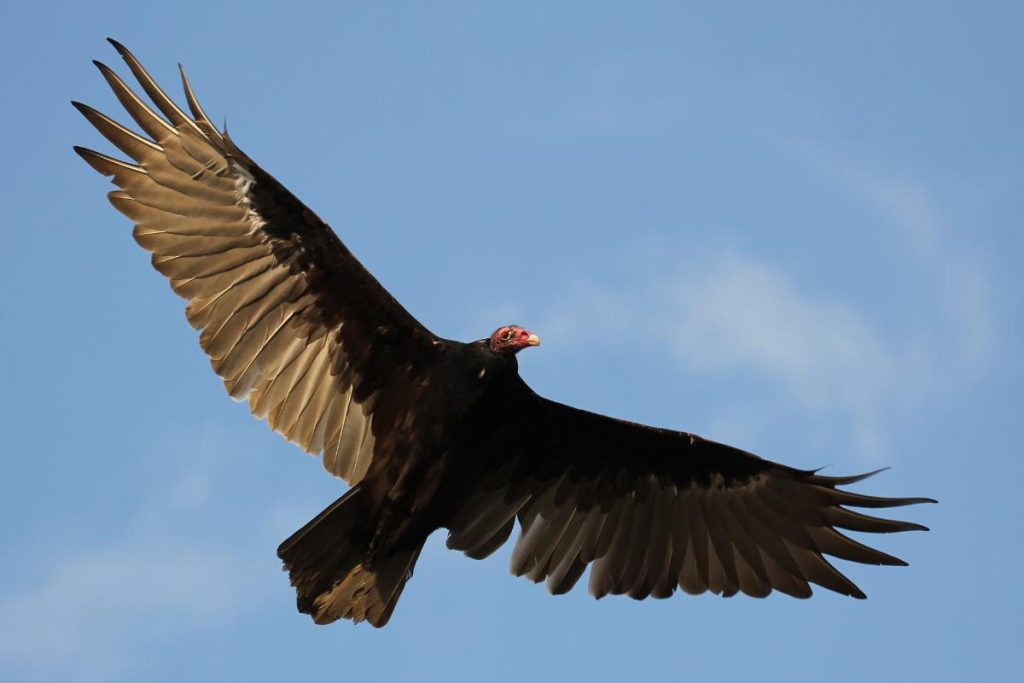
Vultures are generally large birds with broad, flat wingspans that can reach 5 to 6 feet. They typically weigh between 3 and 5 pounds. A few vulture species are quite large, such as the condors, reaching upwards of 30 pounds and having wingspans of nearly 10 feet. Slightly smaller than vultures, buzzards measure about 16 to 22 inches in length and weigh roughly 1.5 to 3 pounds.
Feathers and Coloring
The plumage of a vulture is usually dark brown or black. This helps them absorb heat while soaring at high altitudes.
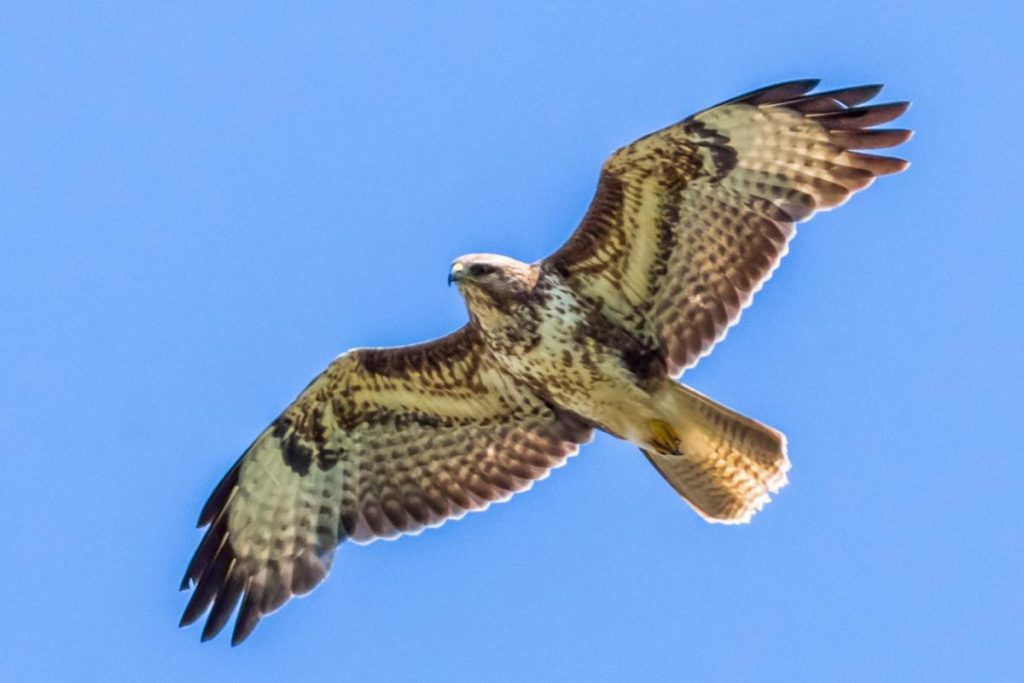
Buzzards exhibit a wide variety of colors, often featuring “grizzled” patterns of brown, white, and tan that provide camouflage while perched in trees.
Head and Neck Features

Vultures are famous for their featherless heads (which are often red or black, but can also feature other colors). This adaptation prevents bacteria from sticking to them during feeding.
In contrast, like other members of the hawk family, buzzards have fully feathered heads and necks.
Habitat and Range
Geographical Range
Vultures are found on every continent except Antarctica and Australia. There are two main groups of vulture species. One group (family Cathartidae) inhabits North and South America and a separate group lives across Europe, Asia, and Africa (part of family Accipitridae).
Buzzards are also part of family Accipitridae, but are their own genus, Buteo. Buteo hawks occur across much of the Americas, Eurasia, and Africa; they are not native to Australia or Antarctica. Buzzards are primarily found in Europe, Asia, and parts of Africa. Close relatives to the buzzard (like the Red-tailed Hawk) are also common across North America.
Preferred Habitat
Vultures often inhabit open areas such as plains, deserts, and roadsides where carrion is easy to spot from the air.
Buzzards tend to prefer a mix of woodland for nesting and open fields for hunting small mammals and birds.
Behavior and Diet
Behavior
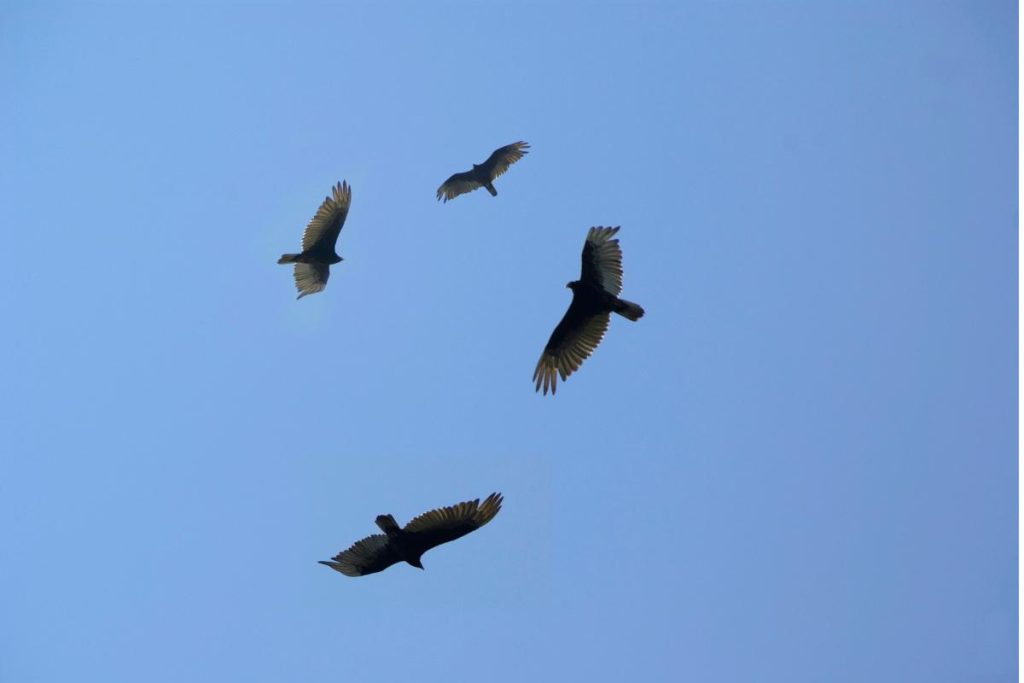
Vultures are often seen in groups called “kettles” as they circle upward on warm air currents to save energy. Buzzards are more territorial and are typically seen perched alone on fence posts or soaring in tight circles as they track live prey below.
Diet
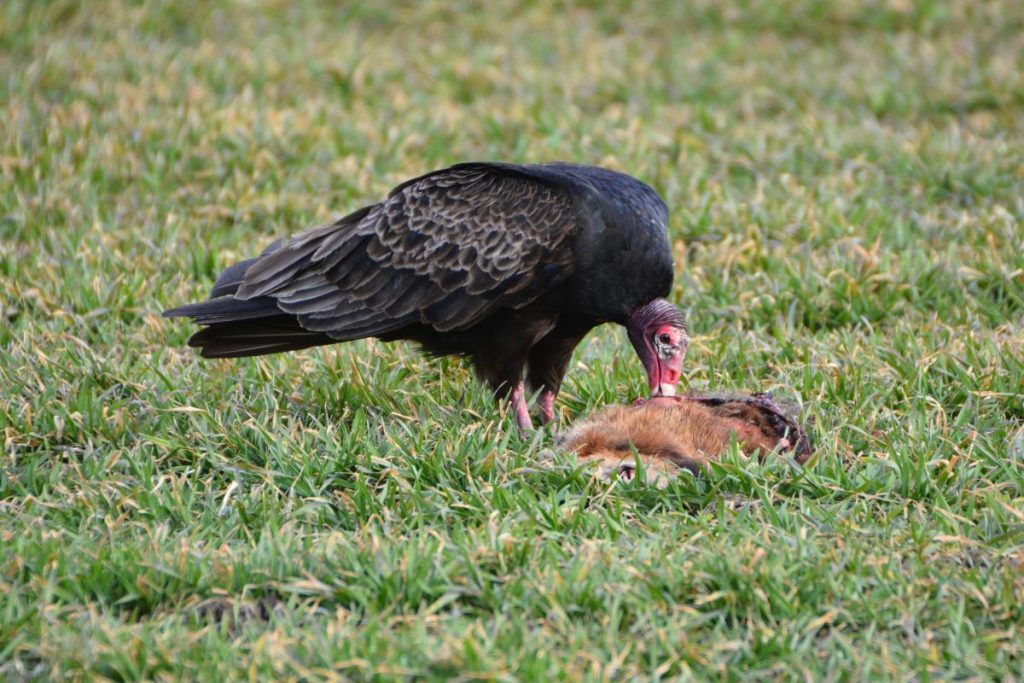
The diet of a vulture consists almost entirely of carrion, which is the remains of animals that have already died. In contrast, buzzards typically hunt for live prey including small mammals, reptiles, and insects, though they will occasionally scavenge if food is scarce.
Reproduction and Lifespan
Mating and Offspring
Nesting varies by vulture species. Some use ground sites, caves, or ledges; others build stick nests in trees. Buteo buzzards commonly build stick nests in trees or on ledges.
Lifespan
In the wild, vultures are long-lived birds, often reaching 10 to 20 years. They can live up to 30 years or more in captivity. Buzzards generally live 10 to 12 years in the wild, though they have been known to reach 25 years in captivity.
Cultural Significance
Vultures are frequently portrayed in media as “nature’s clean-up crew,” playing a vital role in preventing the spread of disease by removing decaying matter. Buzzards (and their hawk relatives) are often symbols of sharp vision and nobility, appearing frequently in history and folklore across Europe and Asia.
Conservation Status
According to the IUCN Red List, while some vulture species like the Turkey Vulture and Black Vulture are listed as species of Least Concern, many vulture species are Critically Endangered due to habitat loss and accidental poisoning, particularly in Africa and Asia. The Common Buzzard is currently listed as a species of Least Concern, as its populations are stable and it has adapted well to human-altered landscapes.