The desert biome is defined by scarce precipitation, not by heat alone. Deserts can be hot or cold, sandy or rocky. Their plants and animals conserve water in different ways, from water-storing cactus stems to nighttime activity and sheltering in burrows.
Use the books, printables, crafts, and experiments below to plan a desert unit study. The background facts help children compare desert habitats and explore how living things survive with limited water.
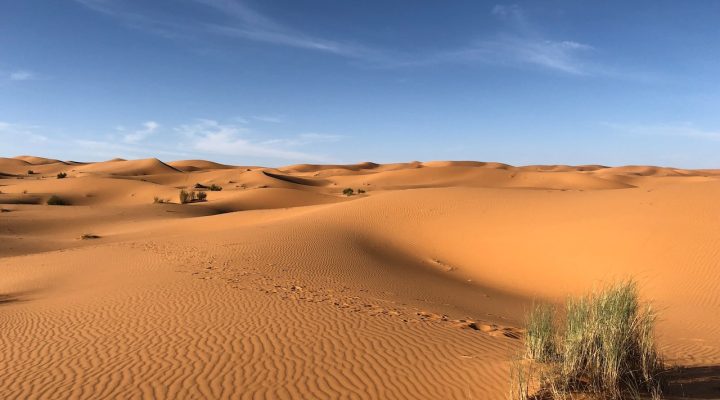
Curriculum Resources for the Desert Biome
- Desert Mini-Unit Suitable for ages 4-9 – this is great for older primary students! This mini-unit includes 14 activities including writing prompts, food web activities, animal adaptations, cactus study, and an “A-Z Desert Life” resource featuring pictures and information about 26 desert plants and animals.
- Desert Preschool Pack Sorting, matching, cutting, and more engaging preliminary activities; great as a supplement to the mini-unit!
- Desert Animals 3-Part Cards A mix of 24 mammals, birds, reptiles, and arachnids. This set includes full-color realistic illustrations plus blank outlines to copy and use for booklet-making.
- You might also enjoy some desert-themed ideas from our unit study on the Middle East, which we explored as part of a larger unit study of the continent of Asia.
Desert Biome Printables
- Desert Habitat 3-Part Cards from Welcome to Mommyhood – this set includes 23 different desert plants and animals.
- Wildlife Tracks blog post by White Sands National Park. White Sands National Park is a beautiful and unique desert environment. While this is not officially a “printable resource” you may want to use the lovely photos here to create your own shelf activity!
- Bactrian Camel from Learn Create Love – this printable template could be fun for your older students who are confident with scissor skills and also looking for a fine motor challenge. Bactrian camels have two humps and are native to the Gobi Desert in Mongolia and China.
Desert Books and Materials
- Desert Animals book by Kids Can Press
- Cactus Hotel book by Brenda Z. Guiberson and Megan Lloyd
- Desert Plants and Animals Wooden Block Memory Game by Everwood Friends
- Desert Shadow Matching and Memory Game by My Imagine Box
- Desert Animals Sticker Book by Dover Little Activity Books – Buy two of these inexpensive books and use the stickers to create a DIY matching activity!
Crafts and Hands-On Activities for Learning About the Desert
- Sandpaper Cactus Craft from No Time for Flash Cards
- Watercolor Resist With Crayons by Art Hub for Kids – because the temperature tends to be cooler at night, many desert animals are nocturnal. Try this activity as a “desert night scene” invitation with sandy-colored crayons and watercolor paint in shades like blue, purple, and black.
- Simple DIY Desert Science Project: How a Cactus Stores Water by Home Science Tools (plus several other easy desert-related science demonstrations!)
- Tips for Cactus Gardening with Children
About the Desert Biome
What is a Biome? A biome is a large geographical region that is characterized by its unique climate, plants, and animals. Wetlands, grasslands, and temperate forests are all examples of biomes. Learning about different biomes can help us better understand the natural world and how it works. Biomes also provide an opportunity to learn about the different species that inhabit our planet and how they interact with one another.
Deserts receive little precipitation, often less than 25 centimeters (10 inches) a year. Precipitation includes rain and snow. Some deserts have very hot days, while others have cold winters or remain cold year-round; temperature alone does not determine whether a place is a desert.
Deserts occur on several continents, including the polar desert of Antarctica. Their landscapes may contain rock, gravel, dunes, or ice. Some form in mountain rain shadows, while others result from atmospheric circulation or cold ocean currents.
Plants and animals have adapted to deal with the extreme temperatures and lack of water in the desert:
- Many cacti have water-storing stems, a waxy outer surface, and spines instead of broad leaves. Cacti are mainly native to the Americas; they are not the characteristic plants of every desert worldwide.
- The Fennec fox, which is found in the Sahara desert, has large ears that help it stay cool, and it can go without water for long periods by getting moisture from its prey.
- Rattlesnakes, which are found throughout the deserts of North America, have a special sense that allows them to hunt in the dark of night when temperatures are cooler.
These adaptations are just a few examples of how plants and animals survive the extreme conditions of the desert biome.
Some Deserts are Cold!
When we think of deserts, we typically think of hot, sandy places. However, there are cold deserts as well! Some examples are the Gobi Desert in Asia and the Great Basin Desert in North America. These deserts can experience extreme temperature changes, with very hot summers and very cold winters. Some deserts are even cold all year long.
Much of Antarctica is a polar desert because it receives very little precipitation. The interior is especially dry, while some coastal regions receive much more snow.
When comparing snowfall with desert rainfall, scientists often use the depth of water that would remain if the snow melted. Snow depth and liquid-water equivalent are different measurements.
The Desert Biome: Fun Facts for Kids
- The Saguaro cactus can grow up to 40 feet (12 meters) tall and live for over 200 years.
- Many kangaroo rats can meet their water needs without drinking, using water in food and water produced as their bodies process it. Their kidneys and behavior also help limit water loss.
- Some desert dunes produce humming or booming sounds when dry sand slides down their slopes. Such “singing sands” occur in several parts of the world.
- The Gobi Desert has dinosaur fossils that are over 80 million years old.
- The Mojave Desert in southwestern North America is home to the desert tortoise, which can live up to 100 years.
- The Sahara Desert in northern Africa has sand dunes that are as tall as a 50-story building.
- The sand in the Sahara Desert can reach temperatures of up to 170°F (77°C) during the day.
- The cactus wren, a bird that lives in the desert, builds its nest inside a cactus for protection.
- The thorny devil is an Australian lizard whose skin channels help move water toward its mouth. Blood-squirting from the eyes is a defense of some North American horned lizards, not thorny devils. The Australian Museum explains its water-collecting skin.
- The Atacama Desert in South America contains extremely dry areas where rain is rare and irregular. Conditions vary across the region, so it is more accurate to describe particular places and periods than to say the entire desert never receives rain.