Pocket gophers are generally larger than voles and have external cheek pouches for carrying food. Voles are smaller rodents that often make runways through dense vegetation. Compare their size, feet, burrows, and feeding habits to identify signs of each animal.
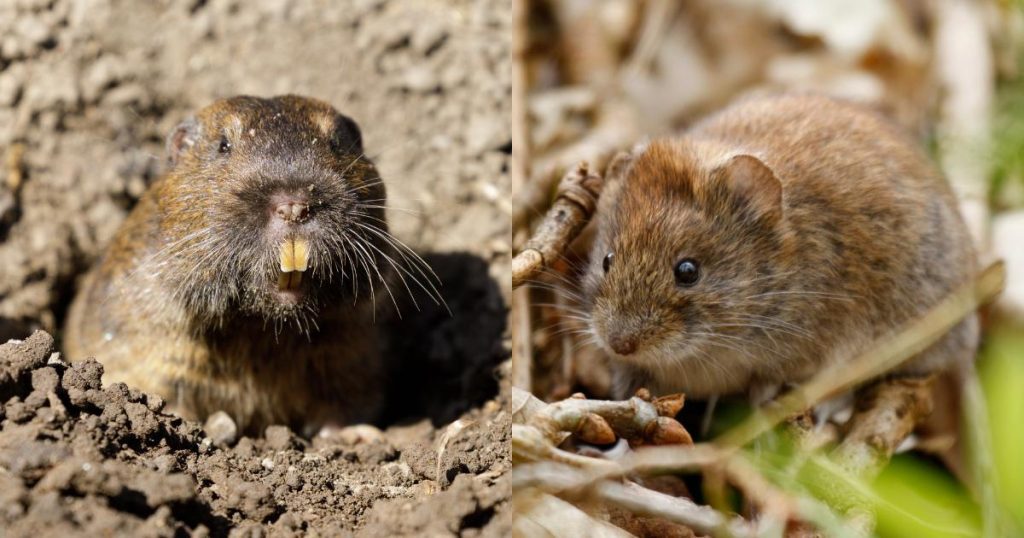
Gopher vs Vole: What is the Difference?
- Gophers belong to the family Geomyidae, while voles are part of the family Cricetidae.
- Gophers are much larger and heavier than the small, mouse-like vole.
- Voles create visible runways through surface dirt and vegetation, while gophers stay mostly underground.
- Gophers possess external cheek pouches to carry food, but voles do not.
- Gophers are solitary animals that live alone in their tunnels, while voles are social creatures and often live in colonies.
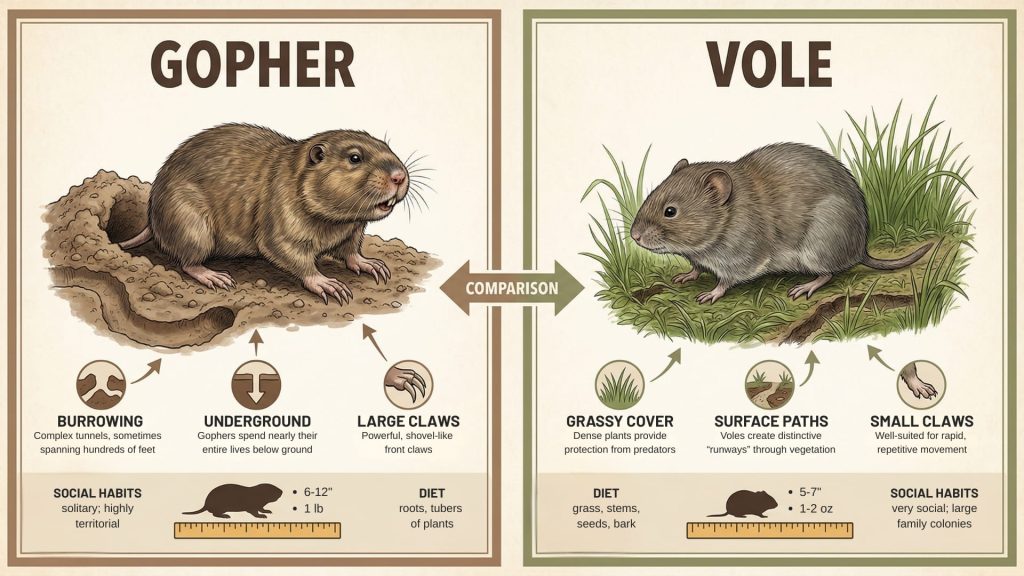
Physical Appearance
Rodents
Rodents are a group of mammals characterized by a single pair of continuously growing incisors (front teeth) in both the upper and lower jaws. Both the gopher and the vole are classified as rodents because they must constantly gnaw on vegetation and roots to wear down these specialized teeth, which would otherwise grow too long for them to eat.
Size, Build, and Coat
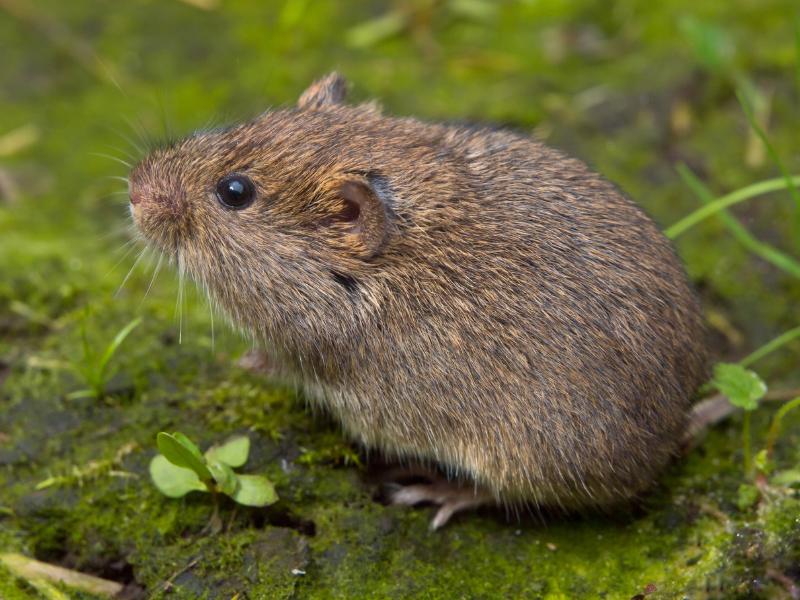
Gophers typically measure 15 to 25 cm in length and weigh between 200 and 500 grams. Voles are smaller, typically reaching 13 to 18 centimeters long. They weigh only 30 to 60 grams. While gophers have a stout, heavy-set frame built for powerful digging, voles possess a compact, rounded body shape that is much more mouse-like.
Gophers have short, soft, solid brown or tan fur. This fur often matches the soil in their region. Voles have thick, coarse fur that ranges from gray to reddish-brown.
Specialized Digging Tools
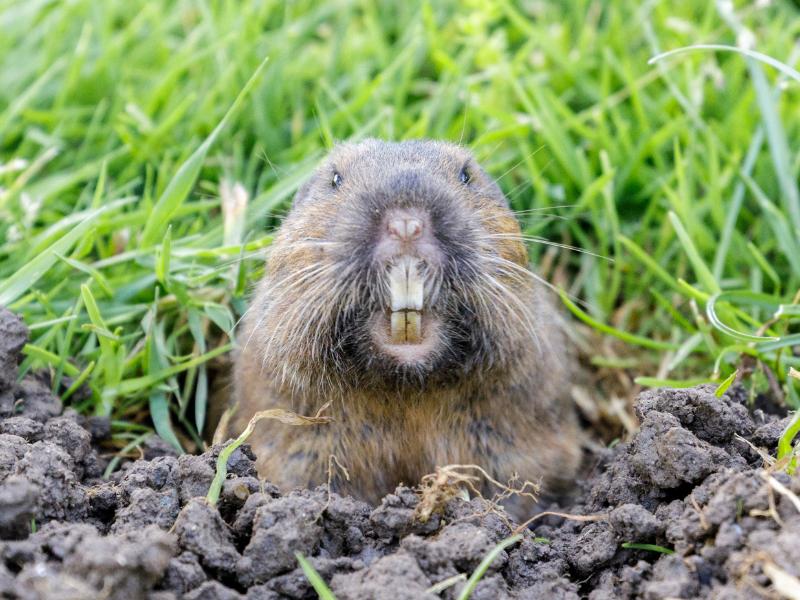
Gophers have massive front claws and broad heads designed for moving large amounts of dirt. Gophers also have large, yellowish incisors (front teeth) that stay outside their lips so they can dig with their teeth without getting dirt in their mouths. Voles have smaller feet and blunt muzzles better suited for shallow tunneling.
Habitat and Range
Geographical Range
Gophers are found exclusively in North and Central America. Voles have a much wider range, living across North America, Europe, and Asia.
Preferred Habitat
Gophers prefer areas with loose, sandy soil that is easy to tunnel through for nesting. Voles thrive in open areas with vegetation, such as grasslands, prairies, meadows, and gardens. Voles depend on the vegetation in such areas to provide cover from predators.
Behavior and Diet
Behavior
Gophers are solitary animals. They are extremely territorial and will defend their tunnel systems from any intruders, including other gophers. Gophers spend much of their lives underground, using their sensitive whiskers and tails to navigate dark tunnels.
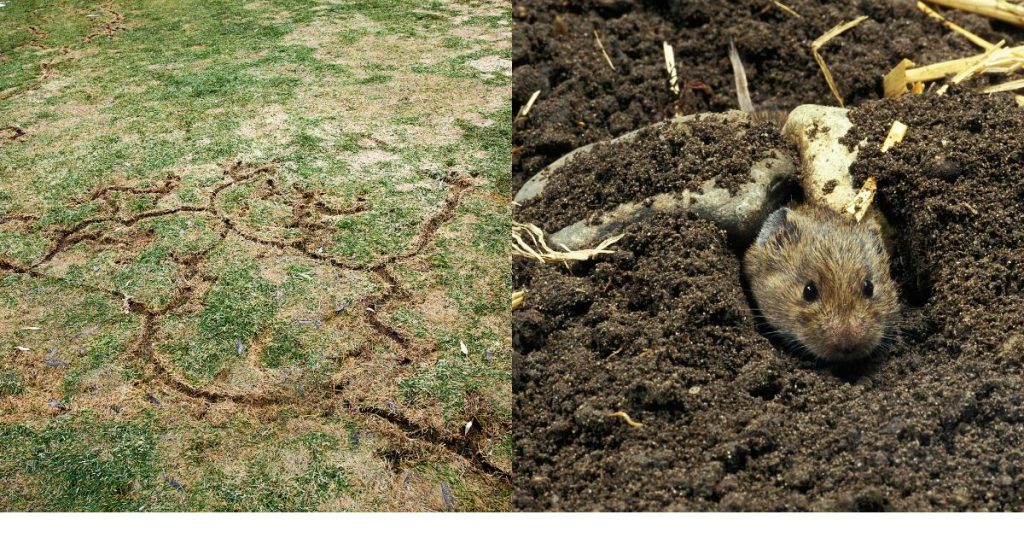
Voles are active both day and night and move through well-traveled paths in the grass. They are social animals that often share burrow entrances with their family members. You can often find their tiny, beaten-down trails in overgrown fields or lawns.
Diet
Gophers eat roots, tubers, and bulbs they find while digging underground. They use their large cheek pouches to carry food back to storage chambers. This allows them to eat in safety away from the surface.
Voles primarily eat green vegetation, seeds, and the bark of small shrubs or trees. They can eat their own weight in plants every single day to stay active. During winter, they often gnaw on the base of trees hidden beneath the snow.
Reproduction and Lifespan
Reproduction
Gophers usually give birth once or twice a year to litters of three to six young that stay in the mother’s burrow for only a few weeks. Voles are famous for fast breeding, often having five to ten litters annually with many offspring.
Lifespan
Gophers live about 1 to 3 years in the wild and up to 5 years in captivity. Voles rarely survive more than 12 months in the wild but can reach 2 years in captivity.
Economic Importance
Both gophers and voles have a reputation for causing extensive damage to crops and vegetation. In addition to eating crops, voles often damage orchards and gardens by gnawing on the base of young trees. Gophers can also cause significant damage to underground utility lines and farm equipment by moving large rocks.
Cultural Significance
Gophers are often portrayed in movies and cartoons as clever or mischievous underground architects, or as pesky, burrowing “villain” types. Voles are less famous in media but are recognized by scientists as a key food source for many predators.
Conservation Status
Most species of both gophers and voles are currently listed as Least Concern by conservation groups. However, some specific local populations face habitat loss and are monitored by wildlife experts. One specific example is the Mazama pocket gopher, which is listed as Threatened in parts of Washington due to urban sprawl. Similarly, the Amargosa vole in California is considered Endangered because its unique wetland habitat is disappearing.
The “Imposter” Gophers
Sometimes, other animals are called gophers by mistake. While many people use the word “gopher” to describe any small hole-digging animal, scientists use the term more specifically. In the world of biology, a “true” gopher is always a pocket gopher, named for the fur-lined pouches in its cheeks used to carry food and nesting materials.
Here are the most common “imposters”:
- Voles and Moles: Homeowners often blame “gophers” for lawn tunnels that are actually made by these smaller animals.
- Richardson’s Ground Squirrel: Often called “gophers” in the northern prairies, these are actually social squirrels.
- Thirteen-Lined Ground Squirrel: The inspiration for the “Golden Gopher” mascot, but biologically a squirrel.
- Gopher Tortoise: A reptile found in the southeastern United States that shares the name because it also digs deep burrows.