Often called the “rainforests of the sea” because of their incredible biodiversity, coral reefs support a vast number of plant and animal species in the ocean biome. Coral reefs are especially rich in unique fish and invertebrate life. From microscopic zooplankton to apex predators like sharks, let’s take a look at the diversity among coral reef animals as well as some of the specialized adaptations these creatures use to thrive in the reef ecosystem.

Coral Reef Animals
Invertebrates
Zooplankton
Zooplankton are small, often microscopic animals that drift in ocean currents. They form a crucial part of the marine food web, serving as a primary food source for many larger organisms.
Amphipods
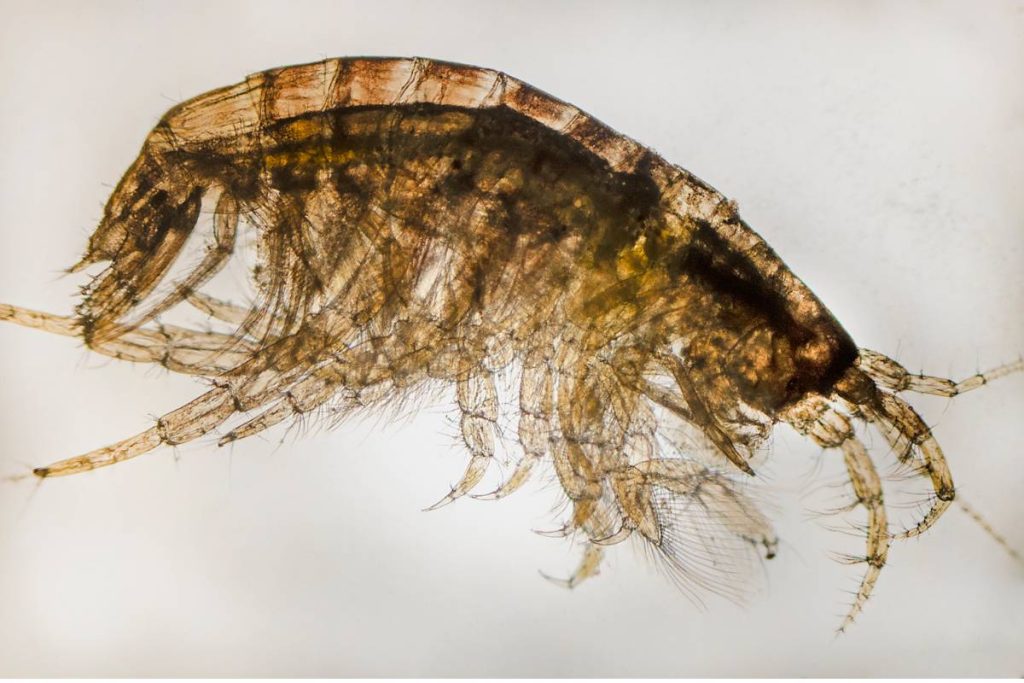
Amphipods are small, shrimp-like crustaceans that are diverse and widespread in coral reefs. They serve as both scavengers and predators, contributing to nutrient cycling and food availability in reef ecosystems.
- Average Size: 1-10 mm (0.04-0.4 inches).
- Eats: Phytoplankton and small animals.
- Predators: Fish, squid, larger zooplankton.
- Region: All oceans.
- Classification: Order Amphipoda
Copepods
Copepods are small crustaceans that are abundant in coral reefs. They play a significant role in the food web as important grazers and prey for many reef organisms.
- Average Size: 0.5-2 mm (0.02-0.08 inches).
- Eats: Phytoplankton, bacteria, small organic particles.
- Predators: Fish, jellyfish, larger zooplankton.
- Region: Global in marine and freshwater.
- Classification: Subclass Copepoda
Krill
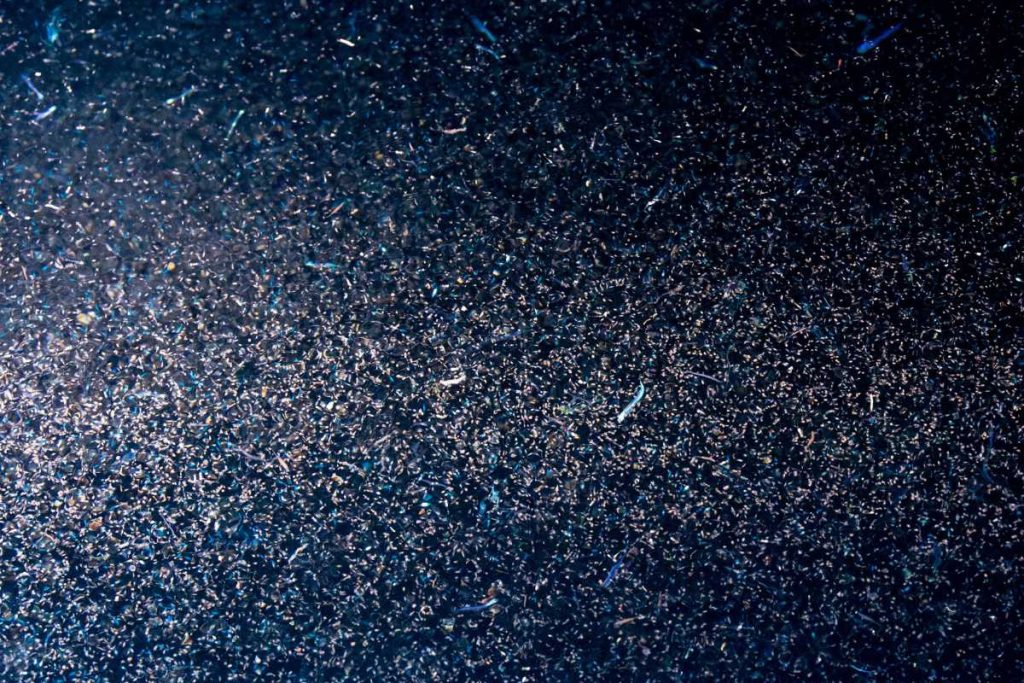
Krill are tiny, shrimp-like animals often found in vast swarms. These enormous groups of krill can be so dense that they make the water appear pink. Although krill are often associated with colder waters, these animals can also be found in tropical and subtropical coral reef regions.
- Average Size: 1-6 cm (0.4-2.4 inches).
- Eats: Phytoplankton, zooplankton, fish larvae.
- Predators: Baleen whales, fish, seabirds.
- Region: Polar and temperate oceans.
- Classification: Order Euphausiacea
Corals
Corals are marine invertebrates that form large structures known as reefs. These hard, rock-like formations are made from calcium carbonate, a material similar to chalk. Coral reefs provide habitat and shelter for many marine species.
Brain Coral
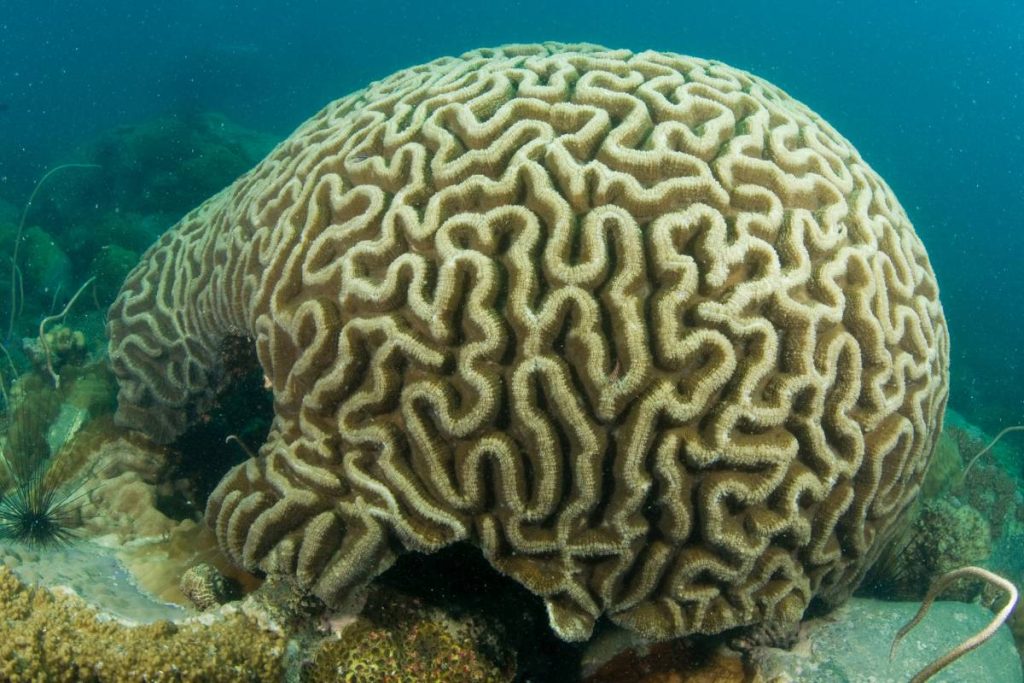
Named for its resemblance to a brain, this coral is typically round or domed with a bumpy, grooved outer layer. Brain coral’s sturdy structure contributes significantly to reef building.
- Average Size: Several meters (10-30 feet) in diameter.
- Eats: Plankton, dissolved organic matter, and nutrients produced by symbiotic algae.
- Predators: Parrotfish and snails.
- Region: Tropical and subtropical oceans.
- Classification: Family Faviidae
Bubble Coral
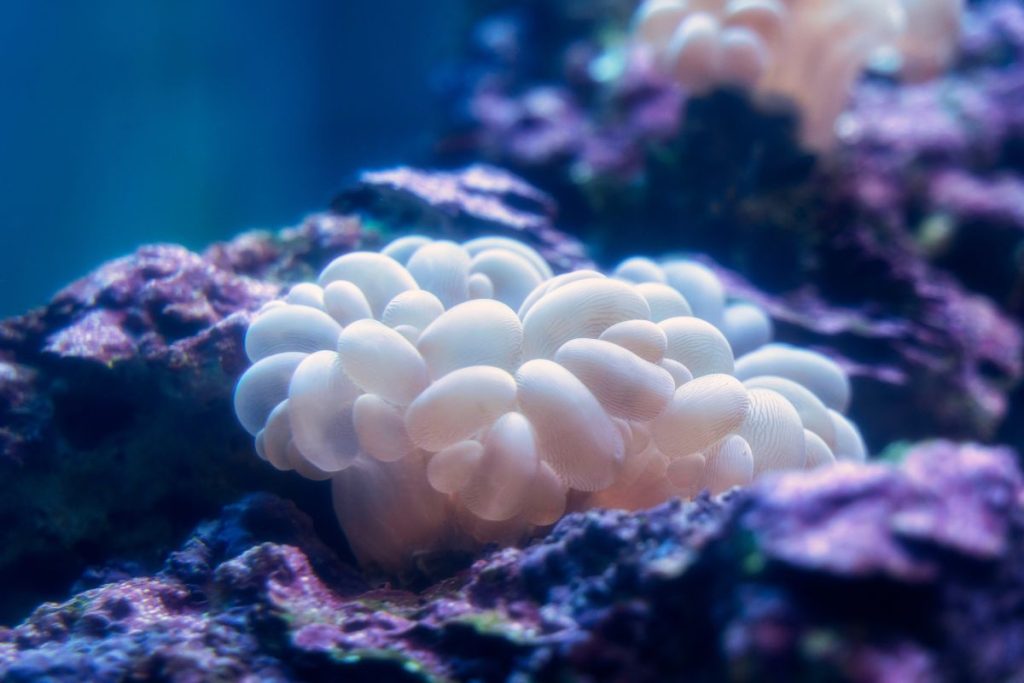
Bubble coral is known for soft, bubble-like, translucent structures that aid in capturing prey through expanding and contracting. While many other corals are known for their hard, stony structures, bubble coral is an example of the diversity that can also occur among coral species.
- Average Size: Up to 30 cm (1 foot) across.
- Eats: Plankton, dissolved organic matter, and nutrients produced by symbiotic algae..
- Predators: Fish and invertebrates.
- Region: Indo-Pacific.
- Classification: Genus Plerogyra
Fan Coral
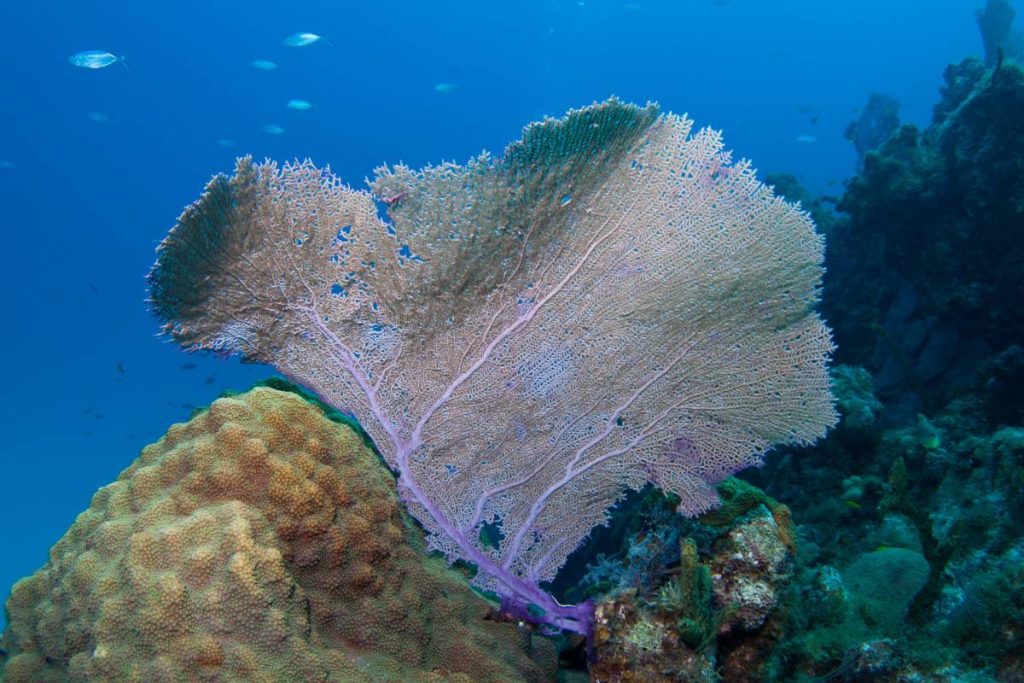
These corals are known for their intricate, lacy, fan-shaped structures.
- Average Size: Typically 30-100 cm (12-39 inches) in height and width, but can grow larger.
- Eats: Plankton and organic particles.
- Predators: Starfish, snails, and fish that feed on coral polyps.
- Region: Tropical and subtropical oceans worldwide.
- Classification: Gorgonia (genus)
Staghorn Coral
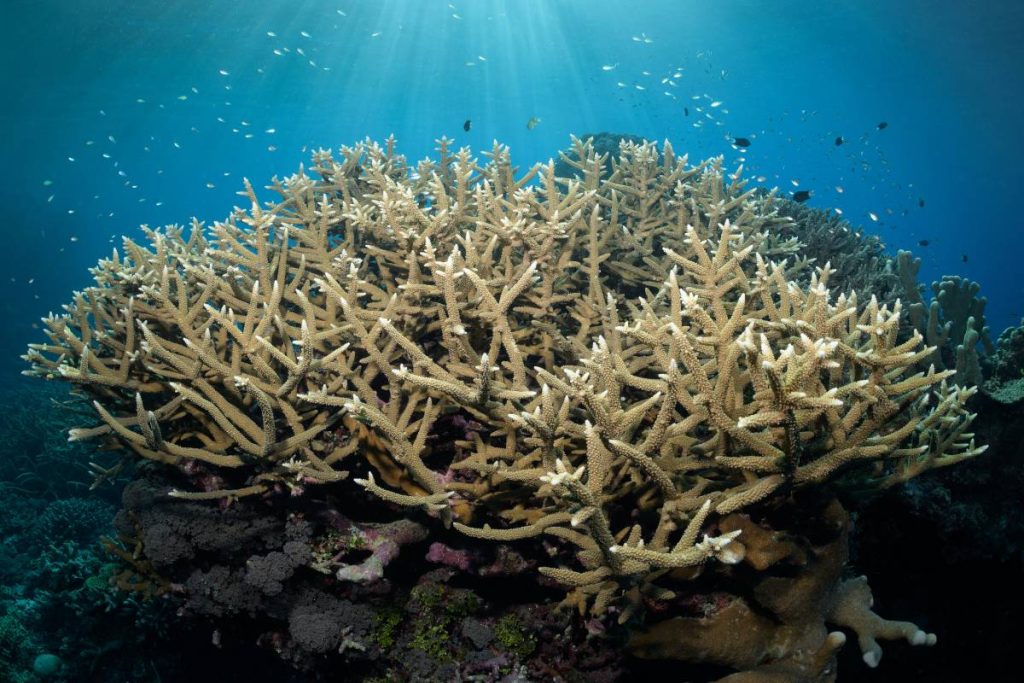
As its name suggests, this coral has branching structures similar to the antlers of a male deer. Staghorn coral is fast-growing, creating intricate underwater “forests” that are vital habitats for many coral reef species.
- Average Size: Up to 2 meters (6.6 feet) long.
- Eats: Plankton, dissolved organic matter, and nutrients produced by symbiotic algae.
- Predators: Fish and invertebrates.
- Region: Indo-Pacific.
- Classification: Genus Acropora
Sponges
Sponges are simple, porous animals that filter feed by pumping water through their bodies to extract nutrients. These creatures provide habitat for many marine organisms and help cycle nutrients through the coral reef ecosystem.
Azure Vase Sponge
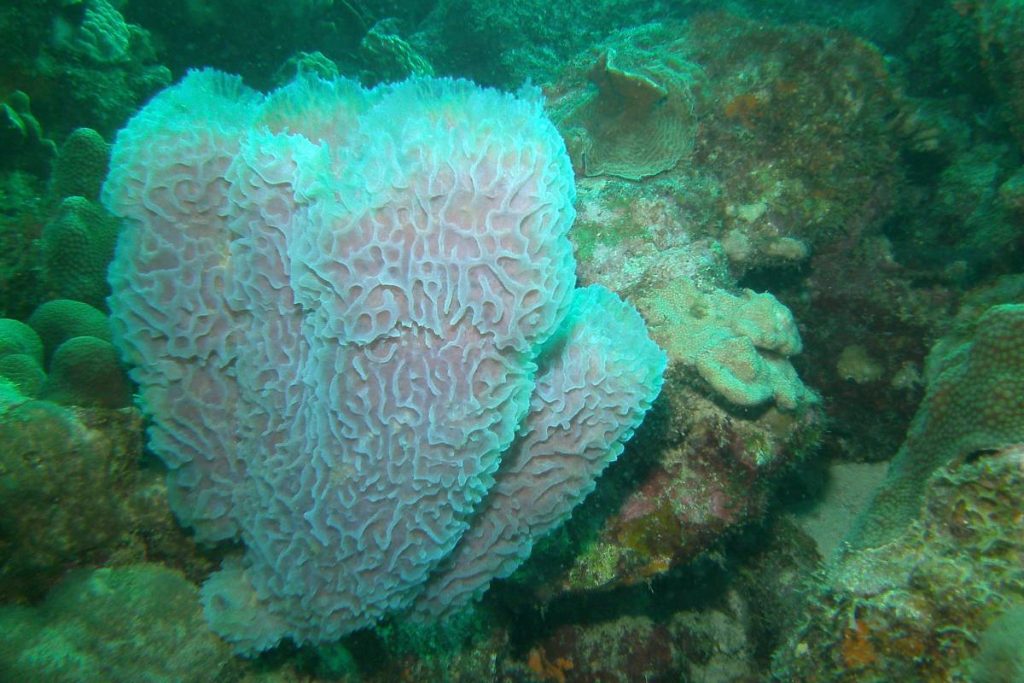
Azure vase sponges have a vase-like shape with a narrow base and a wide opening at the top. Typically bright blue in color, these sponges can change their shape and structure in response to environmental conditions. This adaptability helps them optimize water flow through their bodies for efficient feeding and respiration.
- Average Size: 10-30 cm (4-12 inches) tall.
- Eats: Filters plankton, detritus, and organic particles from water.
- Predators: Sea slugs, sea stars.
- Region: Caribbean Sea, Western Atlantic.
- Classification: Genus Callyspongia (e.g., Callyspongia plicifera)
Barrel Sponge
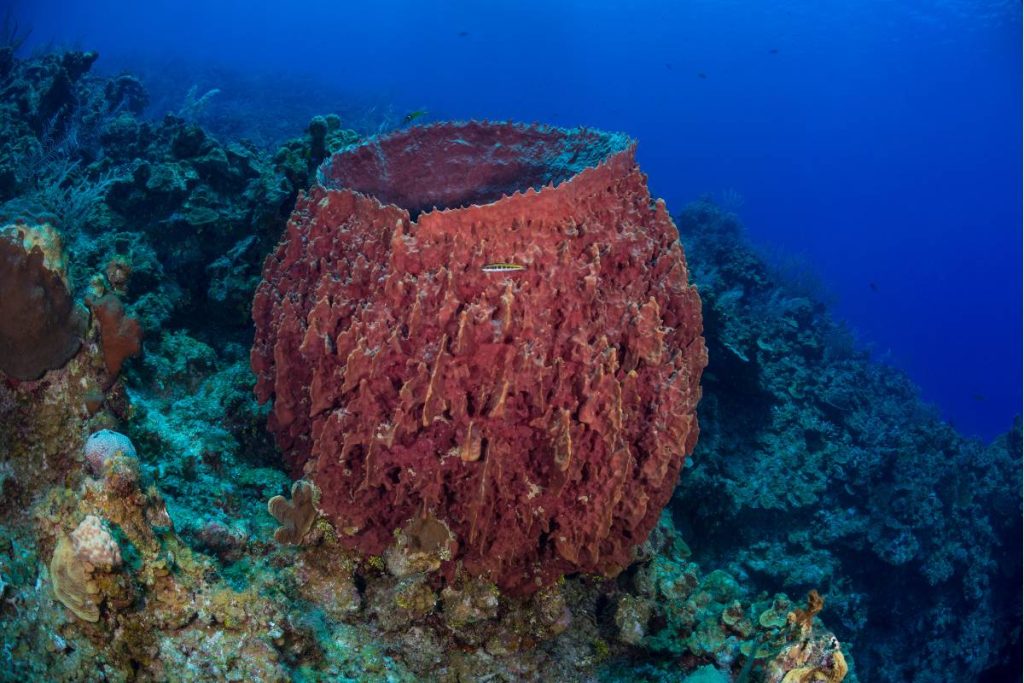
Barrel sponges have cylindrical bodies with large openings at both ends. These sponges can live for over 2,000 years, making them one of the longest-living marine organisms. They play a significant role in filtering large volumes of seawater, which helps maintain the clarity and health of coral reef ecosystems.
- Average Size: Can grow to over 2 meters (6.6 feet) tall.
- Eats: Filters plankton, detritus, and organic particles from water.
- Predators: Sea stars, certain fish species.
- Region: Found in tropical and subtropical oceans.
- Classification: Class Demospongiae
Encrusting Sponge
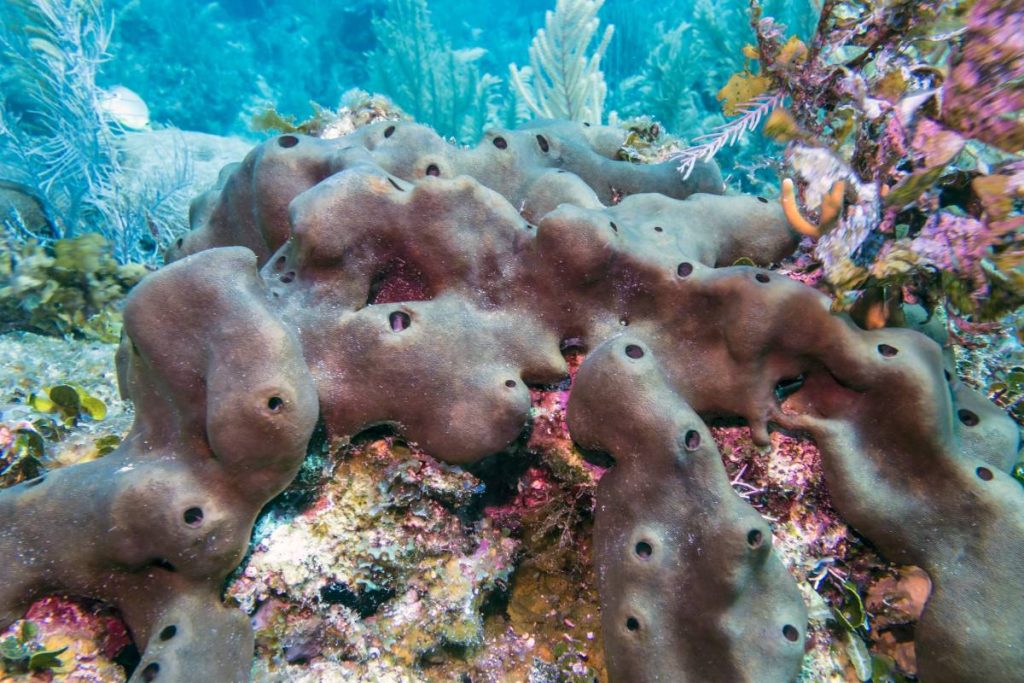
Encrusting sponges form thin, crust-like layers over hard surfaces underwater. These sponges help stabilize the surfaces they inhabit. Also known for their regenerative abilities, these sponges can regrow lost or damaged parts of their bodies, which helps them survive in active marine environments.
- Average Size: Forms thin encrusting layers.
- Eats: Filters plankton, detritus, and organic particles from water.
- Predators: Various marine invertebrates.
- Region: Found in shallow waters worldwide.
- Classification: Order Haplosclerida
Anemones and Jellyfish
Anemones and jellyfish belong to the phylum Cnidaria. Animals in this group are known for their stinging cells called nematocysts. (Corals are also part of the Cnidaria group.) These creatures are important predators in the marine ecosystem.
Anemone
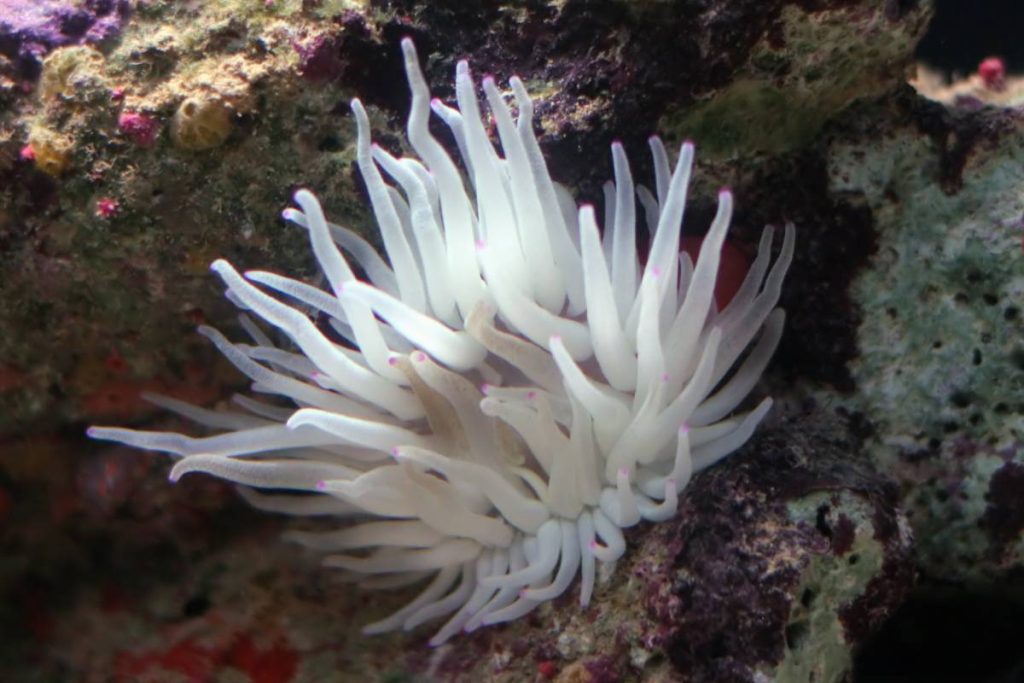
Anemones attach to hard surfaces using a single muscular foot. These coral reef animals capture prey with their tentacles, which are typically equipped with stinging cells and often resemble the petals of a flower.
- Average Size: 1-30 cm (0.4-12 inches).
- Eats: Fish and crustaceans.
- Predators: Sea slugs, fish.
- Region: Oceans worldwide, shallow waters.
- Classification: Class Anthozoa
Jellyfish
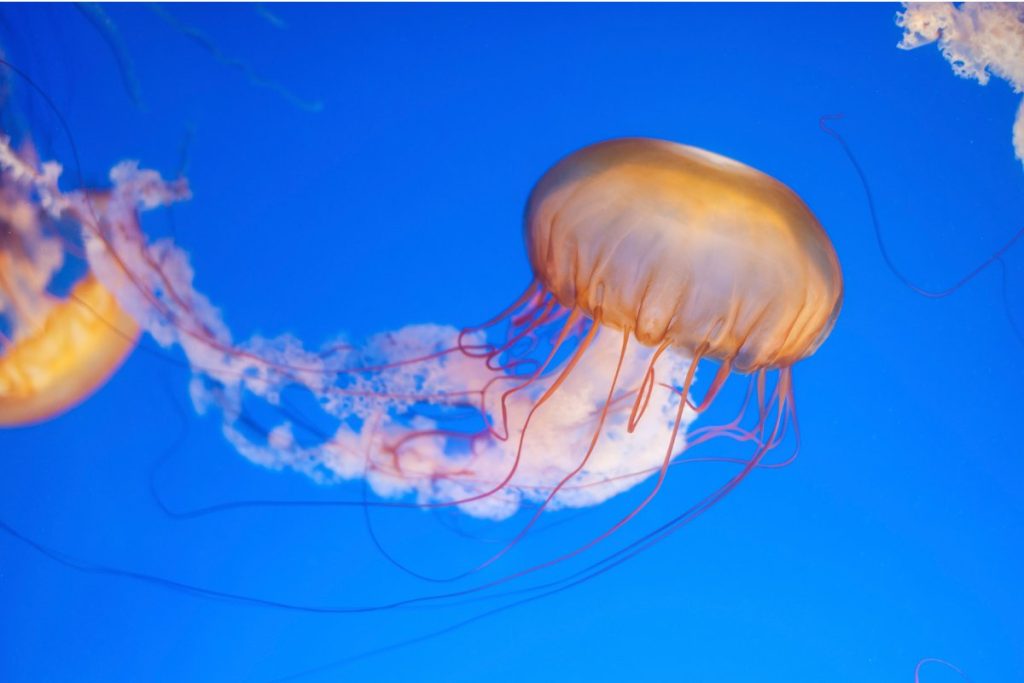
Jellyfish are free-swimming marine animals known for their gelatinous, umbrella-shaped bodies, trailing tentacles, and pulsating movements. They use their tentacles to immobilize and capture prey as well as to deliver a painful sting to potential threats.
- Average Size: Varies widely; from a few millimeters to 2 meters (6.6 feet).
- Eats: Plankton, small fish, and crustaceans.
- Predators: Sea turtles, fish.
- Region: Oceans worldwide, surface to deep sea.
- Classification: Phylum Cnidaria
Echinoderms
Echinoderms are a group of marine invertebrates that includes sea stars, sea urchins, and sea cucumbers. These animals often display radial symmetry, which means their body parts are arranged around a central point, like the spokes of a wheel. Echinoderms also share a unique water vascular system, which is a network of water-filled tubes that help the animals move and catch food.
Sand Dollar
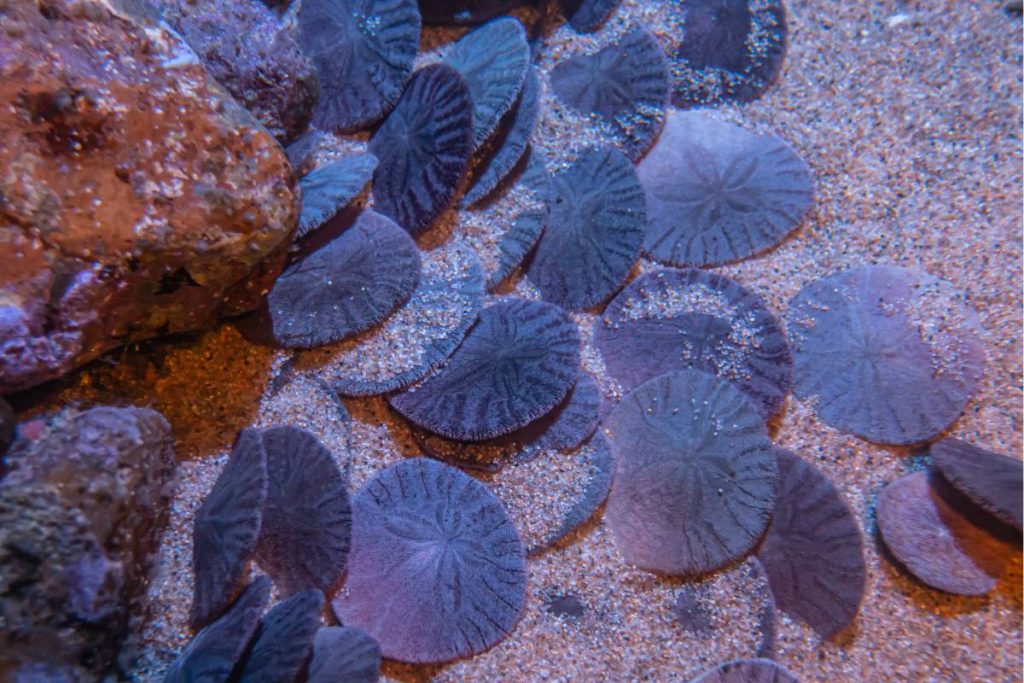
Sand dollars are flat, round, burrowing animals with a star-shaped pattern on their upper surface. They move slowly through the sand, eating plankton and other tiny bits of food from the ocean floor.
- Average Size: Typically 3-10 cm (1-4 inches) in diameter.
- Eats: Detritus, organic particles, and small organisms.
- Predators: Fish, sea birds, sea otters.
- Region: Found in sandy habitats of temperate and tropical oceans.
- Classification: Order Clypeasteroida
Sea Cucumber
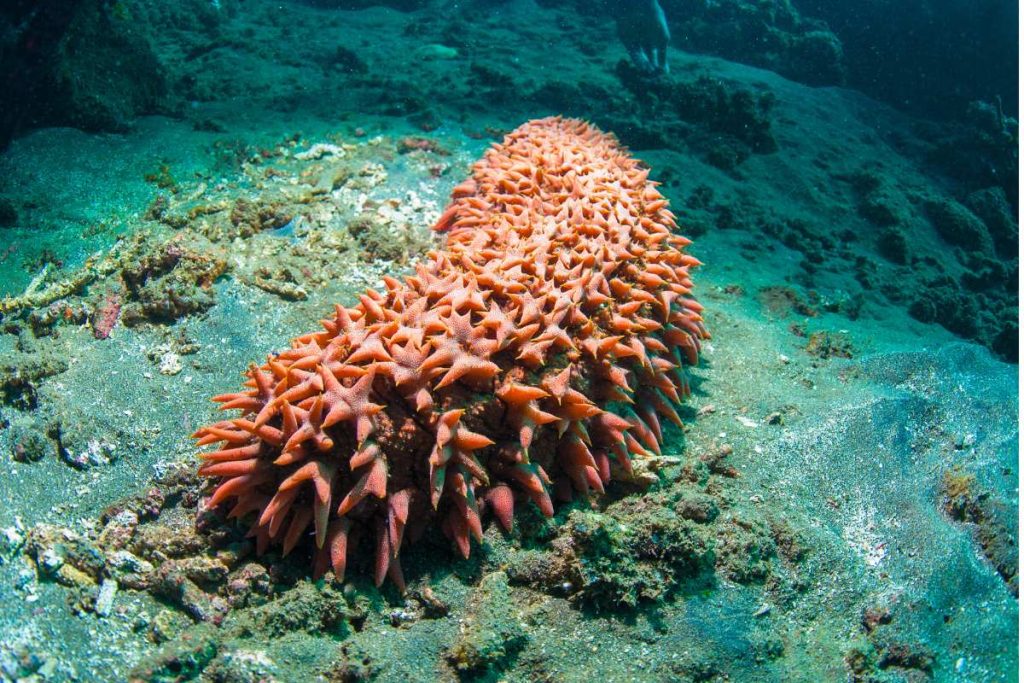
Sea cucumbers are elongated, soft-bodied echinoderms that inhabit the sea floor. They play a key role in the ecosystem by breaking down detritus and recycling nutrients.
- Average Size: 10-30 cm (4-12 inches), some species can be larger.
- Eats: Detritus, plankton.
- Predators: Fish, crabs, sea stars.
- Region: Worldwide, in various marine environments.
- Classification: Holothuroidea (class)
Sea Star
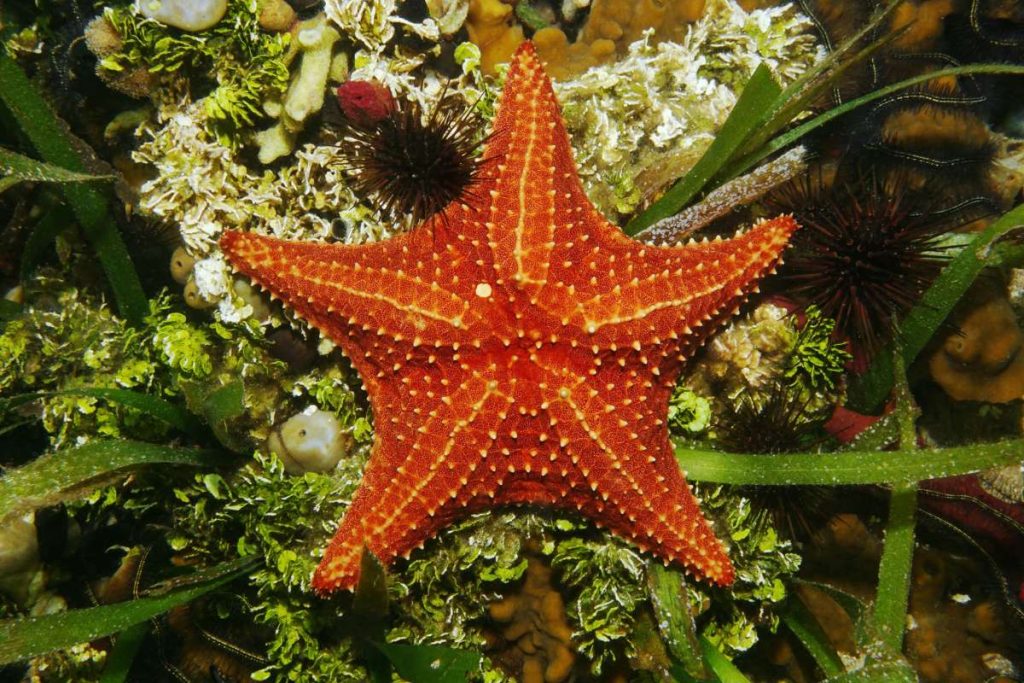
Also known as starfish, sea stars have a star-shaped body with five or more limbs (often called arms) branching out from a central point. Notable for their ability to regrow lost limbs, sea stars are also important predators in the coral reef ecosystem.
- Average Size: Varies; typically 10-30 cm (4-12 inches) in diameter.
- Eats: Mollusks, crustaceans, and other invertebrates.
- Predators: Fish, sea otters, birds.
- Region: Found in oceans worldwide, from intertidal zones to deep sea.
- Classification: Class Asteroidea
Sea Urchin

Sea urchins are round, spiky animals that crawl along the ocean floor using tiny tube-shaped feet. They help maintain the balance of coral reef ecosystems by eating algae that can overgrow and harm the reef.
- Average Size: Varies; typically 3-10 cm (1-4 inches) in diameter.
- Eats: Algae and organic debris.
- Predators: Sea otters, fish, birds.
- Region: Found in oceans worldwide, especially in rocky areas.
- Classification: Class Echinoidea
Mollusks
Mollusks are a diverse group of invertebrates that include species such as octopuses, snails, and clams. These animals have soft bodies, often (but not always) protected by a hard shell. Mollusks play various ecological roles, from filter-feeding to being active predators.
Flamingo Tongue Snail

Flamingo tongue snails are small gastropod mollusks with vibrant, leopard-like patterns on their mantle tissue, which often covers their hidden shell. They feed on soft corals and use their bright coloration as a warning to potential predators.
- Average Size: Typically 2.5 cm (1 inch).
- Eats: Soft corals.
- Predators: Sea stars, predatory snails.
- Region: Caribbean Sea, Western Atlantic.
- Classification: Family Cypraeidae
Giant Clam
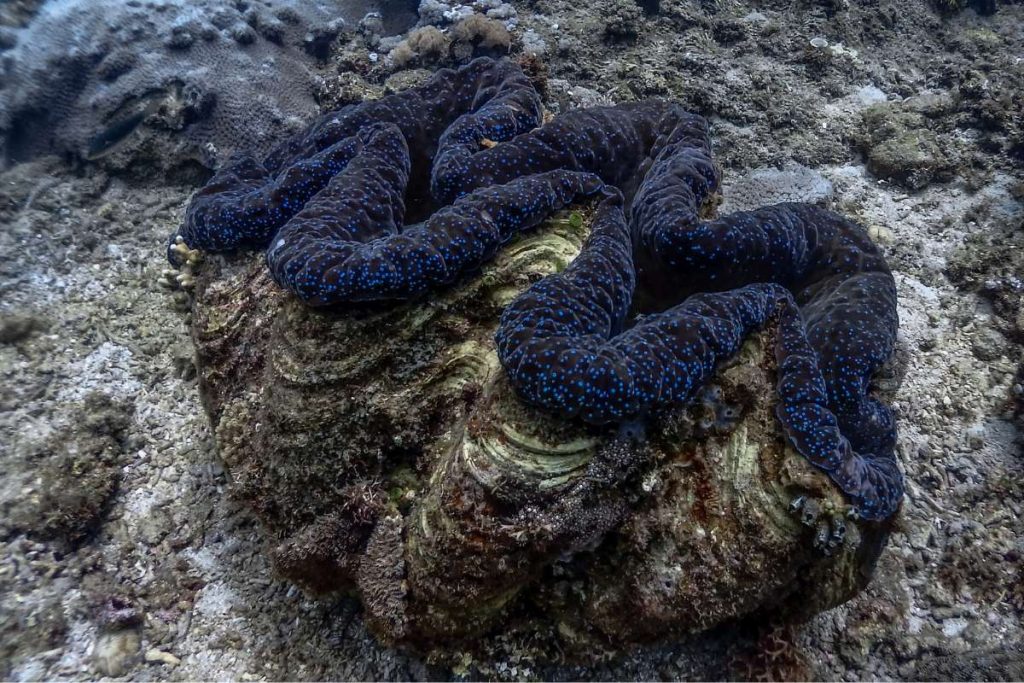
Giant clams are the largest living bivalve mollusks, capable of reaching over four feet in length. These clams live in coral reefs and have symbiotic algae in their tissues, which provide them with nutrients through photosynthesis.
- Average Size: Up to 1.2 meters (4 feet).
- Eats: Plankton and nutrients produced by symbiotic algae.
- Predators: Snails, starfish, humans.
- Region: Indian and Pacific Oceans.
- Classification: Family Tridacnidae
Octopus
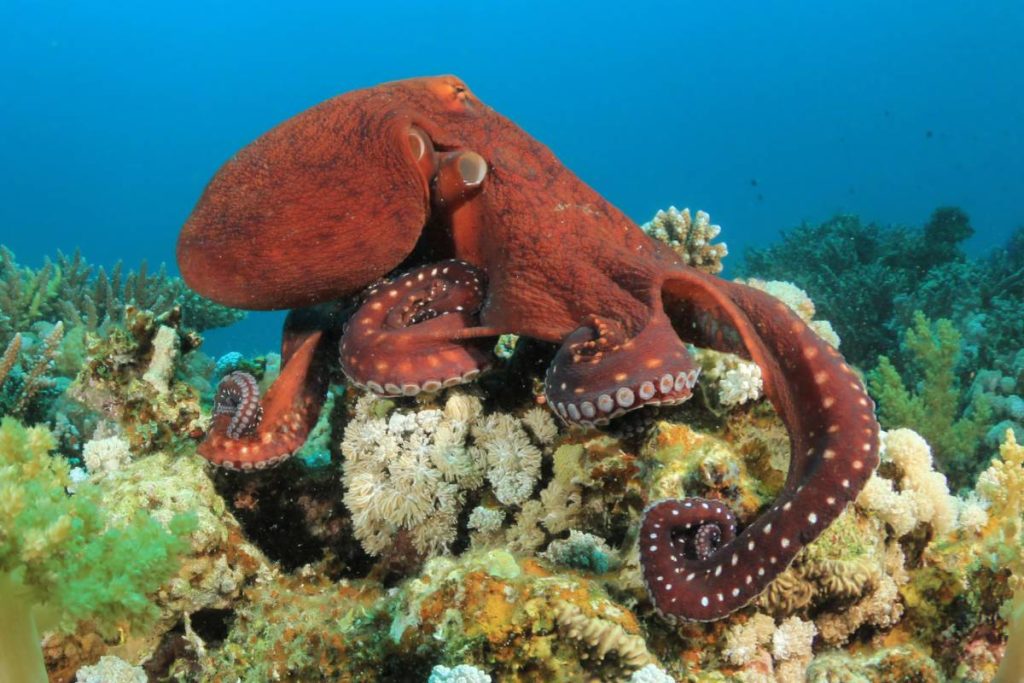
Octopuses are known for their flexible bodies, eight arms lined with suction cups, and ability to change color and texture for camouflage. While many mollusks are relatively simple creatures, cephalopod mollusks like octopus, cuttlefish, and squid are notable among animals in this category for their advanced intelligence and complex behaviors.
- Average Size: Varies widely; from a few centimeters to several meters.
- Eats: Crustaceans, mollusks, and fish.
- Predators: Sharks, large fish, seals.
- Region: Global in temperate and tropical waters.
- Classification: Order Octopoda
Sea Slug (Nudibranch)
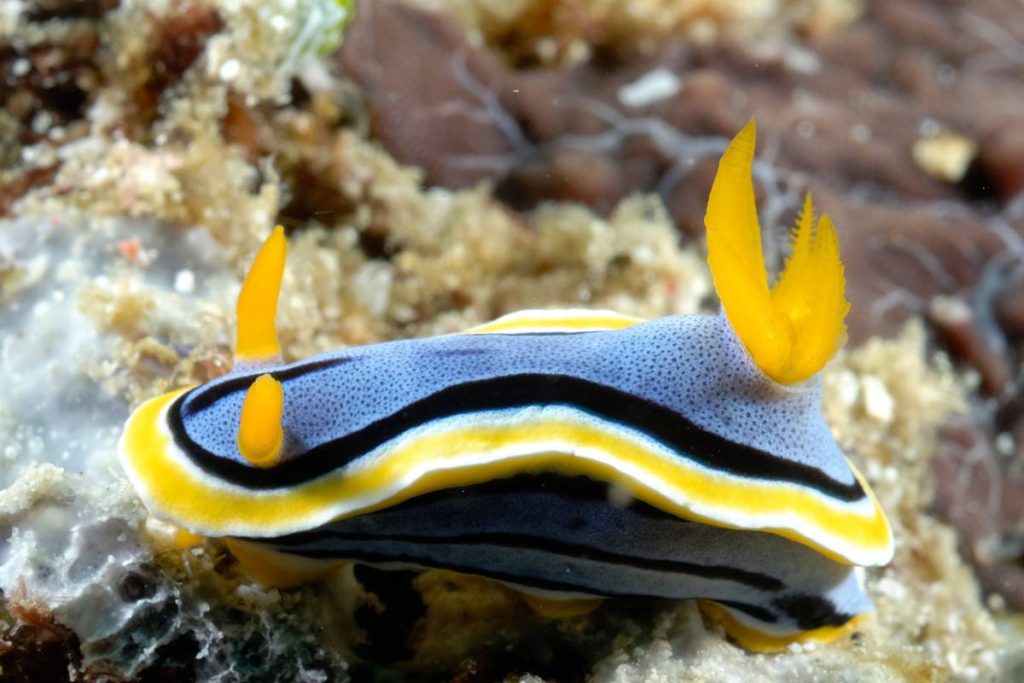
Nudibranchs are colorful sea slugs known for their extraordinary color patterns and intricate body forms. They are shell-less and often found on or near their prey, which includes sponges and other invertebrates.
- Average Size: 1-30 cm (0.4-12 inches).
- Eats: Sponges, anemones, other small marine organisms.
- Predators: Few due to chemical defenses.
- Region: Worldwide in various marine environments.
- Classification: Nudibranchia (order)
Crustaceans
Crustaceans are a class of invertebrates that includes crabs, lobsters, shrimps, and barnacles. They typically have a hard exoskeleton and jointed limbs. Crustaceans are important for their roles in the coral reef food web, both as predators and prey.
Cleaner Shrimp

Cleaner shrimp are small, brightly colored shrimp known for their cleaning symbiosis with fish. They remove parasites and dead tissue from the fish, benefiting both parties.
- Average Size: 2-5 cm (0.8-2 inches).
- Eats: Parasites, dead tissue, small invertebrates.
- Predators: Larger fish, crabs.
- Region: Tropical and subtropical seas worldwide.
- Classification: Lysmata amboinensis
Decorator Crab

Decorator crabs camouflage themselves by attaching materials such as algae, sponges, and debris to their exoskeleton. This camouflage helps them blend into their surroundings and avoid predators.
- Average Size: Varies; typically 2-5 cm (0.8-2 inches).
- Eats: Algae, small invertebrates.
- Predators: Fish, octopus, other crustaceans.
- Region: Found in tropical and temperate oceans.
- Classification: Family Majidae (e.g., Libinia emarginata)
Hermit Crab
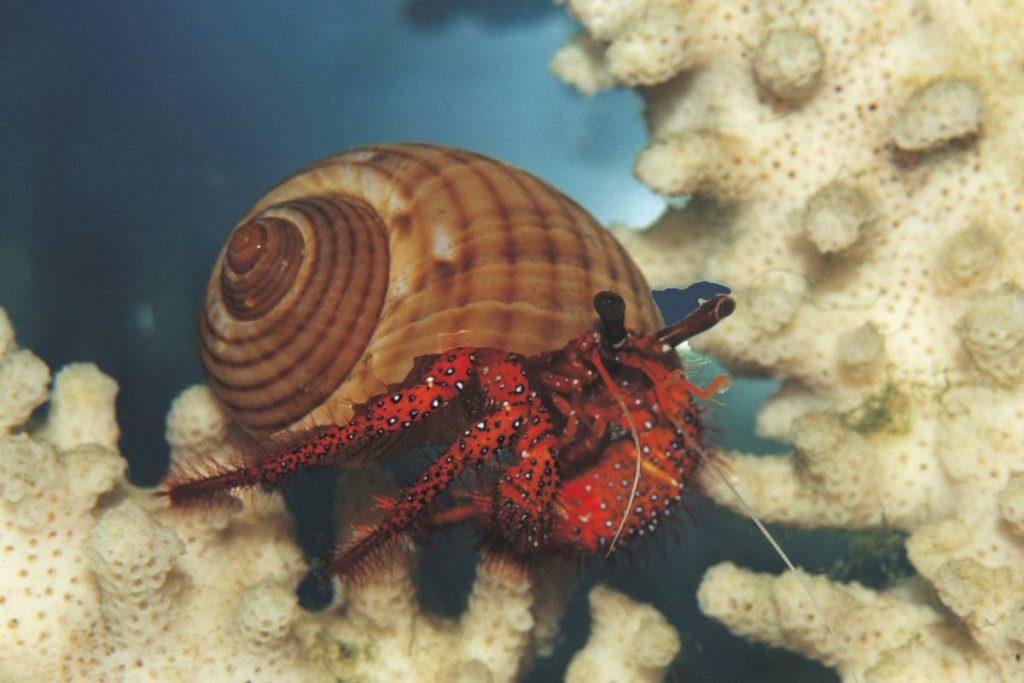
Hermit crabs have soft abdomens and use empty shells for protection. They are known for their scavenging behavior and ability to switch shells as they grow.
- Average Size: Varies; typically 1-5 cm (0.4-2 inches).
- Eats: Algae, detritus, small animals.
- Predators: Fish, birds, larger crabs.
- Region: Found worldwide in marine and freshwater habitats.
- Classification: Family Paguroidea (e.g., Pagurus bernhardus)
Peacock Mantis Shrimp

Mantis shrimp are colorful crustaceans with powerful claws, which are used for hunting prey. Known for its especially vibrant colors, the peacock mantis shrimp also has incredible eyesight.
- Average Size: Typically 10-20 cm (4-8 inches).
- Eats: Fish, crabs, mollusks.
- Predators: Few natural predators, very aggressive.
- Region: Found in tropical and subtropical waters.
- Classification: Genus Odontodactylus (e.g., Odontodactylus scyllarus)
Vertebrates
Coral Reef Fish
Small Reef Fish
This group includes small, colorful fish that contribute to the health and diversity of the coral reef ecosystem through their various roles as grazers, symbionts, and prey for larger species.
Clownfish
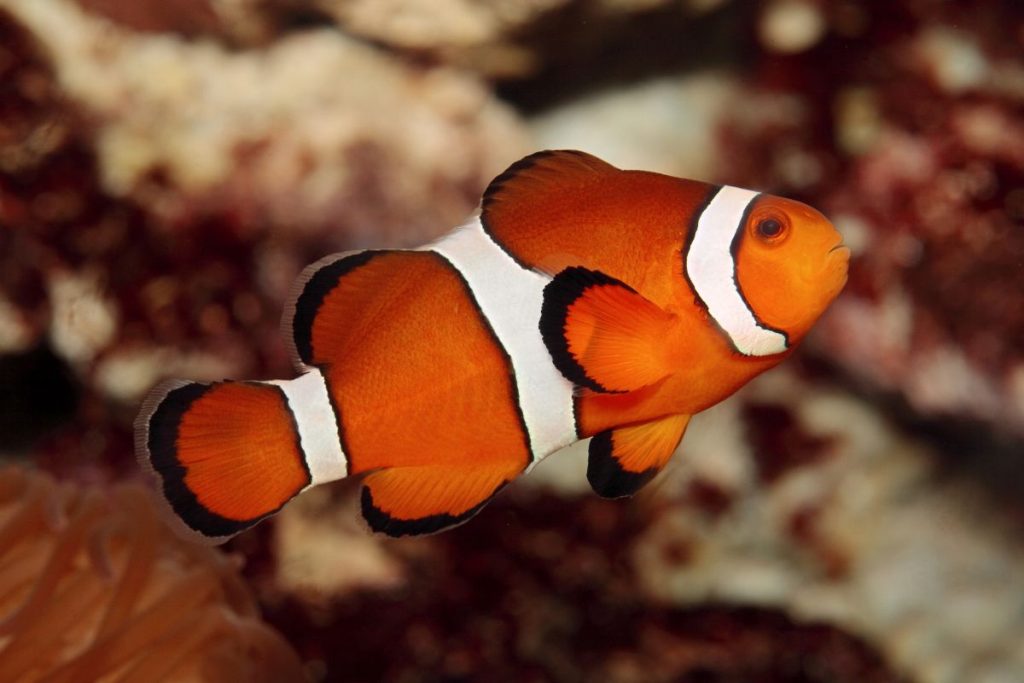
Clownfish are small, brightly colored coral reef fish known for their distinctive stripes. These fish are also notable for their symbiotic relationships with sea anemones: swimming among the anemone’s tentacles, the fish are protected from predators, while the anemone benefits from food scraps left by the clownfish.
- Average Size: 10-15 cm (4-6 inches).
- Eats: Algae, plankton, small invertebrates.
- Predators: Larger fish, sea anemones.
- Region: Coral reefs, Indo-Pacific.
- Classification: Genus Amphiprion
Damselfish
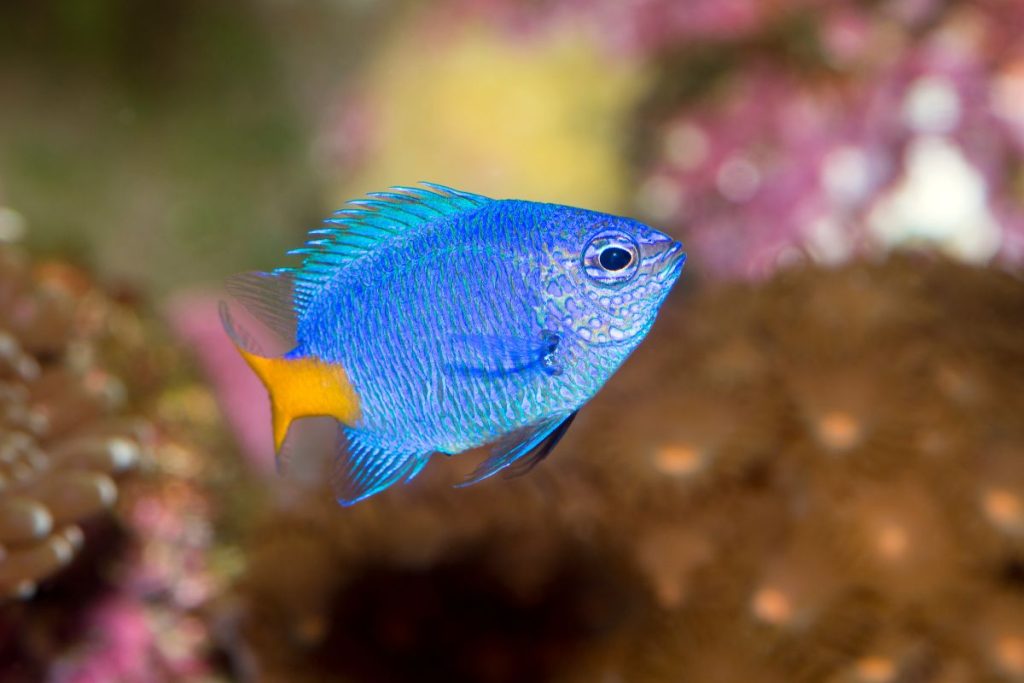
Damselfish are small, brightly colored coral reef fish known for their territorial behavior. They play important roles in coral reef ecosystems by grazing on algae, which helps control the algae population.
- Average Size: 7-15 cm (3-6 inches).
- Eats: Algae, small crustaceans.
- Predators: Larger fish, sea birds.
- Region: Coral reefs, tropical seas.
- Classification: Family Pomacentridae
Firefish
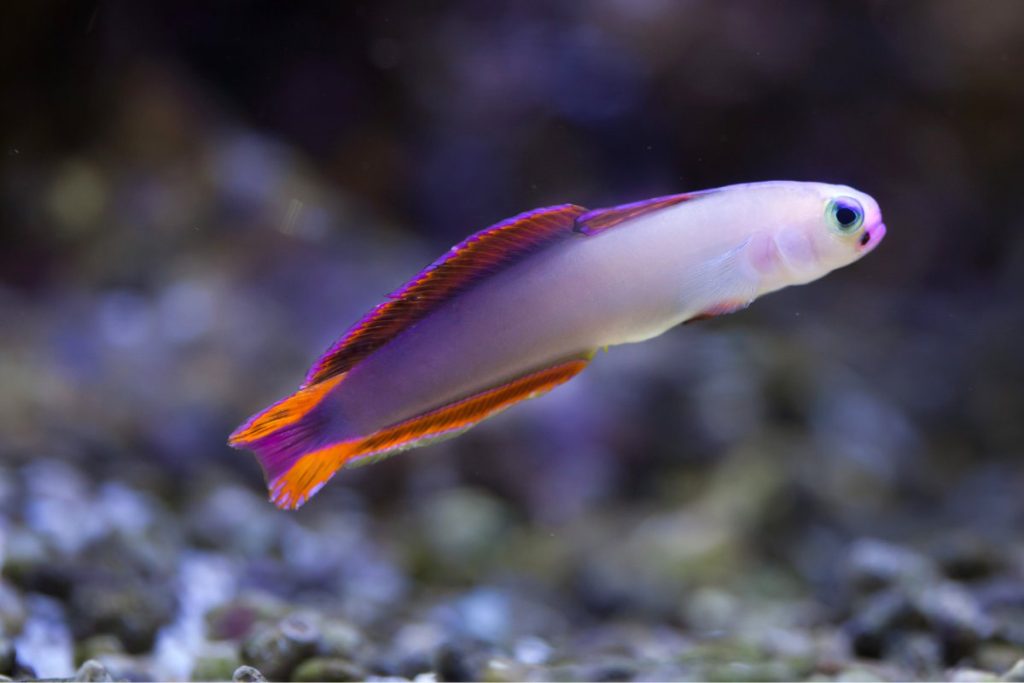
Firefish, also known as dartfish, are small, brightly colored coral reef fish that live in pairs or small groups. They have a unique dorsal fin that can be raised and lowered, and are known for their quick, darting movements.
- Average Size: 6-9 cm (2-3.5 inches).
- Eats: Plankton, small invertebrates.
- Predators: Larger fish.
- Region: Indo-Pacific.
- Classification: Nemateleotris magnifica
Seahorses
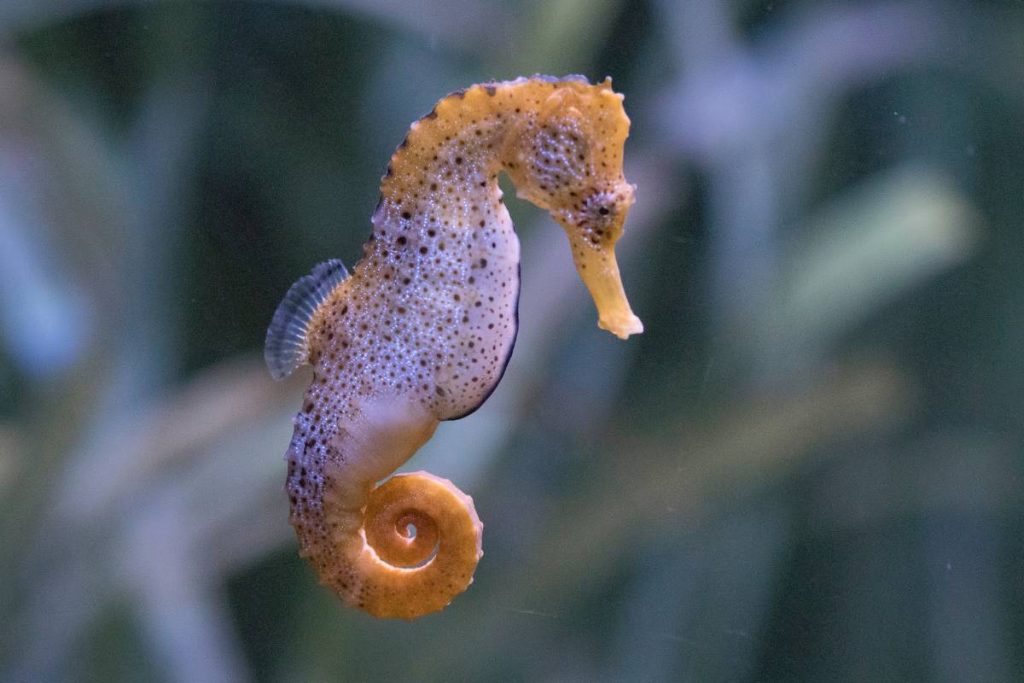
Seahorses are unique fish with horse-like heads and prehensile tails that they use to grasp onto coral and seagrass. They are slow swimmers and rely on camouflage and their unique body shape for protection in coral reef habitats.
- Average Size: 10-30 cm (4-12 inches).
- Eats: Small crustaceans.
- Predators: Fish, sea birds.
- Region: Coastal waters worldwide.
- Classification: Genus Hippocampus
Angelfishes, Butterflyfishes, and Tangs
These are medium to large-sized fish known for their vibrant colors and elaborate patterns. This group includes both herbivores and predators.
Angelfish
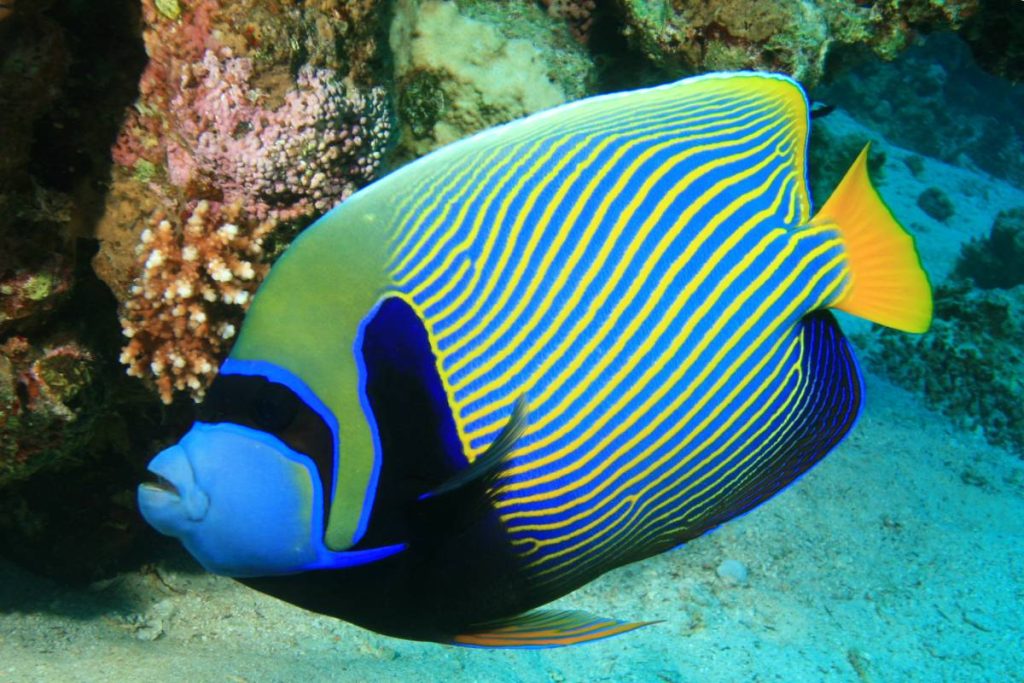
Angelfish are medium to large-sized coral reef fish known for their vibrant colors and distinctive patterns. They play important roles in coral reef ecosystems as both herbivores, feeding on algae, and predators of smaller invertebrates.
- Average Size: 10-30 cm (4-12 inches).
- Eats: Algae, small invertebrates.
- Predators: Larger fish, sea birds.
- Region: Coral reefs, tropical seas.
- Classification: Family Pomacanthidae
Butterflyfish
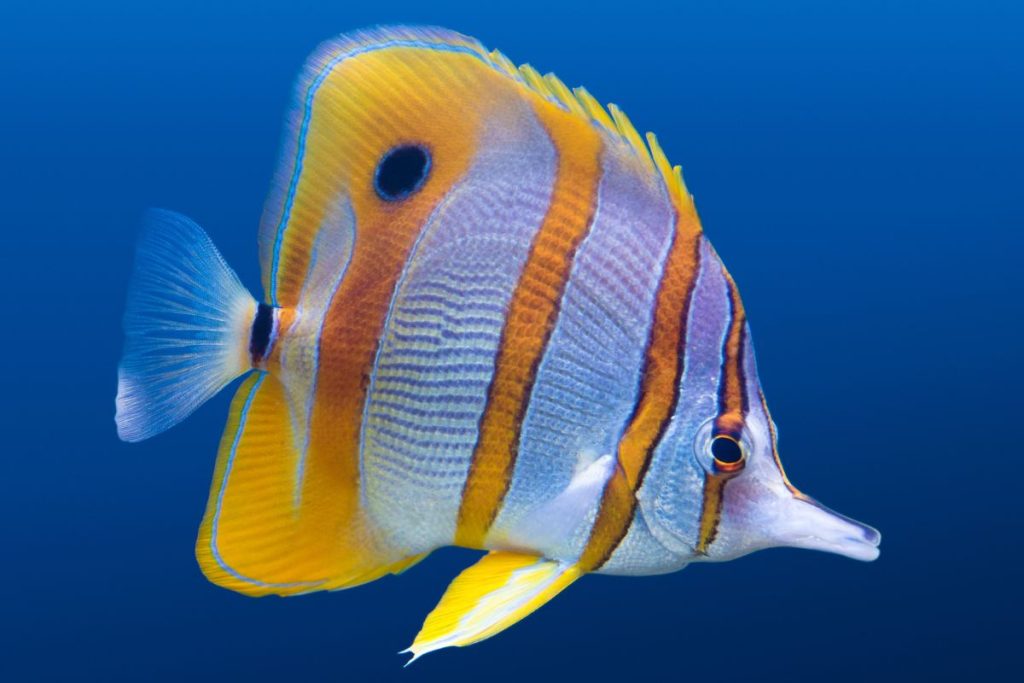
Butterflyfish are colorful coral reef fish characterized by their flat, disk-shaped bodies and prominent, elongated fins. They feed primarily on coral polyps and small invertebrates, contributing to reef health by controlling populations of these organisms.
- Average Size: 10-20 cm (4-8 inches).
- Eats: Coral polyps, small invertebrates.
- Predators: Larger fish, sea birds.
- Region: Coral reefs, tropical seas.
- Classification: Family Chaetodontidae
Tangs (Surgeonfish)
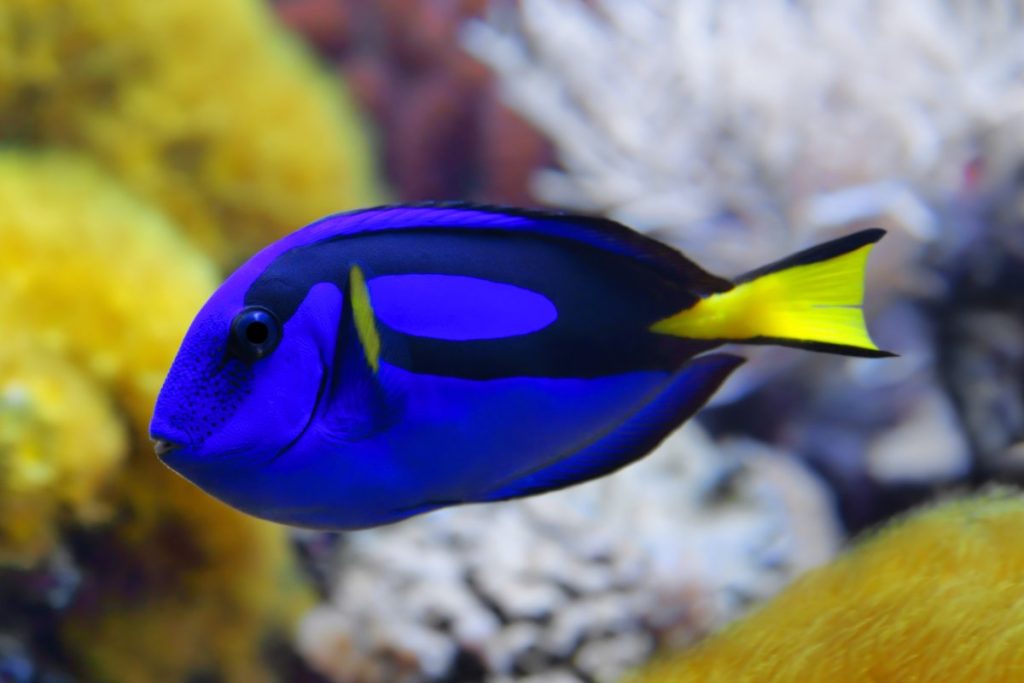
Tangs, also known as surgeonfish, are recognizable by their oval-shaped bodies and sharp, scalpel-like spines near their tails. These fish graze on algae and play crucial roles in maintaining coral reef ecosystems by keeping algae growth in check.
- Average Size: 15-40 cm (6-16 inches).
- Eats: Algae, plankton.
- Predators: Larger fish, sea birds.
- Region: Coral reefs, tropical seas.
- Classification: Family Acanthuridae
Larger Predatory Fish
These fish are crucial for maintaining balance within coral reef communities by controlling prey populations.
Clown Triggerfish
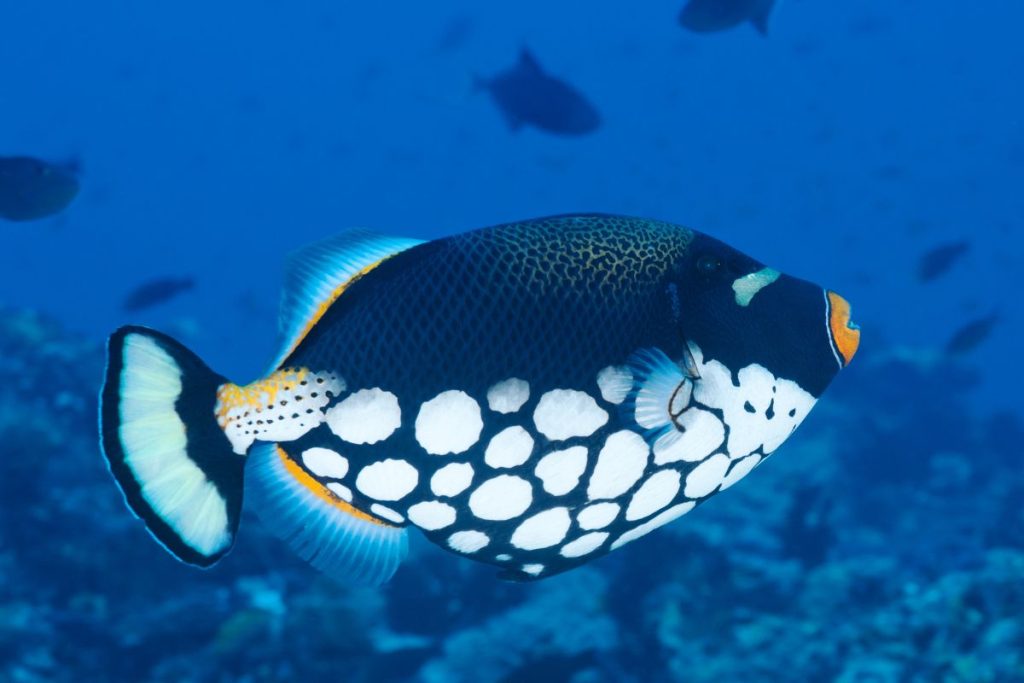
Clown triggerfish are brightly colored fish with bold patterns, including spots that resemble a clown’s makeup. They are aggressive and territorial, using strong jaws to feed on hard-shelled prey.
- Average Size: 50 cm (20 inches).
- Eats: Sea urchins, crustaceans, mollusks.
- Predators: Larger fish, sharks.
- Region: Indo-Pacific.
- Classification: Balistoides conspicillum
Groupers
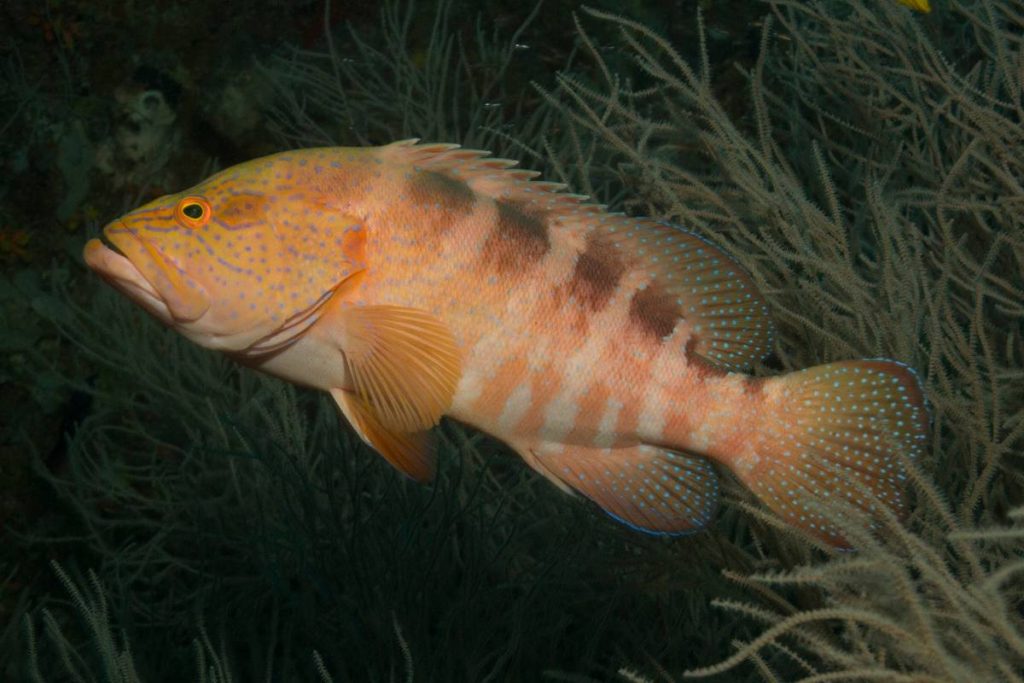
Groupers are large, predatory reef fish known for their robust bodies and powerful jaws. They play a significant role in coral reef ecosystems as apex predators, feeding on smaller fish and crustaceans, and helping to regulate prey populations.
- Average Size: Varies widely; typically 30-150 cm (1-5 feet).
- Eats: Fish, crustaceans.
- Predators: Sharks, larger fish.
- Region: Coral reefs, coastal areas.
- Classification: Family Serranidae
Moray Eel

Moray eels have elongated bodies and sharp teeth, making them effective ambush predators. They often hide in crevices within coral reefs, waiting to strike at passing prey.
- Average Size: 1.5-4 meters (5-13 feet).
- Eats: Fish, octopuses, crustaceans.
- Predators: Larger fish, sharks.
- Region: Tropical and subtropical seas worldwide.
- Classification: Muraenidae (family)
Reef Sharks
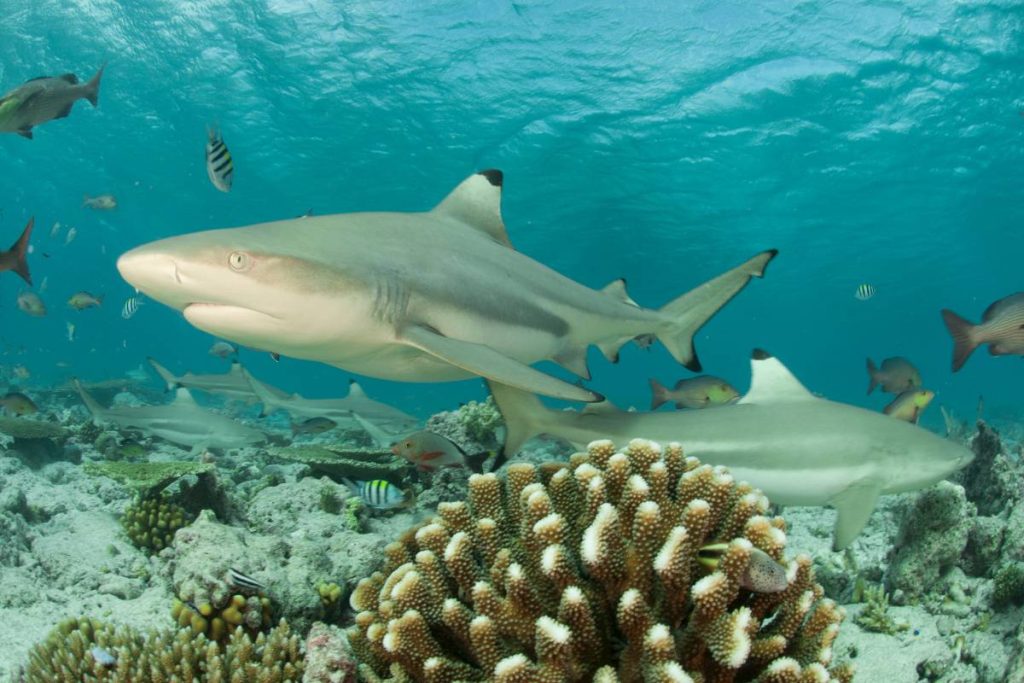
Reef sharks are apex predators in coral reef ecosystems, characterized by streamlined bodies, cartilaginous skeletons, and rows of sharp teeth. They play a crucial role in maintaining the balance of the reef ecosystem by controlling the populations of other marine organisms.
- Average Size: 1.5-2.5 meters (5-8 feet).
- Eats: Fish, cephalopods, crustaceans.
- Predators: Larger sharks, humans.
- Region/continent: Tropical and subtropical coral reefs, Indo-Pacific and Caribbean.
- Classification: Carcharhinus perezii (Caribbean Reef Shark) or Triaenodon obesus (Whitetip Reef Shark) depending on the specific reef shark species.
Specialized and Unique Fish Species
This category encompasses fish with specialized adaptations or unique behaviors. These fish often have specific habitat requirements and play niche roles within coral reef ecosystems.
Cowfish
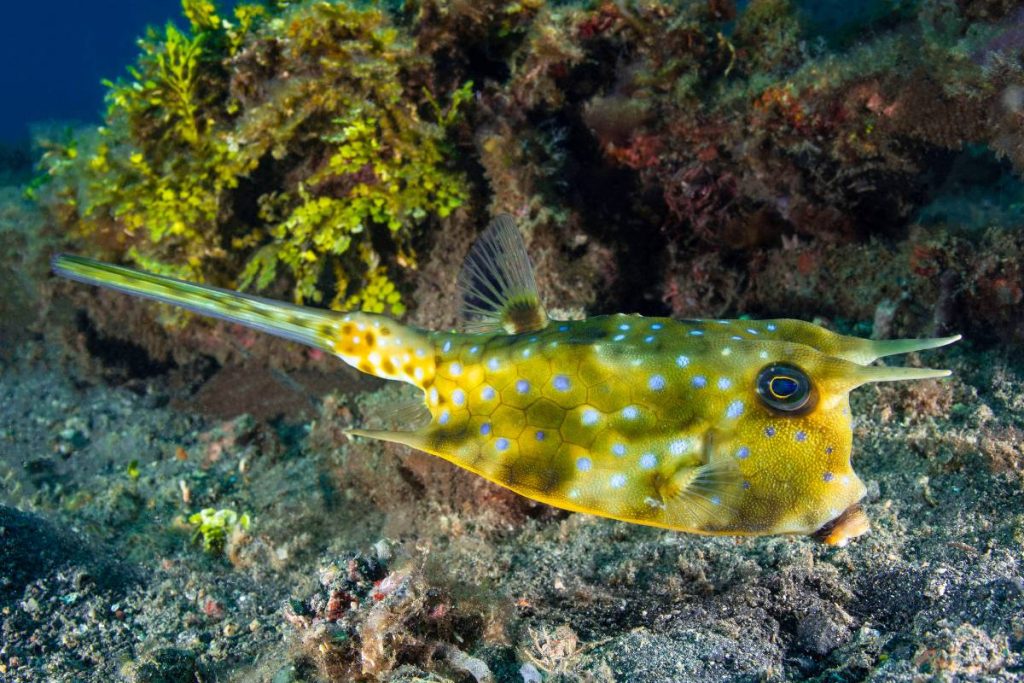
Cowfish are small, box-shaped coral reef fish with unique horns and a bony carapace that covers their body. They are known for their slow movements and ability to camouflage among coral and rocky substrates, feeding on small invertebrates and algae.
- Average Size: 20-40 cm (8-16 inches).
- Eats: Algae, small invertebrates.
- Predators: Larger fish, sea birds.
- Region: Tropical seas, coral reefs.
- Classification: Family Ostraciidae
Frogfish
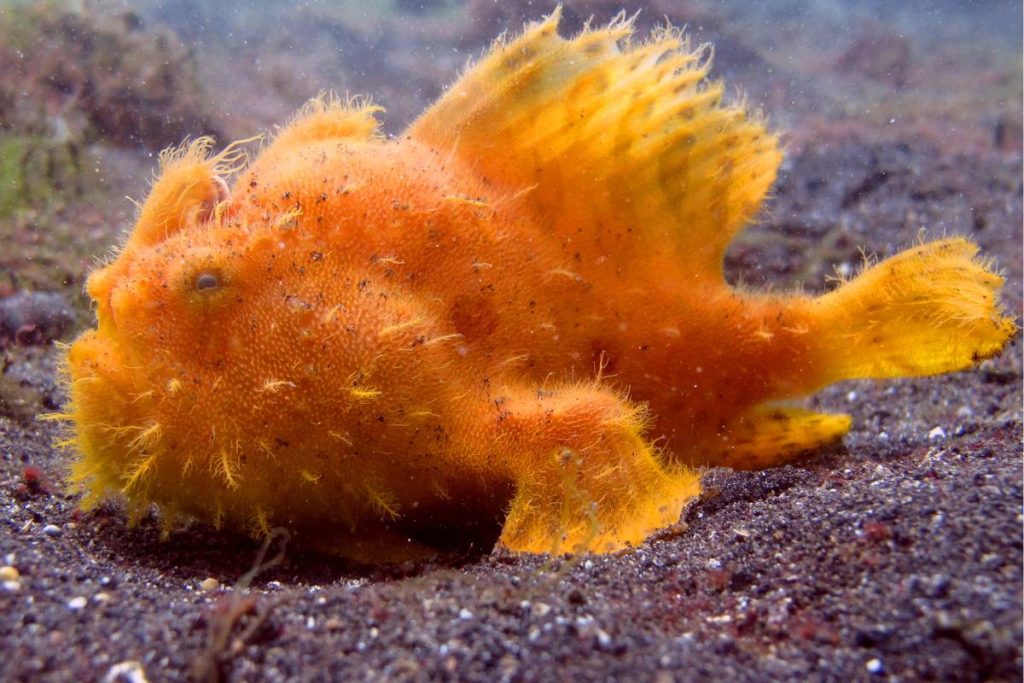
Frogfish have a stocky body and a wide, frog-like mouth. Found in a variety of colors and patterns, frogfish are known for their ability to ambush prey, often using a lure on their heads to attract unsuspecting fish.
- Average Size: 5-40 cm (2-16 inches).
- Eats: Fish, crustaceans.
- Predators: Larger fish, sea birds.
- Region: Tropical and temperate seas.
- Classification: Family Antennariidae
Lionfish
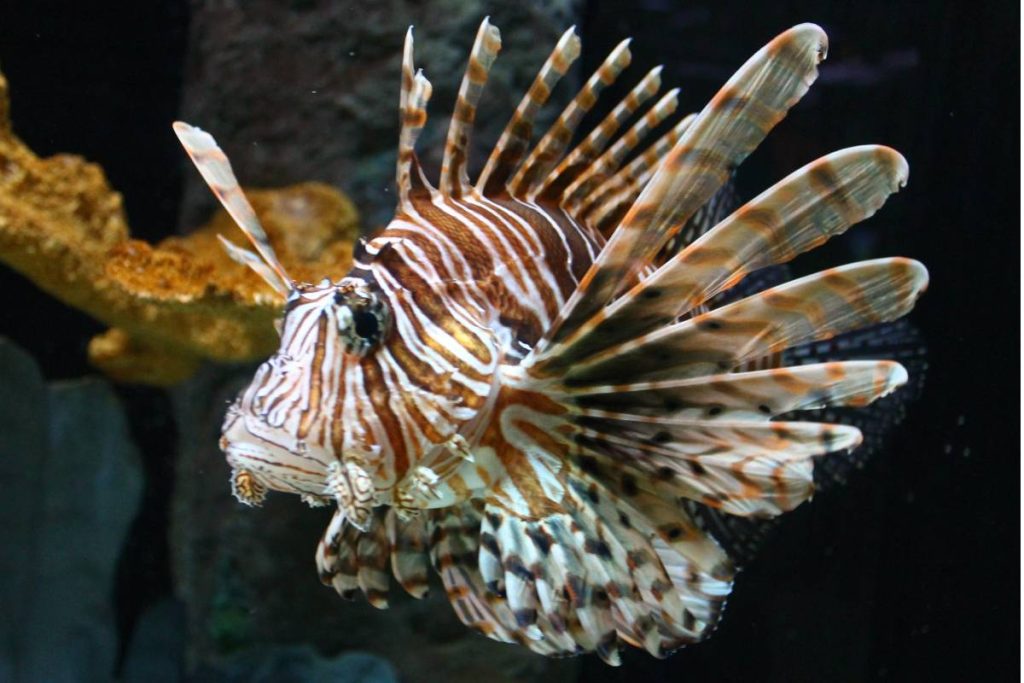
Lionfish are venomous fish known for their striking red, white, and brown stripes and long, spiny fins. These fish are are ambush predators, relying on their camouflage and quick reflexes to catch prey in coral reefs.
- Average Size: 30-38 cm (12-15 inches).
- Eats: Small fish, invertebrates.
- Predators: Few natural predators due to venomous spines, occasionally large predators like sharks.
- Region: Native to the Indo-Pacific, invasive in the Atlantic.
- Classification: Pterois volitans
Pufferfish
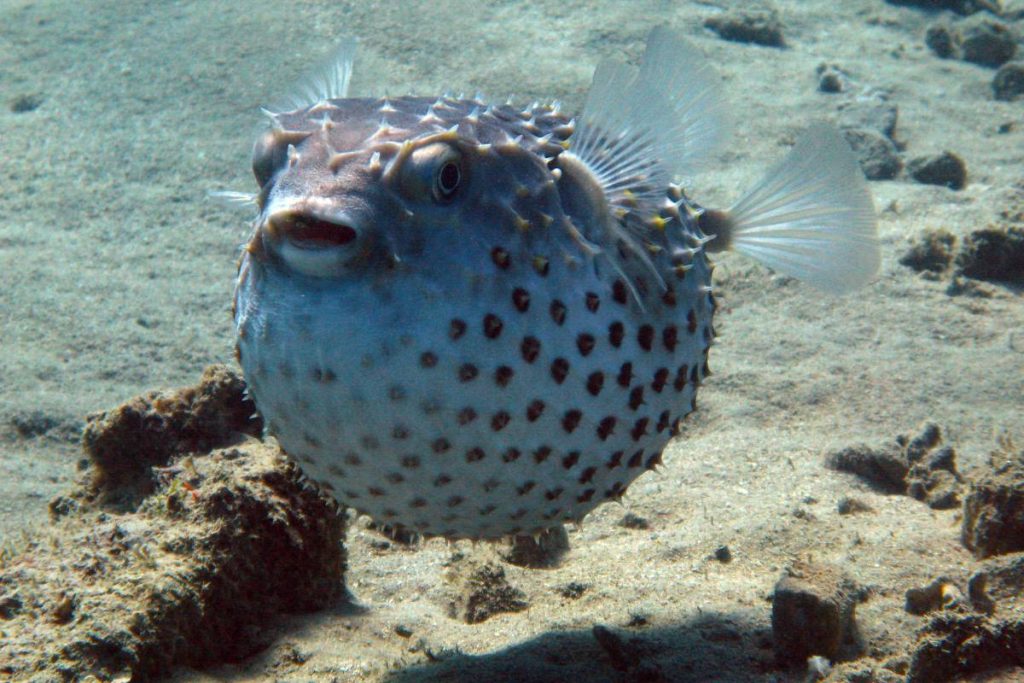
Pufferfish are known for their ability to inflate their bodies as a defense mechanism. They have spines that become visible when inflated and contain tetrodotoxin, a potent toxin.
- Average Size: 10-60 cm (4-24 inches).
- Eats: Algae, invertebrates.
- Predators: Few due to toxicity, but some sharks and large fish.
- Region: Tropical and subtropical waters worldwide.
- Classification: Tetraodontidae (family)
Reptiles, Birds, and Mammals
Coral reef ecosystems also provide important feeding and breeding grounds for other aquatic animals including reptiles, birds, and mammals, though these animals don’t typically live full-time in the reef.
Banded Sea Snake
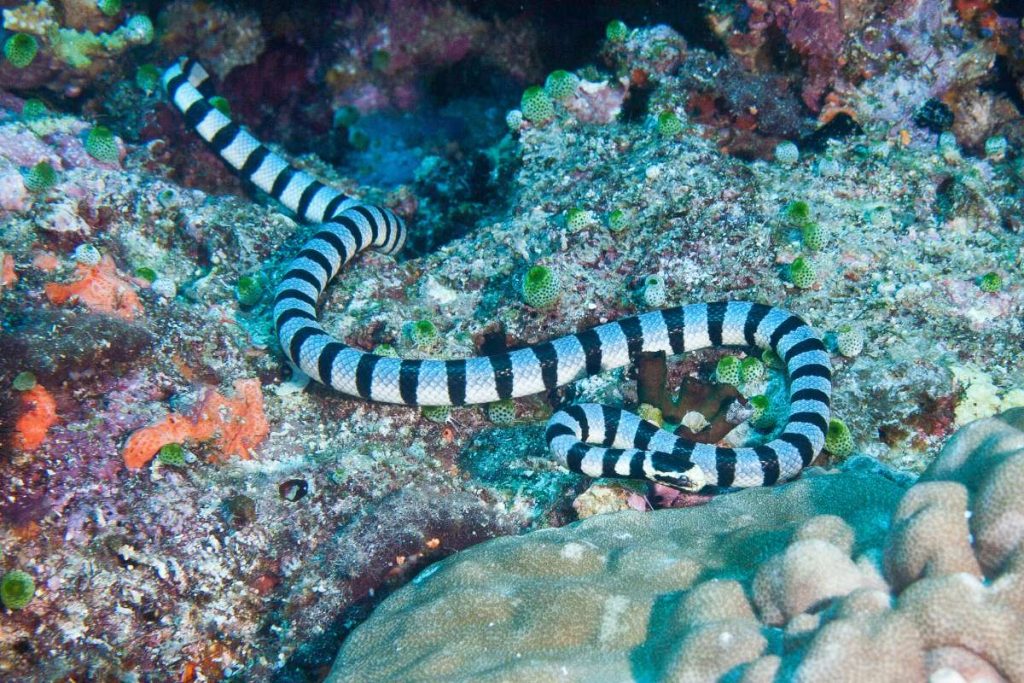
Banded sea snakes, also known as sea kraits, are venomous snakes with distinctive black and white bands along their bodies. These powerful swimmers are highly aquatic but come ashore to lay eggs.
- Average Size: 1-1.5 meters (3-5 feet).
- Eats: Fish, particularly eels.
- Predators: Large fish, sharks, birds of prey.
- Region: Indo-Pacific region.
- Classification: Laticauda colubrina
Dolphin
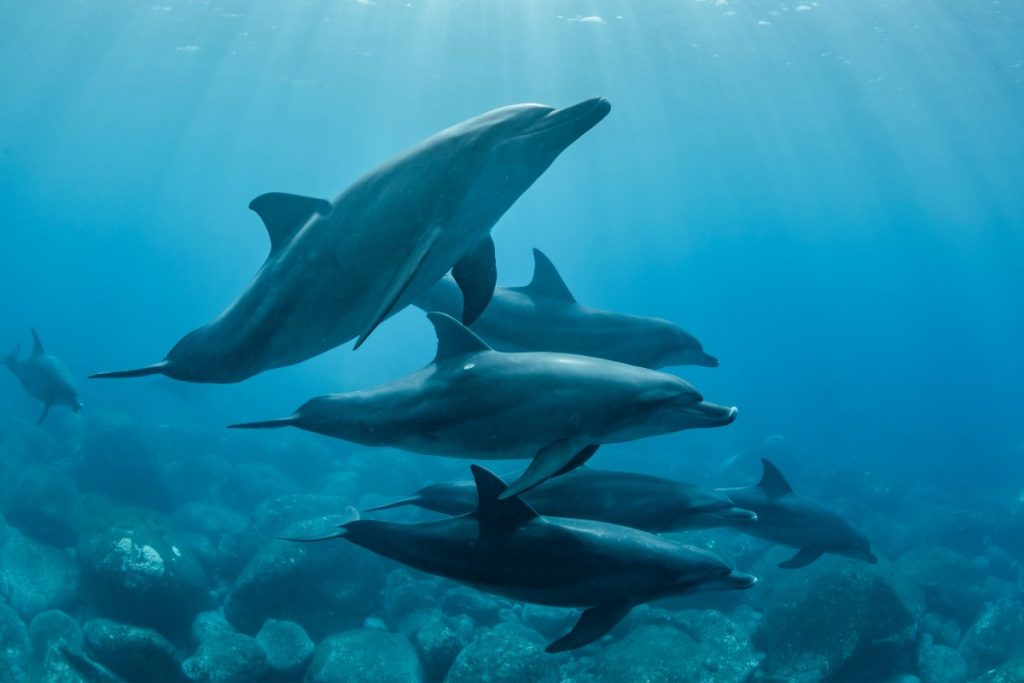
Dolphins are sleek, streamlined marine mammals known for their playful behavior and high intelligence. As apex predators, they help maintain the balance of coral reef life by preying on fish and squid.
- Average Size: Varies widely; typically 2-4 meters (6-13 feet).
- Eats: Fish, squid.
- Predators: Sharks, humans.
- Region: Oceans worldwide.
- Classification: Family Delphinidae
Dugong
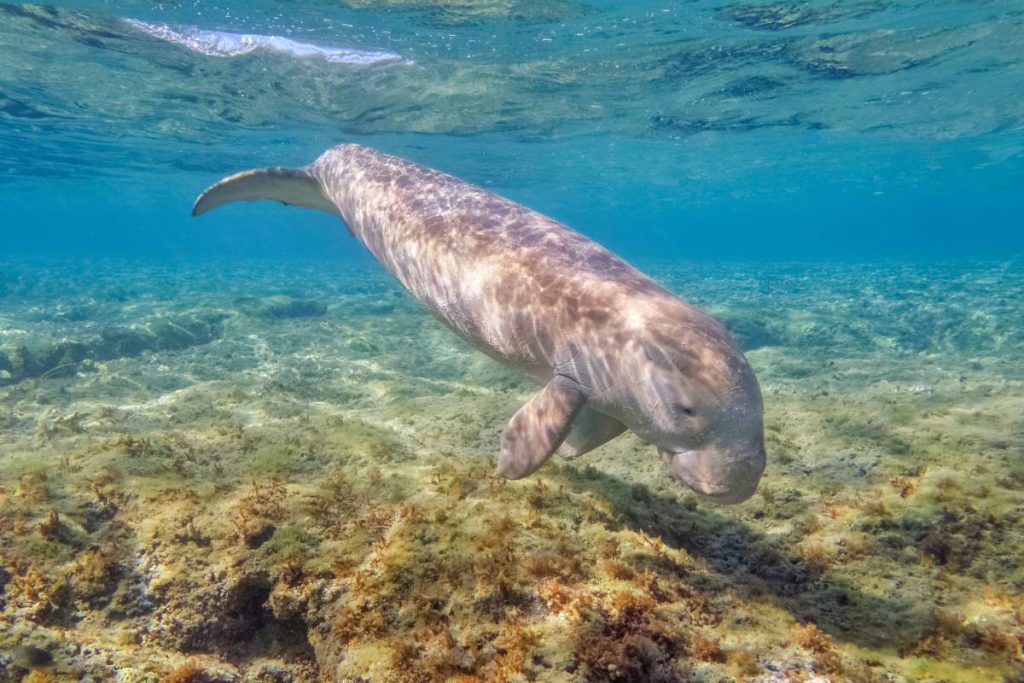
Dugongs are large, gentle, slow-moving marine mammals related to manatees. They have a distinct, whale-like tail and feed primarily on seagrass in shallow coastal waters.
- Average Size: 2.5-3 meters (8-10 feet).
- Eats: Seagrass.
- Predators: Sharks, crocodiles, orcas.
- Region: Warm coastal waters from East Africa to Australia.
- Classification: Dugong dugon
Hawksbill Sea Turtle
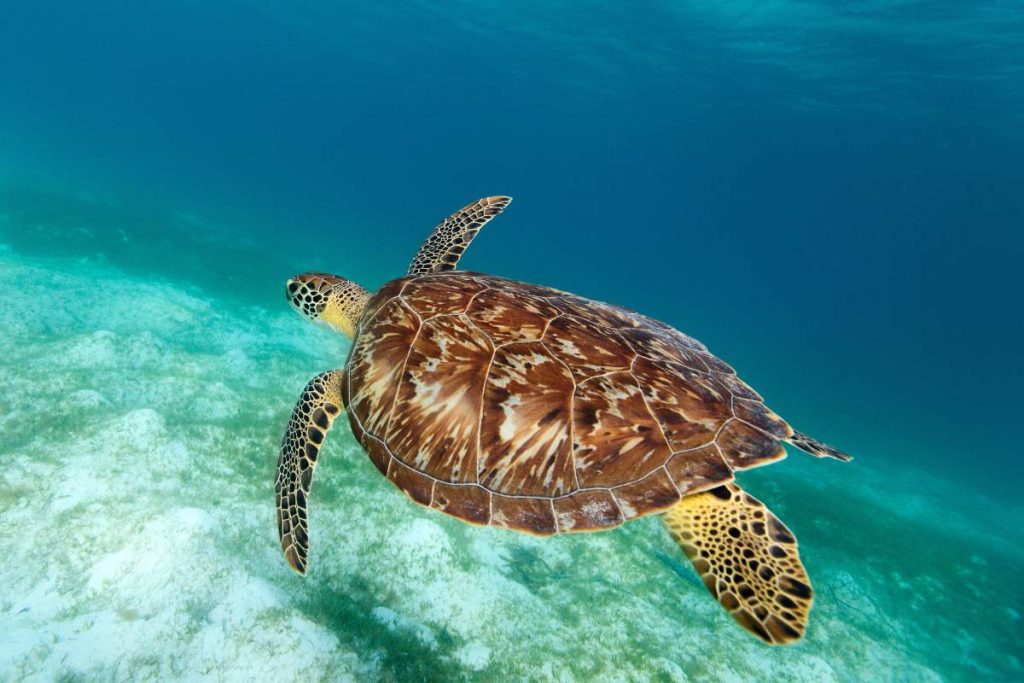
Hawksbill sea turtles feed on sponges, helping to control sponge populations and balance the reef ecosystem. Their movements also disperse nutrients and facilitate the growth of marine vegetation.
- Average Size: 60-90 cm (2-3 feet) in length.
- Eats: Sponges, algae.
- Predators: Sharks, humans.
- Region: Tropical and subtropical seas.
- Classification: Eretmochelys imbricata
Tern
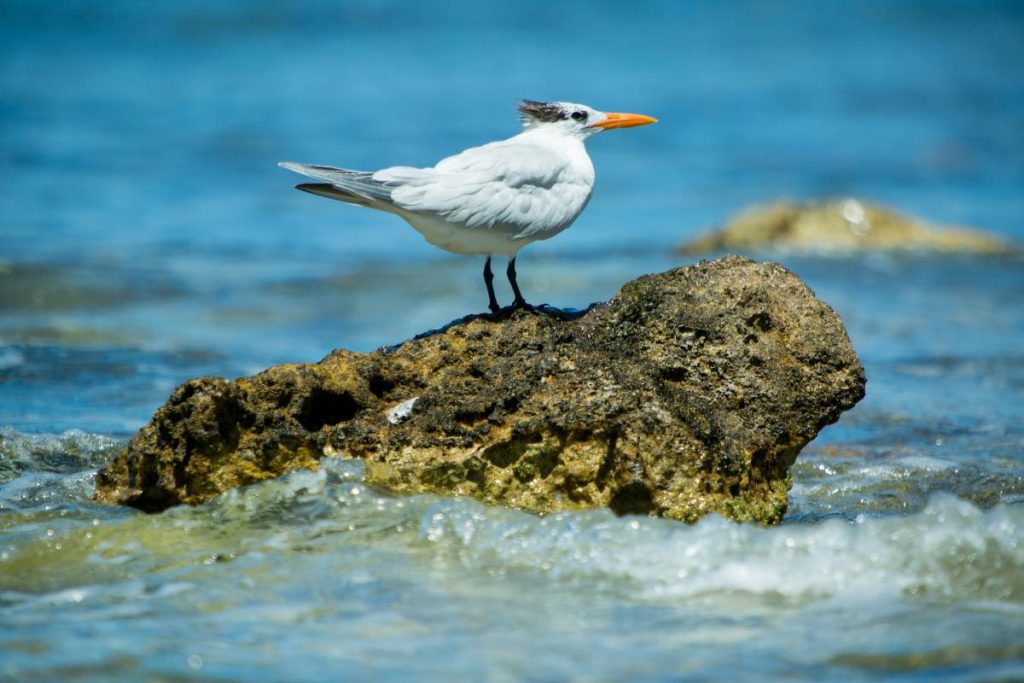
These birds rely on coral reef ecosystems for feeding opportunities, particularly by diving for small fish and squid. Terns’ nesting habits on nearby islands also contribute to nutrient cycling in coastal ecosystems.
- Average Size: 20-40 cm (8-16 inches).
- Eats: Fish, crustaceans.
- Predators: Larger birds, humans.
- Region: Coastal areas worldwide.
- Classification: Family Sternidae
About the Coral Reef
How Are Coral Reefs Formed?
Coral reefs are unique ecosystems within the ocean biome, formed through a slow and intricate process involving coral polyps, which are tiny animals that live in colonies. Coral polyps secrete calcium carbonate, which forms a hard skeleton upon which the reef is built over time. As new generations of polyps grow on top of the old skeleton, the reef structure expands. Coral reefs thrive in warm, shallow waters with plenty of sunlight, providing habitat for a diverse array of marine life.
Notable Coral Reefs Around the World
Great Barrier Reef, Australia: The largest coral reef system in the world, stretching over 2,300 kilometers along the coast of Queensland. It’s renowned for its biodiversity and vibrant coral formations.
Belize Barrier Reef, Belize: The second-largest coral reef system globally, featuring impressive coral formations, mangrove forests, and numerous marine species, including manatees and dolphins.
Red Sea Reefs: The Red Sea, located between northeastern Africa (Egypt, Sudan, and Eritrea) and the Arabian Peninsula, is home to diverse and well-preserved coral reefs. Reefs such as those in the Ras Mohammed National Park in Egypt are known for their vibrant coral formations and abundant marine life.
Tubbataha Reefs Natural Park, Philippines: A UNESCO World Heritage site in the Sulu Sea, famous for its pristine coral reefs and rich marine biodiversity, including sharks, rays, and reef fish.
Mozambique Channel Reefs: The Mozambique Channel, between Madagascar and the eastern coast of Africa (Mozambique), contains extensive coral reefs. Sites like the Quirimbas Archipelago in northern Mozambique are renowned for their pristine reefs and rich marine biodiversity.
Adaptations of Coral Reef Animals
Unique Challenges for Coral Reef Animals
Coral reef environments present several notable challenges that animals must overcome to survive. These challenges include competition for space and resources, predation, variable water conditions, and the need for effective reproduction.
For example, coral reefs are densely populated, leading to intense competition for living space and food. High biodiversity means a variety of predators are present, requiring effective defenses and avoidance strategies.
Additionally, coral reef water conditions can be highly variable. Changes in temperature, saltiness, and water clarity can impact the survival of reef organisms. Plus, strong waves and currents can physically damage delicate structures and displace animals.
Finally, coral reef animals face the challenge of reproduction: finding mates and ensuring the survival of offspring can be challenging in such a busy and dynamic environment.
To address these challenges, coral reef animals have developed a variety of successful adaptations, contributing to the high biodiversity and ecological richness of coral reefs. Here are some examples:
Coral Reef Animals’ Physical Adaptations
Camouflage and Mimicry
Many reef fish and invertebrates have evolved coloration and patterns that help them blend into their surroundings to avoid predators or ambush prey. For example, the sea slug (nudibranch) often has vibrant colors that can mimic the toxic sponges they feed on. The banded sea snake’s stripes help it blend into the reef, while octopuses and frogfish use coloration to mimic their surroundings.
Defensive Structures
Hard shells, spines, and toxic chemicals are common defenses among reef animals. For example, sea cucumbers can expel sticky threads to entangle predators, and some fish like the pufferfish and lionfish have powerful toxins. Additionally, the triggerfish can lock itself into crevices with a specialized spine, making it difficult for predators to extract them.
Mobility and Flexibility
Some reef animals, like octopuses, have developed exceptional flexibility and intelligence to navigate complex reef structures and avoid predators. Moray eels use their elongated bodies to hide among reef structures and ambush prey. Cleaner shrimp are agile and can dart in and out of crevices while cleaning other fish.
Specialized Feeding Adaptations
Reef animals have evolved various feeding strategies to take advantage of different food sources. For example, the giant clam filters plankton from the water, while the cleaner shrimp feed on parasites from other fish. The flamingo tongue snail grazes on soft corals, and the peacock mantis shrimp uses its powerful claws to break open the shells of crabs and snails.
Coral Reef Animals’ Behavioral and Reproductive Adaptations
Behavioral Adaptations
Many reef animals exhibit behaviors such as schooling for protection, as seen in damselfish and clownfish. Nocturnal feeding is also common among species like the firefish and certain species of sea cucumbers, allowing them to avoid daytime predators.
Reproductive Strategies
Many reef animals use broadcast spawning, releasing many eggs into the water simultaneously to increase the chances of fertilization. Others, like the decorator crab, may brood their young or use specialized structures to protect offspring. Cleaner shrimp often engage in elaborate mating dances to attract partners, ensuring successful reproduction.
Interspecies Adaptations Among Coral Reef Animals
Many reef animals engage in symbiotic relationships, which are interactions between two different species living in close physical proximity. For example, corals and giant clams engage in symbiotic relationships with algae (zooxanthellae). The algae provide the reef animals with nutrients produced through photosynthesis, while in return, the algae receive a protected environment and stable access to sunlight.
In another example, cleaner shrimp establish cleaning stations where they remove parasites and dead tissue from fish. This arrangement benefits the fish by keeping them healthy and provides the shrimp with a steady food source. Similarly, the banded sea snake can often be found swimming alongside schools of fish, providing protection for the snake from predators, while the snake helps keep the fish population in check by preying on smaller fish.
Frequently Asked Questions: Coral Reef Animals
How do corals eat?
Corals have tiny tentacles that they use to capture plankton (and, in some cases, small fish). They also have a symbiotic relationship with zooxanthellae algae, which live in their tissues and provide additional nutrients through photosynthesis.
Do corals move?
No, corals do not move. Corals are sessile animals, which means they stay fixed in one place and do not move around. They attach themselves to the sea floor and rely on their polyps to capture food particles from the water. Other examples of sessile reef animals include anemones and sponges.
What are some threats to coral reef animals?
Coral reef animals face numerous threats, including coral bleaching, pollution from land-based sources, destructive fishing practices, and habitat destruction from coastal development and tourism activities.
What is coral bleaching? Can coral reefs recover from this damage?
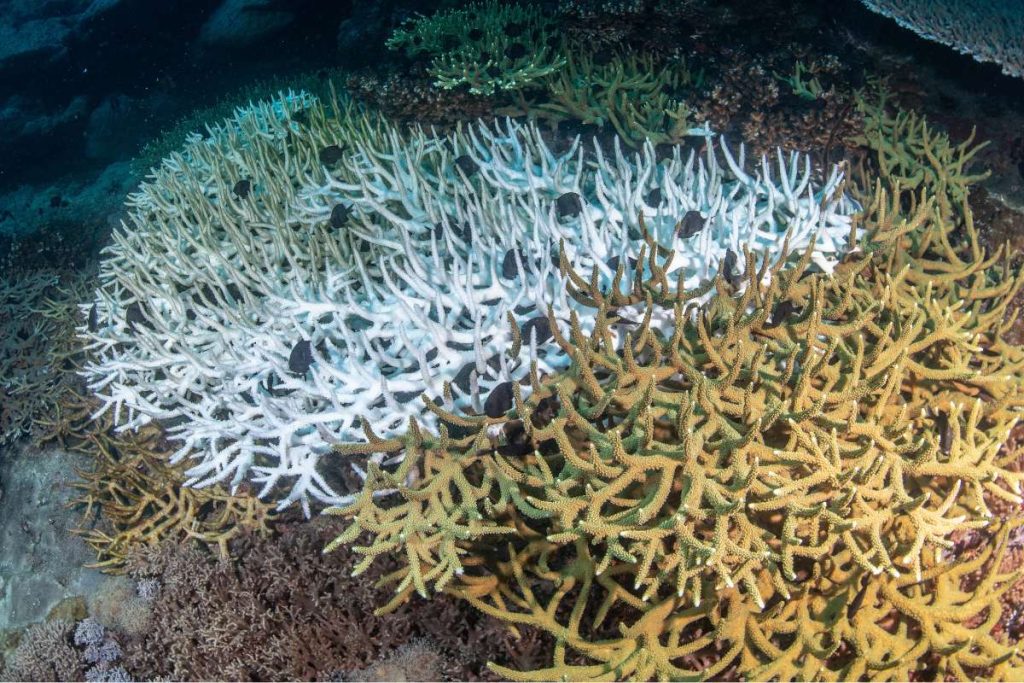
Bleaching occurs when corals push out the beneficial algae living in their tissues due to stress, often caused by increased water temperatures. Without the algae, the corals lose their color and their main source of food, making them more susceptible to disease and death. Coral reefs can recover from damage if the conditions are favorable and if the stressors are removed. However, recovery can take many years, and some reefs may never fully recover.
What can humans do to help protect coral reef animals?
To help protect coral reef animals, individuals and communities can support sustainable fishing practices, reduce carbon emissions to lessen climate change impacts, minimize pollution runoff into oceans, and advocate for reef conservation, marine protected areas, and sustainable tourism practices. Education and raising awareness about the importance of coral reefs are also crucial in promoting conservation efforts.