Temperate forest plants include deciduous trees such as oaks and maples, evergreen conifers, shrubs, ferns, mosses, and woodland wildflowers. Their adaptations help them cope with changing seasons and different amounts of light beneath the canopy. This illustrated guide compares plant examples, where they grow, and how they support forest wildlife.

Temperate Forest Plants: Deciduous Trees
American Beech

American Beech is a tall, deciduous tree with smooth, silver-gray bark and delicate, toothed leaves. Its dense canopy provides shade for understory plants and shelter for wildlife.
- Average Size: Typically grows to heights of 20-30 meters, occasionally reaching up to 40 meters.
- What eats this plant? American Beech nuts are a valuable food source for many wildlife species, including white-tailed deer, black bears, and various small mammals, as well as birds such as wild turkeys, jays, woodpeckers, and ruffed grouse. The nuts are also eaten by humans.
- Region/Continent: Native to eastern North America, commonly found in temperate forests from Nova Scotia to Florida and west to Texas.
- Scientific Name: Fagus grandifolia
Chestnut
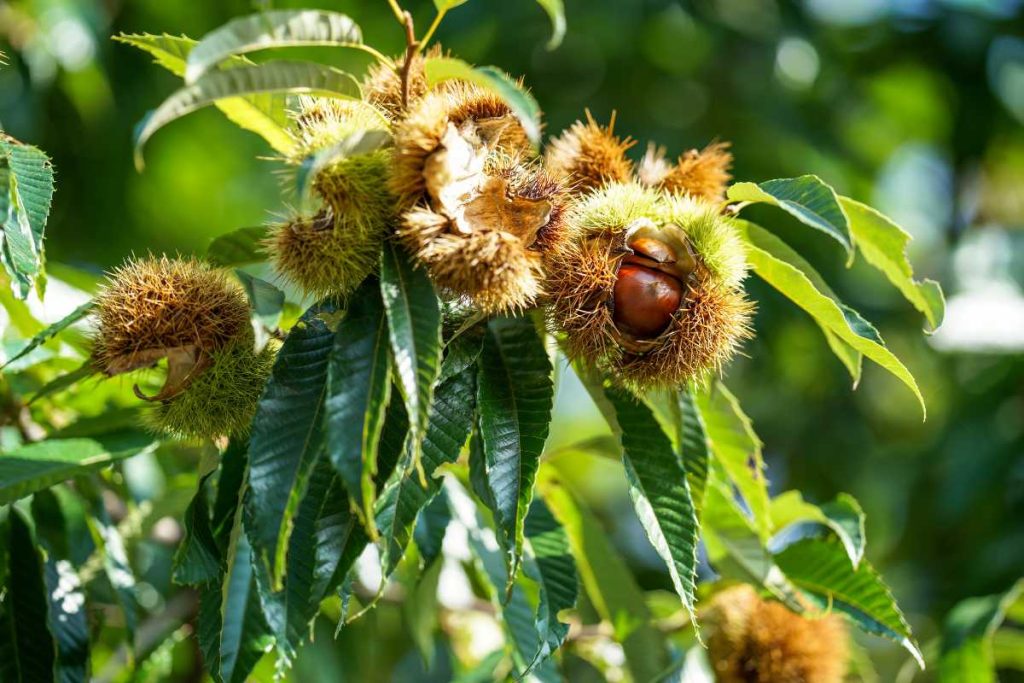
Chestnut trees are large deciduous trees belonging to the genus Castanea, known for their deeply furrowed bark and serrated, oblong leaves. These trees produce edible nuts enclosed in spiny husks. Chestnut trees were historically important for their timber and food value until the devastating chestnut blight decimated many populations.
- Average Size: Depending on the species, chestnut trees typically reach 20–30 meters tall or more.
- What eats this plant? Chestnuts provide food for squirrels, deer, birds, and other wildlife. Caterpillars and other herbivorous insects may feed on the leaves. People also cultivate edible chestnuts for food.
- Region/Continent: Chestnut trees are native to temperate regions of the Northern Hemisphere, with species distributed across Europe, Asia, and North America. They are commonly found in temperate forests, woodlands, and orchards.
- Scientific Name: Many species of Chestnut grow in temperate forests, including American Chestnut (Castanea dentata), European Chestnut (Castanea sativa), and Japanese Chestnut (Castanea crenata).
Elm

Elm trees are deciduous trees belonging to the genus Ulmus. These trees have distinctive winged seeds, also known as samaras. Elms vary in size and form, with some species growing into stately shade trees and others remaining shrubby in stature. Elm trees are valued for their strong, durable wood. Unfortunately, many elm populations have been devastated by Dutch elm disease, a fungal infection spread by bark beetles.
- Average Size: Elm trees can vary widely in size, ranging from small to large trees depending on the species. Mature elms typically reach heights of 15-30 meters, though some species may grow taller.
- Is Eaten by: various bird species and small mammals eat elm seeds, while the leaves may be eaten by caterpillars, deer, and other herbivores.
- Region/Continent: Elms are widely distributed across temperate regions of the Northern Hemisphere, with species native to Europe, Asia, and North America. They are commonly found in temperate forests, woodlands, urban parks, and along riverbanks.
- Scientific Name: Many species of Elm grow in temperate forests, such as American Elm (Ulmus americana), European White Elm (Ulmus laevis), and Siberian Elm (Ulmus pumila).
European Ash

European Ash is a large deciduous tree with compound leaves and distinctive black buds. Because of its strength and flexibility, European Ash wood is commonly used in furniture making.
- Average Size: Can grow up to 40-50 meters tall.
- Is Eaten by: European Ash seeds are eaten by birds, particularly finches and woodpeckers. Foliage of this tree is eaten by caterpillars of various moth species, including the mourning cloak butterfly.
- Region/Continent: Native to Europe, primarily found in temperate forests across the continent.
- Scientific Name: Fraxinus excelsior
European Beech

European Beech is a majestic deciduous tree with smooth gray bark and glossy, dark green leaves. It produces small, prickly husks containing beechnuts, which are an important food source for wildlife.
- Average Size: Typically reaches heights of 20-40 meters.
- What eats this plant? Many animals eat European beech nuts, including squirrels, chipmunks, deer, and birds such as turkeys and woodpeckers.
- Region/Continent: Native to Europe, widely distributed in temperate forests across the continent.
- Scientific Name: Fagus sylvatica
Japanese Beech
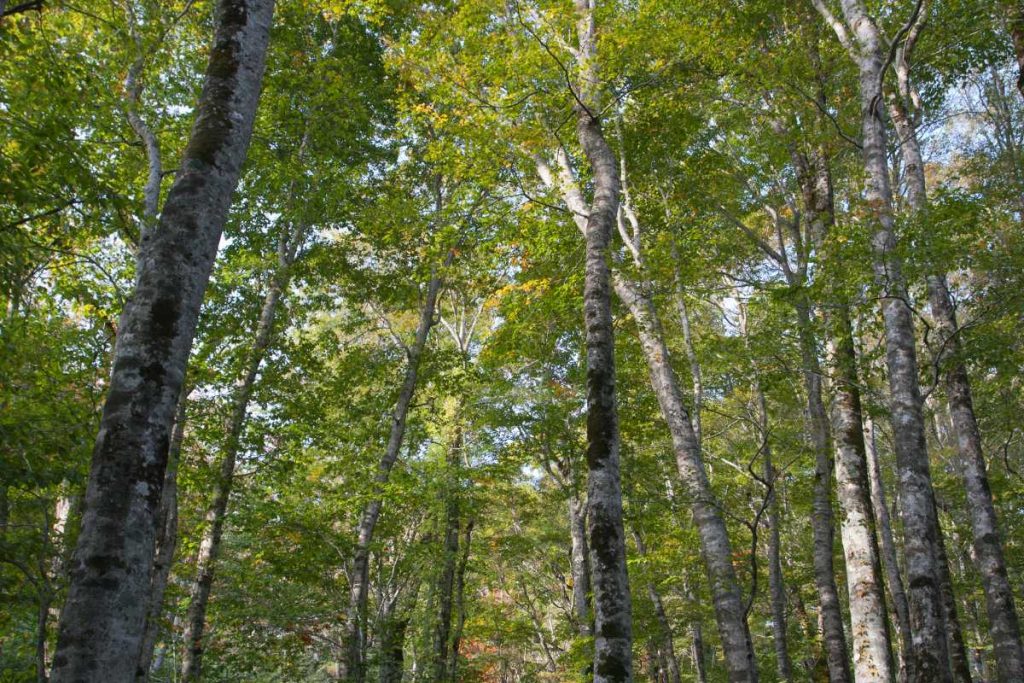
Japanese Beech is a close relative of European Beech, distinguished by its smaller leaves with finely serrated edges. It forms dense, shade-tolerant forests and provides habitat for a variety of wildlife.
- Average Size: Grows to heights of 20-30 meters.
- What eats this plant? Japanese Beech nuts are consumed by a variety of wildlife, including Japanese macaques (snow monkeys), sika deer, and various bird species.
- Region/Continent: Native to Japan, predominantly found in temperate forests throughout the country.
- Scientific Name: Fagus crenata
Pedunculate Oak

Pedunculate Oak, also known as English Oak, is a large, long-lived deciduous tree with deeply lobed leaves and acorns enclosed in cup-like structures called cupules. It supports a rich diversity of wildlife. The Pedunculate Oak holds cultural and historical significance in Britain and is often associated with strength, longevity, and tradition.
- Average Size: Typically grows 20-40 meters tall, with a spread of 20-30 meters.
- What eats this plant? As with many oak trees, the acorns produced by the Pedunculate Oak are a vital food source for many wildlife species, including squirrels, chipmunks, deer, bears, and various birds such as turkeys, woodpeckers, and jays. Humans also use acorns as a food source, grinding them for flour or roasting them before eating whole.
- Region/Continent: Native to Europe and parts of Asia, commonly found in temperate forests across the continent.
- Scientific Name: Quercus robur
Red Maple
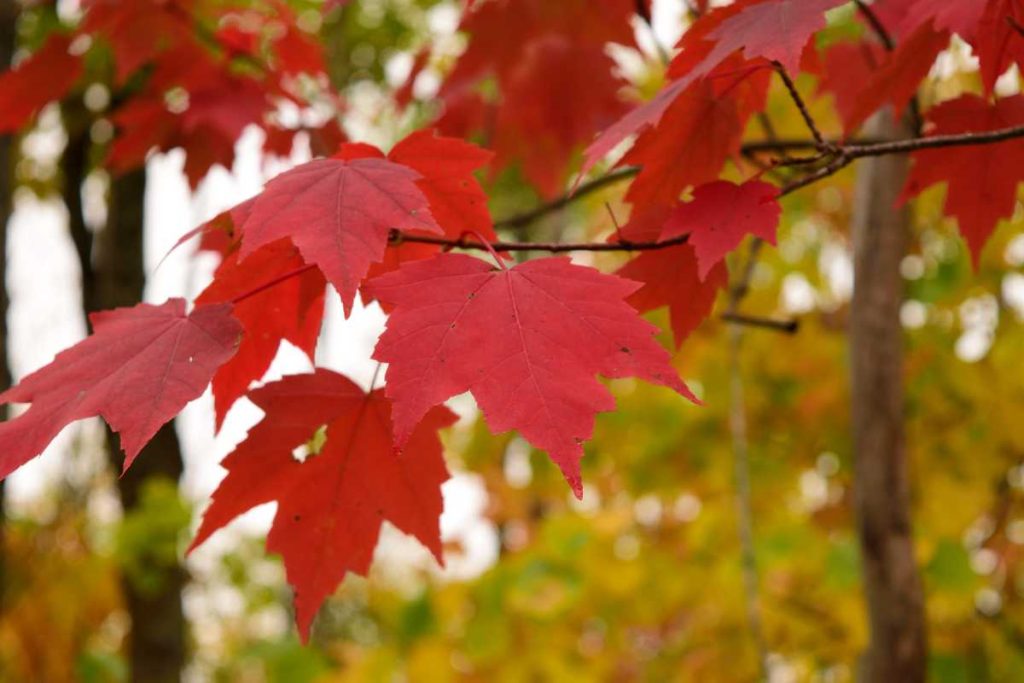
Red Maple is a fast-growing deciduous tree known for its vibrant red foliage in autumn. It produces small, winged seeds called samaras and is valued for its ornamental beauty in landscaping.
- Average Size: Typically grows 18-27 meters tall, with a spread of 12-15 meters.
- What eats this plant? Red Maple seeds are food for a variety of wildlife, including birds such as finches and woodpeckers, as well as squirrels and chipmunks. Additionally, deer may browse on red maple foliage, but it is not a preferred food source.
- Region/Continent: Native to eastern North America, commonly found in temperate forests from Canada to Florida and west to Texas.
- Scientific Name: Acer rubrum
Silver Birch
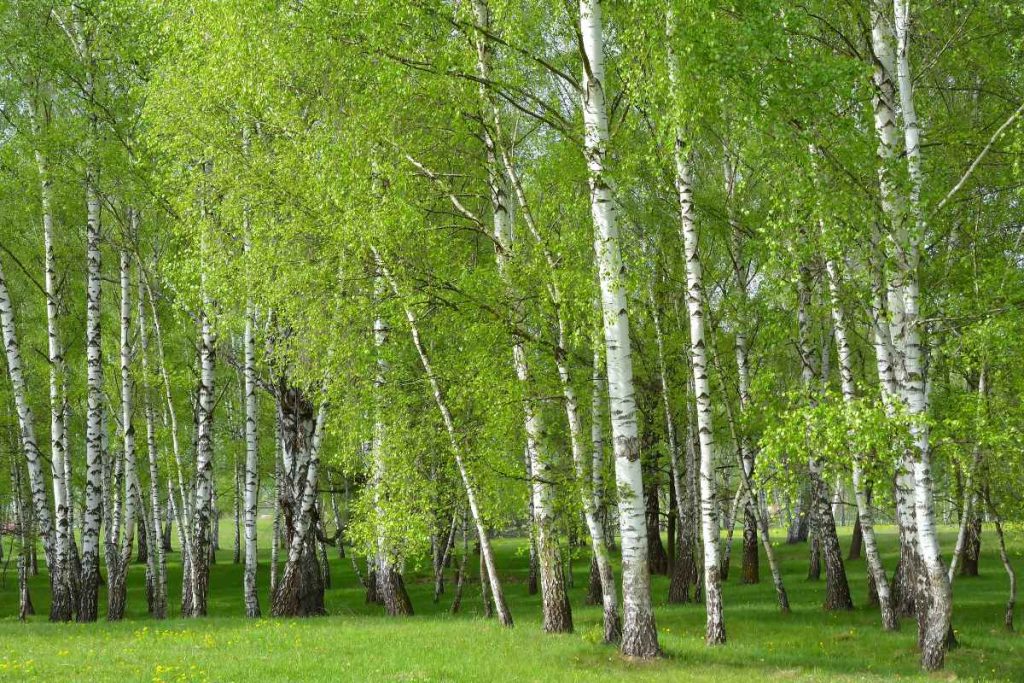
- Average Size: Typically grows 15-25 meters tall, with a spread of 10-15 meters.
- What eats this plant? Many birds eat silver birch seeds, particularly finches and woodpeckers. Additionally, deer may browse on birch foliage in some regions, but it is not a preferred food source. Birch sap, obtained by tapping the tree’s trunk, is edible and can be consumed fresh or fermented into birch wine or syrup. The inner bark of young birch trees is also edible.
- Region/Continent: Native to Europe and parts of Asia, commonly found in temperate forests across the continent.
- Scientific Name: Betula pendula
Southern Live Oak

Southern Live Oak is a slow-growing, sturdy tree with spreading branches and glossy, leathery leaves. It forms majestic, sprawling canopies and is well-adapted to coastal environments, where it withstands strong winds and salt spray.
- Average Size: Typically grows 15-25 meters tall, with a spread of 15-30 meters.
- What eats this plant? As with many oak trees, the acorns produced by the Southern Live Oak are a vital food source for many wildlife species, including squirrels, chipmunks, deer, bears, and various birds such as turkeys, woodpeckers, and jays.
- Region/Continent: Native to the southeastern United States, commonly found in temperate forests along the Gulf and Atlantic coasts.
- Scientific Name: Quercus virginiana
Tree Fuchsia
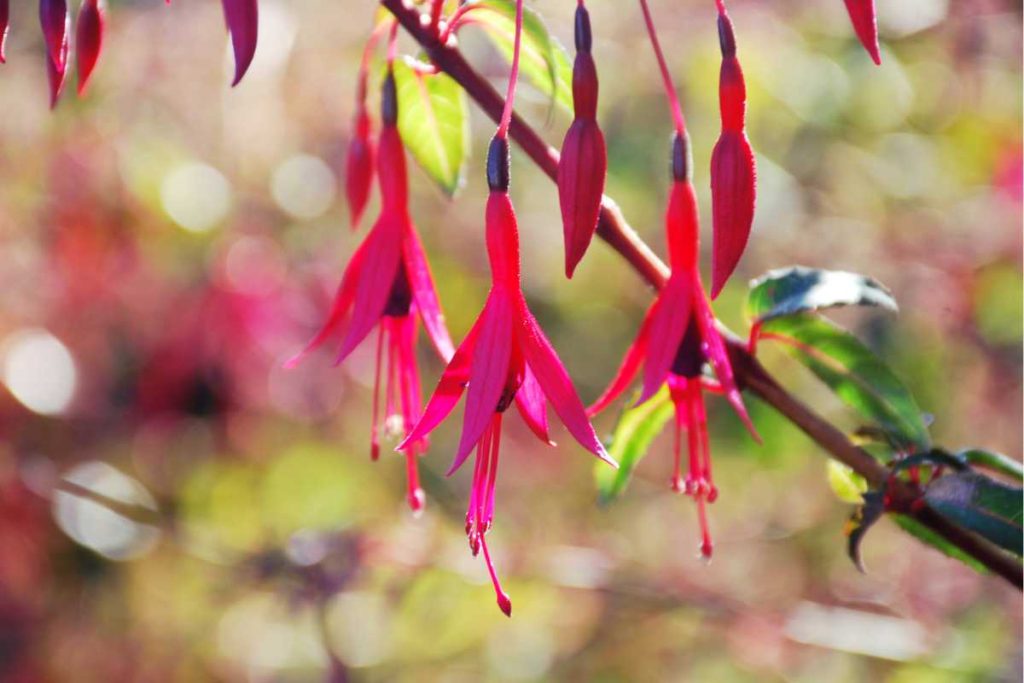
Also known by its Māori name kōtukutuku, Tree Fuchsia is a distinctive native tree of New Zealand. This tree is known for its striking, tubular flowers that range in color from deep pink to purple. Tree Fuchsia is a culturally significant plant to Māori, who use various parts of the tree for medicinal and ceremonial purposes.
- Average Size: Typically grows 5-15 meters tall
- What eats this plant? The flowers of Tree Fuchsia attract nectar-feeding birds such as tui and bellbirds, which play a crucial role in pollination. Additionally, the berries produced by Tree Fuchsia are enjoyed by native birds and insects.
- Region/Continent: Native to New Zealand, Tree Fuchsia is commonly found in temperate forests, coastal scrublands, and stream banks throughout the country.
- Scientific Name: Fuchsia excorticata
Temperate Forest Plants: Coniferous Trees
Atlas Cedar
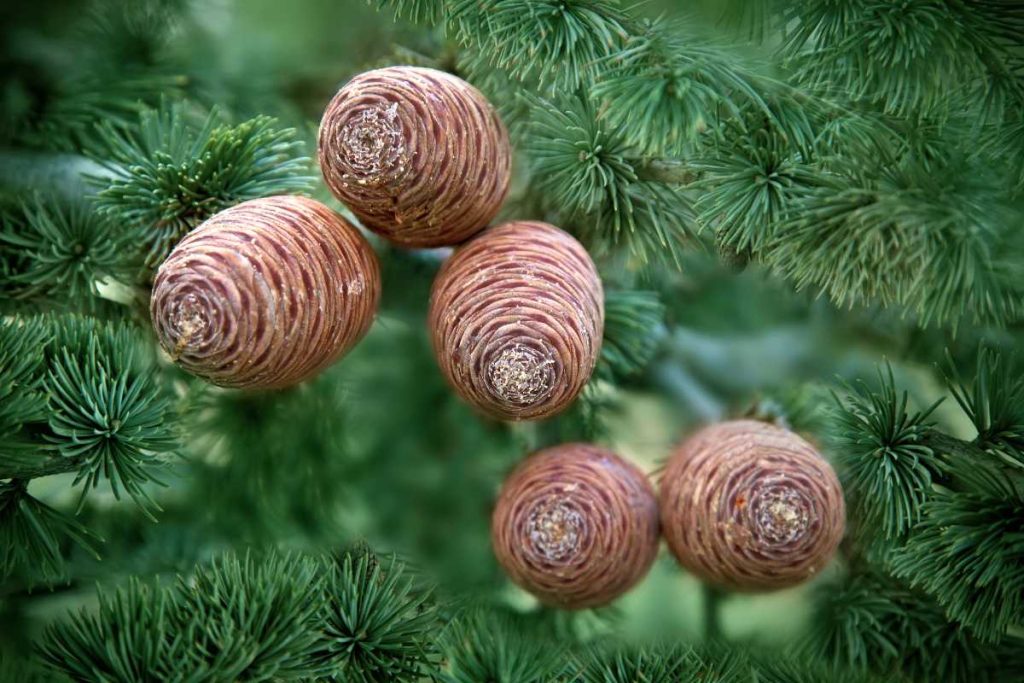
Atlas Cedar is a large evergreen tree with a distinctive pointed top and bluish-green needles arranged in dense clusters. It is prized for its aromatic wood and is often cultivated as an ornamental tree in gardens and parks.
- Average Size: Typically grows 20-35 meters tall, with a spread of 8-12 meters.
- What eats this plant? Atlas cedar cones provide food for mammals such as Barbary macaques and various birds, including crossbills and finches, which extract the seeds from the cones. Additionally, deer and other herbivores sometimes browse Atlas cedar foliage, but it is not typically a preferred food source due to its resinous nature.
- Region/Continent: Native to the Atlas Mountains in Morocco and Algeria, commonly found in temperate forests of the region.
- Scientific Name: Cedrus atlantica
Douglas Fir
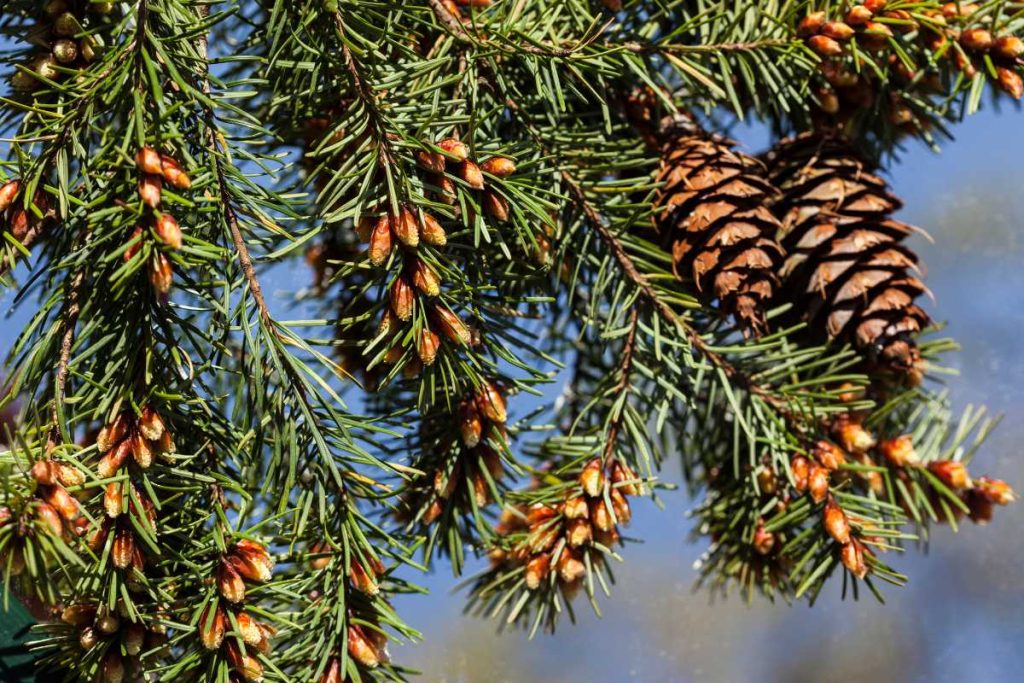
Douglas Fir is a tall, cone-shaped evergreen tree with soft, flattened needles and distinctive cones with three points protruding from each scale. This tree is an important timber species and a popular choice for Christmas trees.
- Average Size: Typically grows 50-70 meters tall, with a diameter of 1-2 meters.
- What eats this plant? Squirrels, chipmunks, and various bird species, including crossbills and chickadees.
- Region/Continent: Native to western North America, commonly found in temperate forests from British Columbia to California.
- Scientific Name: Pseudotsuga menziesii
Eastern Hemlock
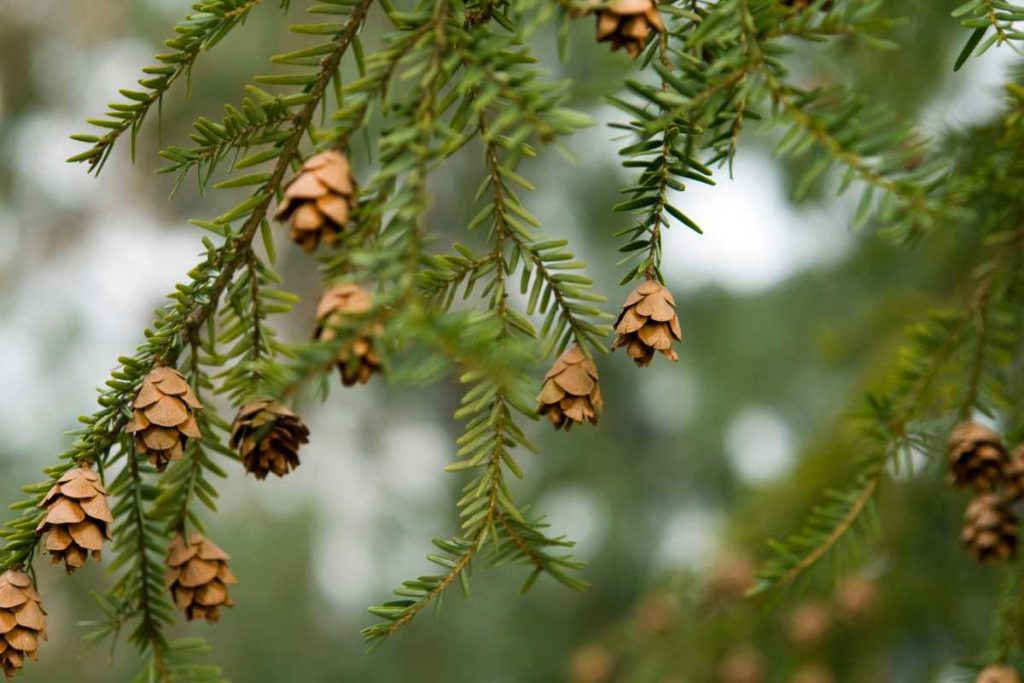
Eastern Hemlock is an evergreen tree with feathery, dark green needles and small cones that hang from its branches. It thrives in cool, moist environments and serves as an important habitat for forest wildlife.
Despite their similar names, the Eastern Hemlock (Tsuga canadensis) and Poison Hemlock (Conium maculatum) are not closely related and belong to different plant families. Eastern hemlock trees are not poisonous.
- Average Size: Typically grows 15-30 meters tall, with a spread of 6-9 meters.
- What eats this plant? White-tailed deer, porcupines, and various bird species, including warblers and thrushes.
- Region/Continent: Native to eastern North America, commonly found in temperate forests from Canada to Georgia and west to Minnesota.
- Scientific Name: Tsuga canadensis
Japanese Cedar

Japanese cedar is an evergreen conifer with reddish-brown bark and short, pointed, awl-shaped leaves arranged spirally around its shoots. It is widely grown for timber in Japan and is also planted in gardens and parks.
- Average Size: Typically grows 35-50 meters tall, with a diameter of 1-2 meters.
- What eats this plant? Japanese Cedar (Cryptomeria japonica) trees provide food for various bird species, including crossbills and nuthatches, which extract the seeds from the cones. Japanese macaques also eat the seeds from this tree.
- Region/Continent: Native to Japan, commonly found in temperate forests throughout the country.
- Scientific Name: Cryptomeria japonica
Kauri

Kauri is a large New Zealand conifer with a massive trunk and thick, leathery leaves. Its leaves are broad and flat rather than needle-like. Mature trees can become exceptionally large and are an important part of northern New Zealand forests.
- Average Size: Typically grows 30-50 meters tall, with some specimens reaching heights of over 50 meters.
- What eats this plant? Some insects feed on kauri tissues. Resin helps protect the tree from injury and pests.
- Region/Continent: Native to New Zealand, commonly found in temperate forests of the North Island.
- Scientific Name: Agathis australis
Patagonian Cypress
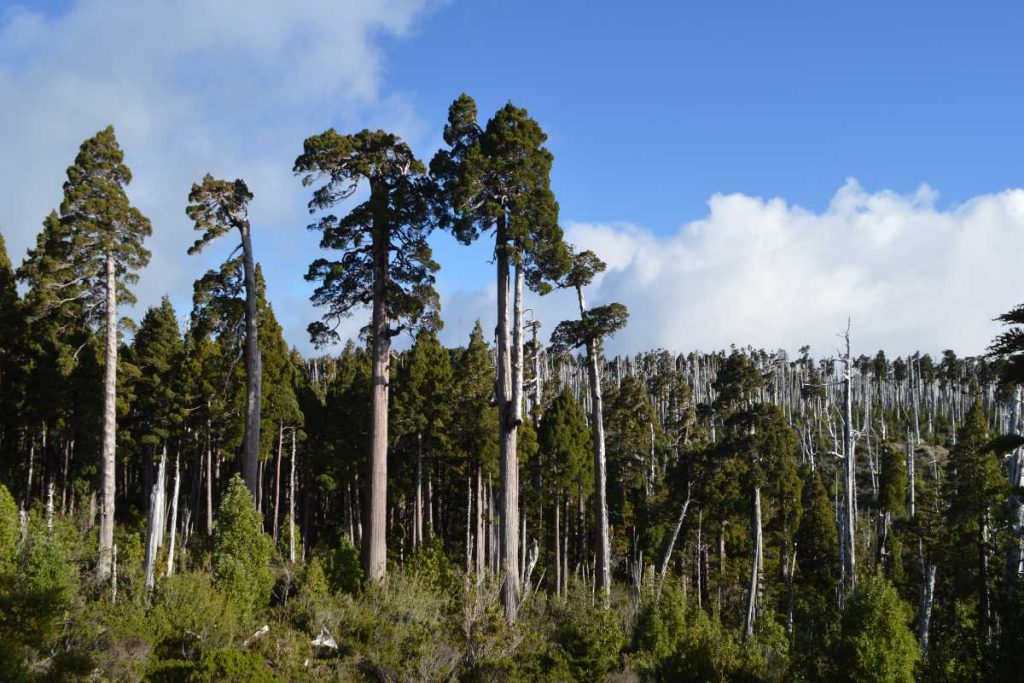
Patagonian Cypress, also known as Alerce, is an evergreen tree with a massive, tapering trunk and dense, pointed crown. Highly valued for its durable, rot-resistant wood, Patagonian cypress is one of the longest-lived trees in the world.
- Average Size: Typically grows 30-50 meters tall, with some ancient specimens exceeding 60 meters in height.
- What eats this plant? Herbivorous mammals such as guanacos and deer.
- Region/Continent: Native to the Andes mountains of South America, commonly found in temperate forests of Chile and Argentina.
- Scientific Name: Fitzroya cupressoides
Scots Pine
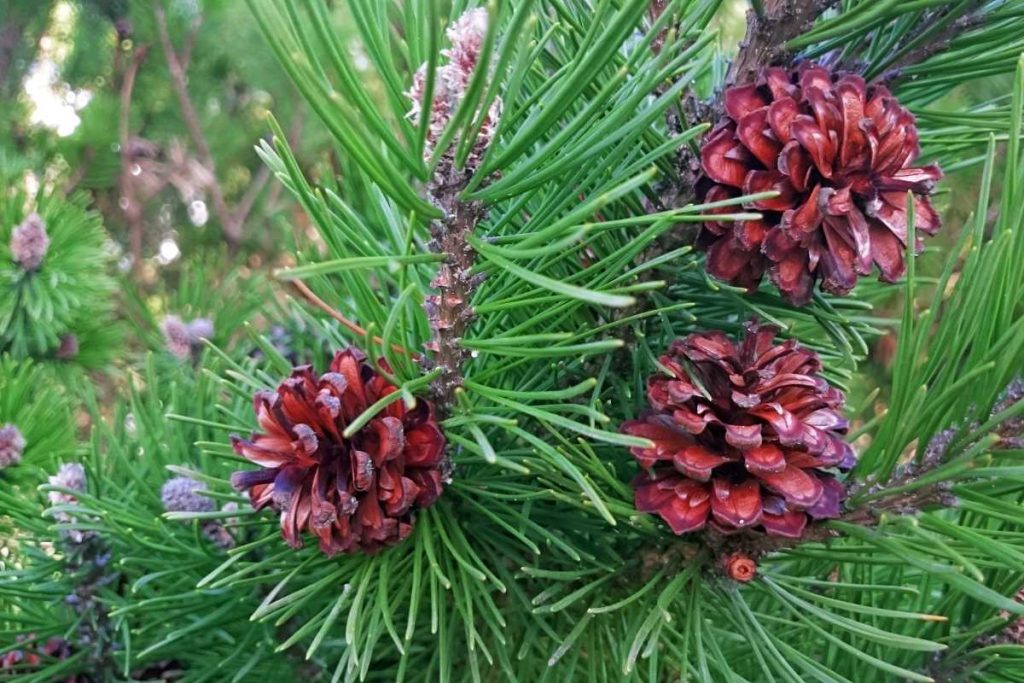
Scots pine is an evergreen conifer with needles in pairs and orange-brown bark on the upper trunk. Its cones contain small seeds that feed wildlife. It is an important timber tree; it is not one of the principal species grown for commercial edible pine nuts.
- Average Size: Typically grows 20-35 meters tall, with a spread of 8-12 meters.
- What eats this plant? Many animals find food in Scots pine cones, including squirrels, crossbills, and finches, which extract the seeds from the cones. Additionally, deer and other herbivores sometimes browse Scots Pine foliage, especially in winter when other food sources are scarce.
- Region/Continent: Native to Europe and Asia, commonly found in temperate forests across both continents.
- Scientific Name: Pinus sylvestris
Western Redcedar
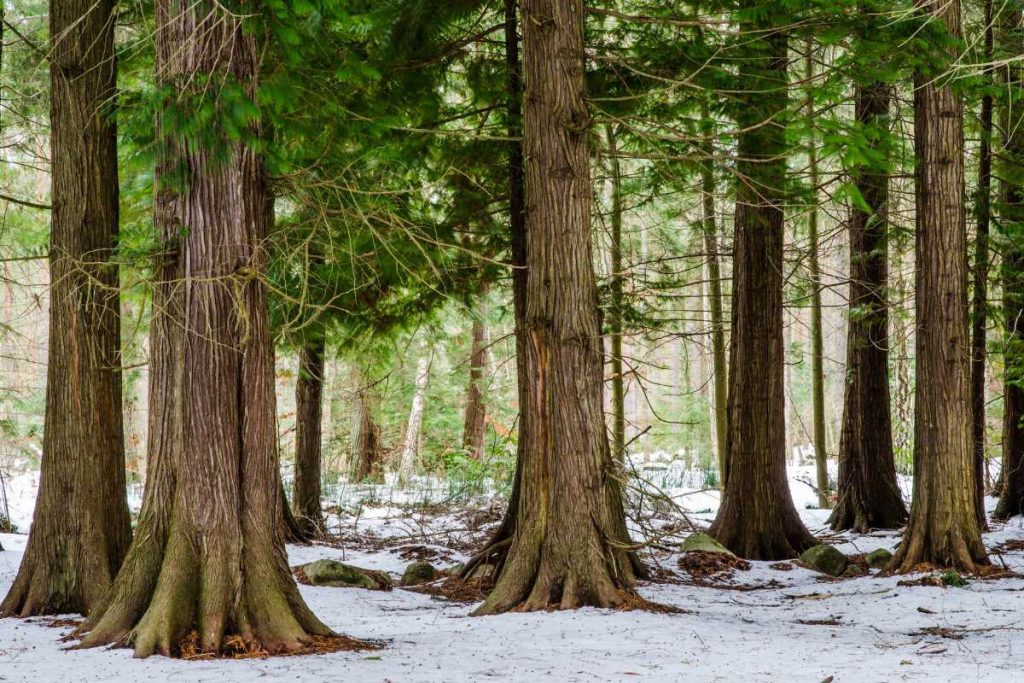
Western Redcedar is a tall, slender evergreen tree with reddish-brown bark and scale-like leaves that emit a distinct fragrance when crushed. It is prized for its lightweight, rot-resistant wood. Western Redcedar is culturally significant to indigenous peoples of the Pacific Northwest.
- Average Size: Typically grows 30-60 meters tall, with some specimens reaching heights of over 70 meters.
- What eats this plant? Birds such as crossbills and nuthatches extract the edible seeds from this plant’s cones. Additionally, deer and other herbivores sometimes browse Western redcedar foliage, but the foliage is not typically a preferred food source due to its strong aromatic oils.
- Region/Continent: Native to the Pacific Northwest of North America, commonly found in temperate forests from Alaska to northern California.
- Scientific Name: Thuja plicata
White Pine
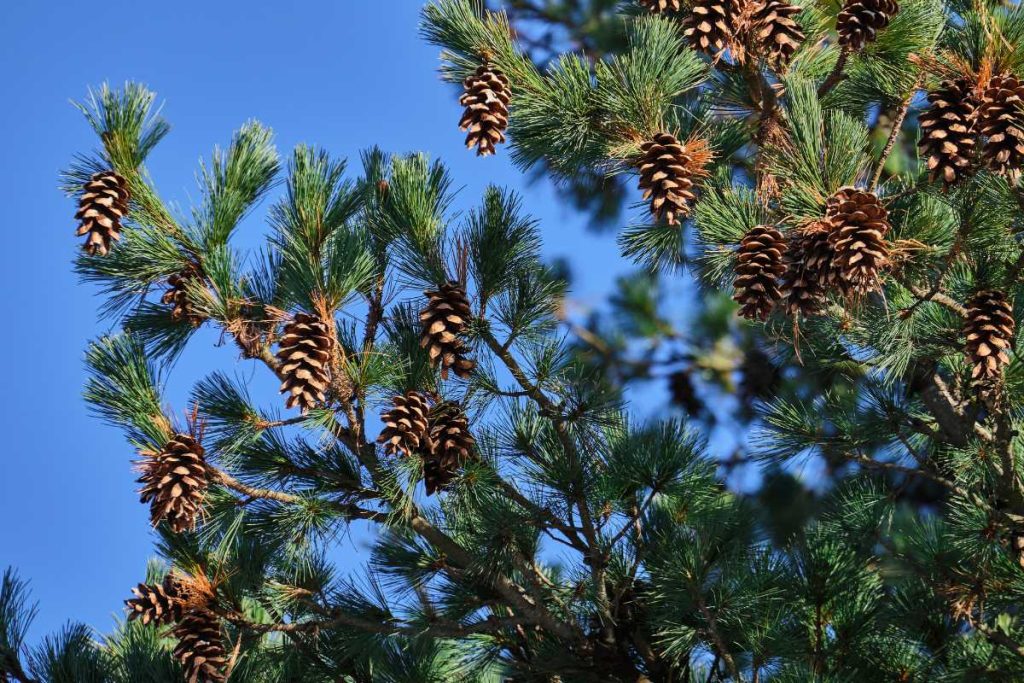
White Pine is a tall, coniferous tree with blue-green needles and elongated cones. It is valued for its straight, knot-free wood and is historically significant in the timber industry of North America.
- Average Size: Typically grows 30-50 meters tall, with some specimens exceeding 60 meters in height.
- What eats this plant? Animals such as squirrels, chipmunks, and birds such as crossbills and chickadees, extract edible seeds from the plant’s cones. Additionally, deer and other herbivores sometimes eat white pine foliage, especially in winter when other food sources are scarce.
- Region/Continent: Native to eastern North America, commonly found in temperate forests from Newfoundland to Georgia and west to Minnesota.
- Scientific Name: Pinus strobus
Temperate Forest Plants: Shrubs and Herbaceous Plants
Blueberry
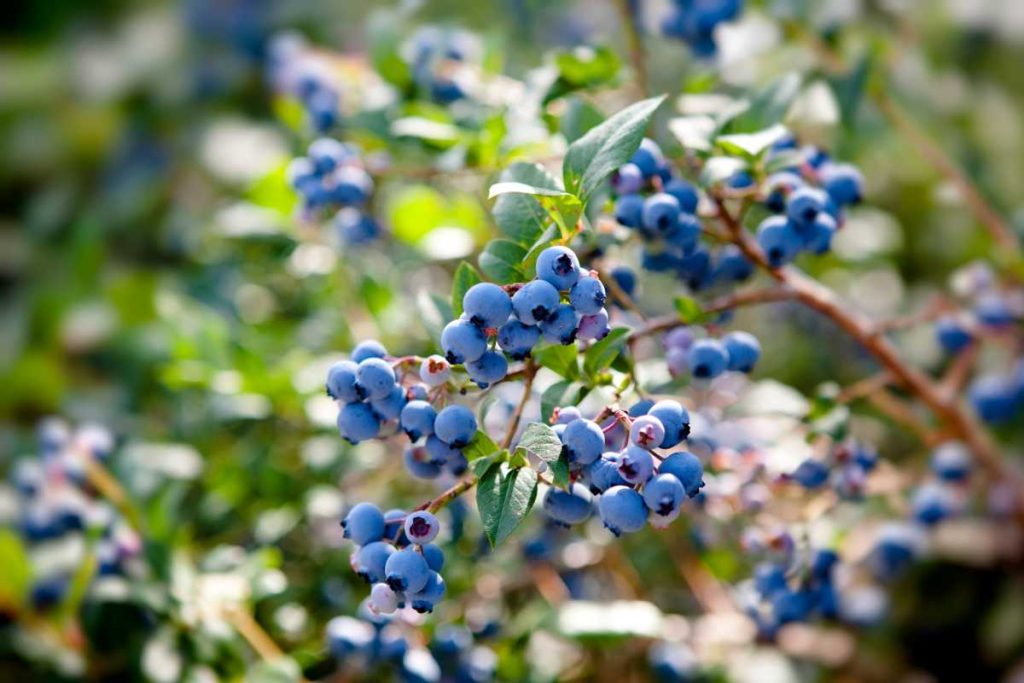
Blueberry is a low-growing, deciduous shrub with small, oval leaves. This plant is famous for its clusters of small, round berries that range in color from blue to purple-black. Blueberry thrives in acidic soils and is valued for its delicious, antioxidant-rich fruit.
- Average Size: Depending on the species, can range from small shrubs to medium-sized trees up to 3-6 meters tall.
- What eats this plant? Various wildlife species consume blueberries, including birds (such as thrushes, robins, and waxwings), small mammals (such as squirrels, chipmunks, and mice), and larger mammals (such as bears and deer). Humans also harvest blueberries for consumption.
- Region/Continent: Native to North America, Europe, and Asia, commonly found in temperate forests, heathlands, and alpine regions.
- Scientific Name: There are several species of blueberry in temperate forests, including Lowbush Blueberry (Vaccinium angustifolium), Highbush Blueberry (Vaccinium corymbosum), and Rabbiteye Blueberry (Vaccinium virgatum).
Dogwood

Dogwoods are shrubs and small trees. In flowering dogwood and some related species, the showy white or pink structures are bracts surrounding clusters of small flowers, rather than four large petals. Their fruits provide food for wildlife.
- Average Size: Depending on the species, can range from small shrubs to medium-sized trees up to 10 meters tall.
- What eats this plant? Many birds eat Dogwood berries, including robins, cedar waxwings, and thrushes. Additionally, some mammals, such as squirrels and raccoons, may feed on dogwood berries. However, other parts of the dogwood tree, such as the leaves and bark, are not typically consumed due to their bitter taste.
- Region/Continent: Native to North America, Europe, and Asia, commonly found in temperate forests, woodlands, and riparian areas.
- Scientific Name: There are several species of dogwood in temperate forests, including Flowering Dogwood (Cornus florida), native to eastern North America; Pacific Dogwood (Cornus nuttallii), Native to western North America; and Kousa Dogwood (Cornus kousa), Native to East Asia, including China, Korea, and Japan.
Heather
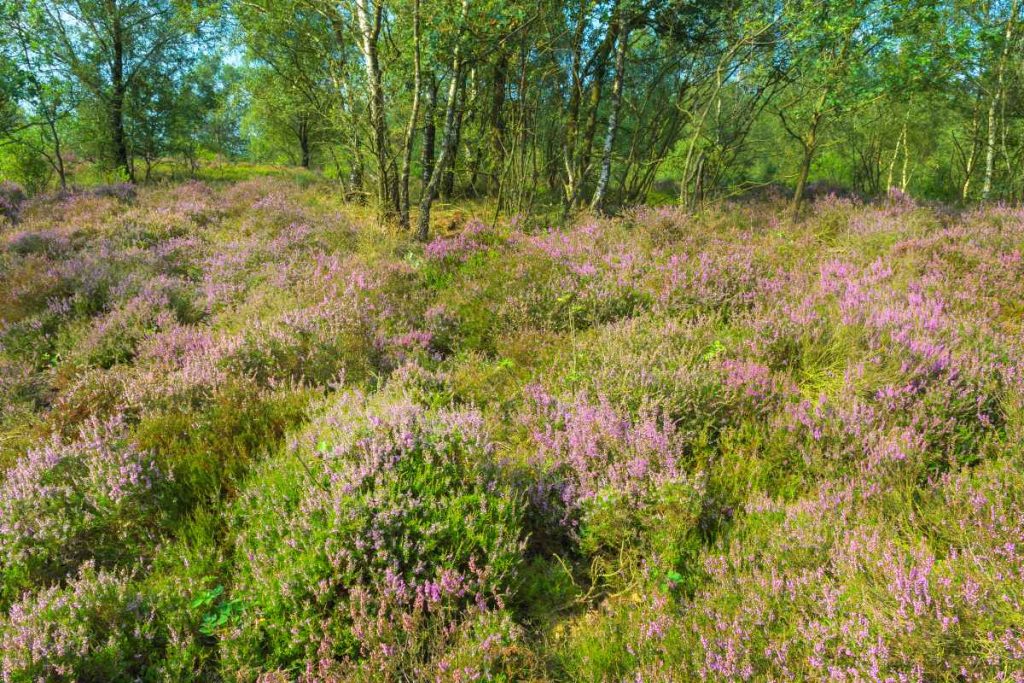
Heather is a low-growing, evergreen shrub with needle-like leaves and tiny, bell-shaped flowers that bloom in shades of pink, purple, and white. It thrives in poor, acidic soils and is valued for its ornamental beauty in gardens and landscapes.
- Average Size: Typically grows 20-50 centimeters tall, forming dense mats or mounds.
- What eats this plant? Heather plants are not typically consumed by wildlife due to their tough, woody stems and bitter foliage. However, in some regions, deer and other herbivores may browse on heather foliage if other food sources are scarce.
- Region/Continent: Native to Europe and parts of Asia, commonly found in temperate forest areas, moors, and coastal cliffs.
- Scientific Name: Calluna vulgaris
Huckleberry
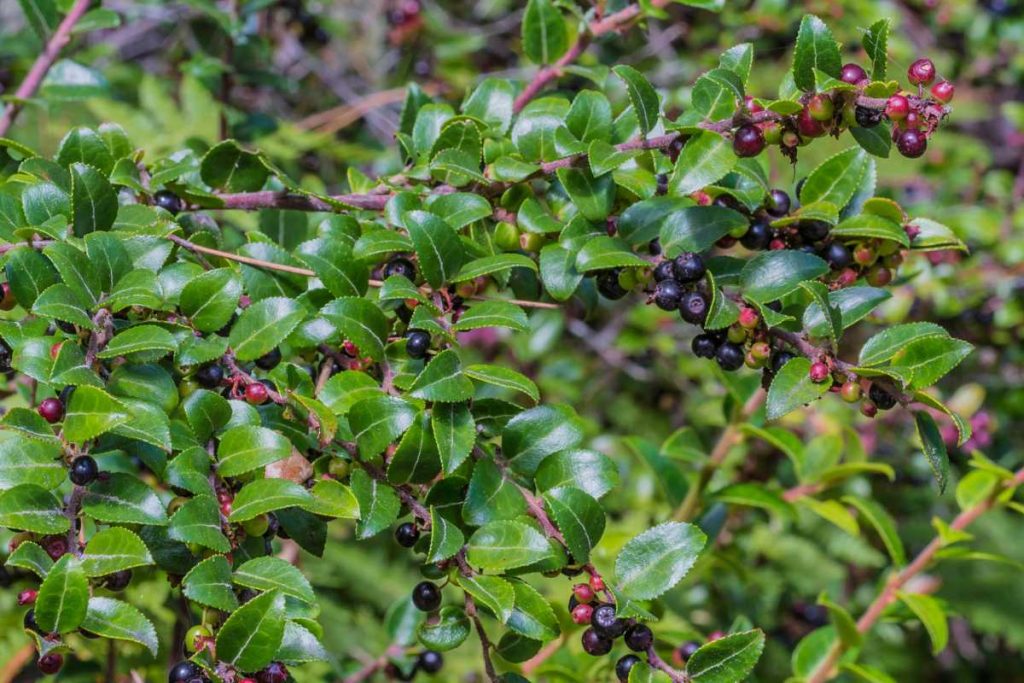
This plant is a deciduous shrub with small, glossy leaves and clusters of small, round berries that range in color from black to dark purple. Closely related to blueberry, huckleberry is prized for its flavorful fruit, which is often used in jams, pies, and desserts.
- Average Size: Typically grows 30-150 centimeters tall, forming dense thickets in forest understories.
- What eats this plant? Huckleberries are consumed by various wildlife species, including birds (such as grouse, thrushes, and robins), small mammals (such as squirrels, chipmunks, and mice), and larger mammals (such as bears and deer). Humans also harvest huckleberries for consumption
- Region/Continent: Native to North America and parts of South America, commonly found in temperate forests, woodlands, and mountainous regions.
- Scientific Name: Vaccinium
Mahonia
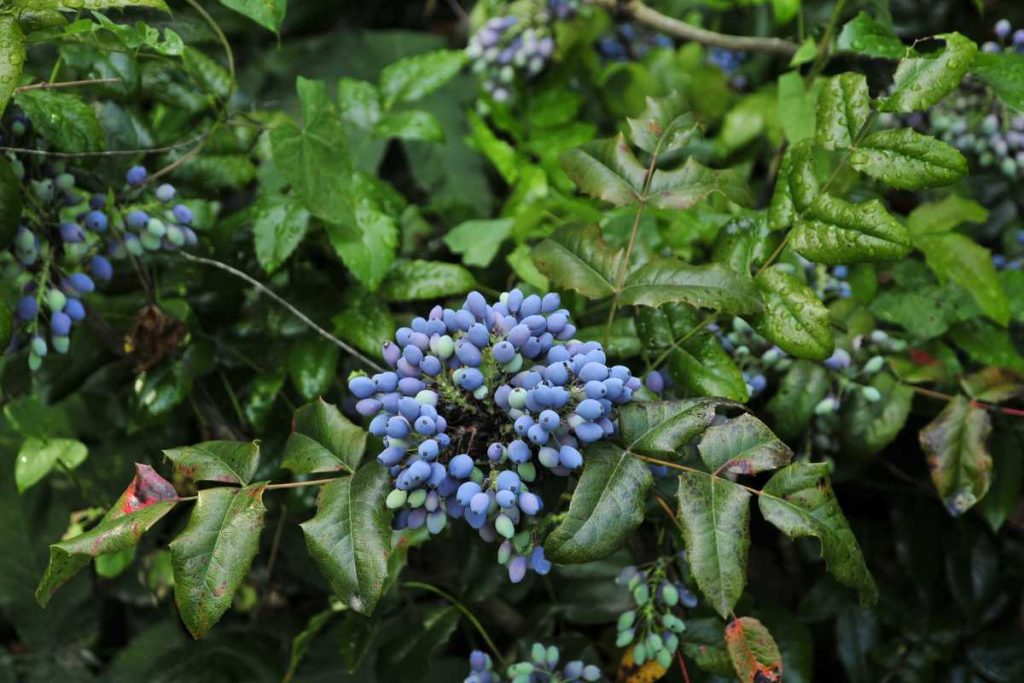
Mahonia is a group of evergreen shrubs that produce clusters of small, fragrant yellow flowers followed by blue-black berries. Aside from providing food for several forest herbivores, mahonia is valued in gardens and landscapes as a plant that adds visual interest during winter.
- Average Size: Depending on the species, can range from small shrubs to medium-sized plants up to 2-3 meters tall.
- What eats this plant? Several bird species eat Mahonia berries, including thrushes, robins, and cedar waxwings. Some mammals, such as squirrels and raccoons, may also feed on mahonia berries. However, other parts of the mahonia plant, such as the leaves and stems, contain toxic compounds and are not typically consumed.
- Region/Continent: Native to Asia, North and Central America, commonly found in temperate forests, woodlands, and rocky slopes.
- Scientific Name: There are several species of mahonia in temperate forests, such as Mahonia aquifolium (Oregon Grape) and Mahonia nervosa (Longleaf Mahonia), native to western North America; and Mahonia japonica (Japanese Mahonia), Native to Japan.
Oleander
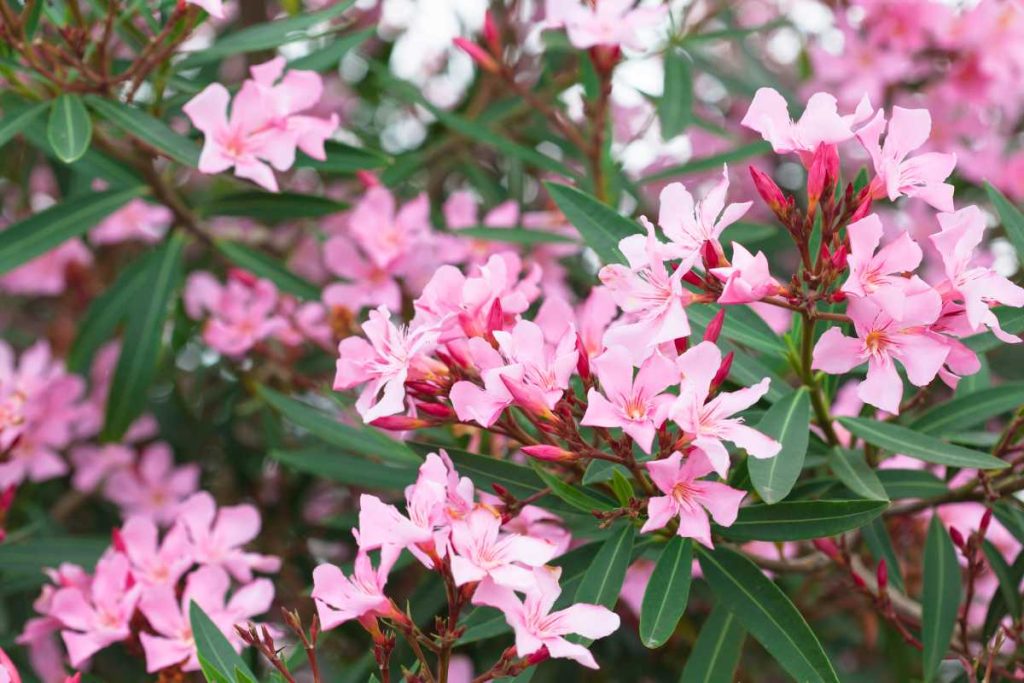
Oleander is a tall, evergreen shrub with lance-shaped leaves and clusters of fragrant flowers in shades of pink, red, white, or yellow. Despite its beauty, all parts of the plant are highly toxic if ingested and should be handled with care.
- Average Size: Typically grows 2-6 meters tall, forming dense thickets in warm temperate climates.
- What eats this plant? All parts of the oleander plant are highly toxic to humans and most animals if ingested. One interesting exception is the Oleander Hawk-moth (Daphnis nerii), whose caterpillars are known to feed on oleander leaves. They possess specialized detoxification mechanisms that allow them to metabolize and tolerate the toxic compounds present in oleander foliage.
- Region/Continent: Native to the Mediterranean region, now commonly found in temperate and subtropical coastal areas worldwide.
- Scientific Name: Nerium oleander
Rhododendron
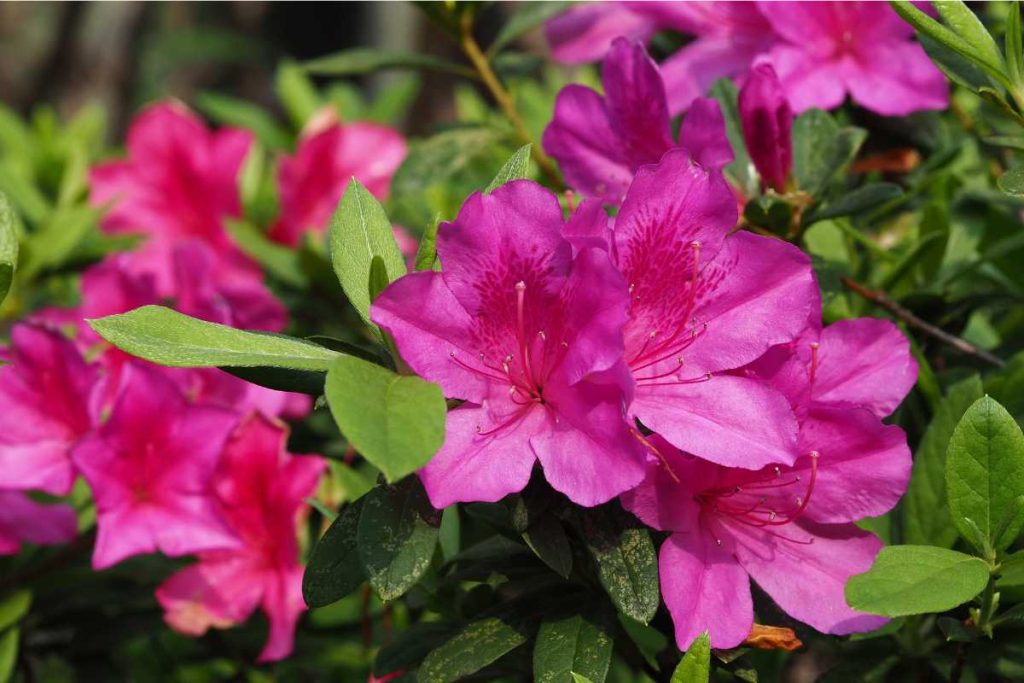
Rhododendrons are a diverse group of evergreen and deciduous shrubs and trees. These plants are known for their large leaves and spectacular clusters of flowers in various colors. They are popular ornamental plants in gardens and parks.
- Average Size: Depending on the species, Rhododendrons range from small shrubs to medium-sized trees up to 10 meters tall.
- What eats this plant? Rhododendrons support pollinating insects and some leaf-feeding insects. Their fruits are dry seed capsules, not berries. The leaves and other parts contain toxins and should not be treated as edible wildlife berries. Pacific rhododendron releases small seeds from woody capsules.
- Region/Continent: Native to Asia, North America, and Europe, commonly found in temperate forests, woodlands, and mountainous regions.
- Scientific Name: Many species of rhododendron grow in temperate forests, such as Rhododendron maximum (Rosebay Rhododendron), native to eastern North America; Rhododendron catawbiense (Catawba Rhododendron), native to the southeastern United States; and Rhododendron macrophyllum (Pacific Rhododendron), native to the Pacific Northwest region of North America, and pictured above.
Skunk Cabbage

Skunk Cabbage is a unique perennial plant with large, cabbage-like leaves and a distinctive foul odor that attracts pollinating insects. It blooms early in spring, often before snowmelt, and is an important food source for emerging pollinators.
- Average Size: Typically grows 30-90 centimeters tall, forming dense colonies.
- What eats this plant? Forest herbivores such as deer and elk sometimes feed on skunk cabbage foliage, particularly in early spring when other food sources are scarce. Bears have also been known to eat skunk cabbage upon ending hibernation, when other food sources are difficult to find.
- Region/Continent: Native to eastern North America, commonly found in temperate wetlands, swamps, and marshes.
- Scientific Name: Symplocarpus foetidus
Trillium
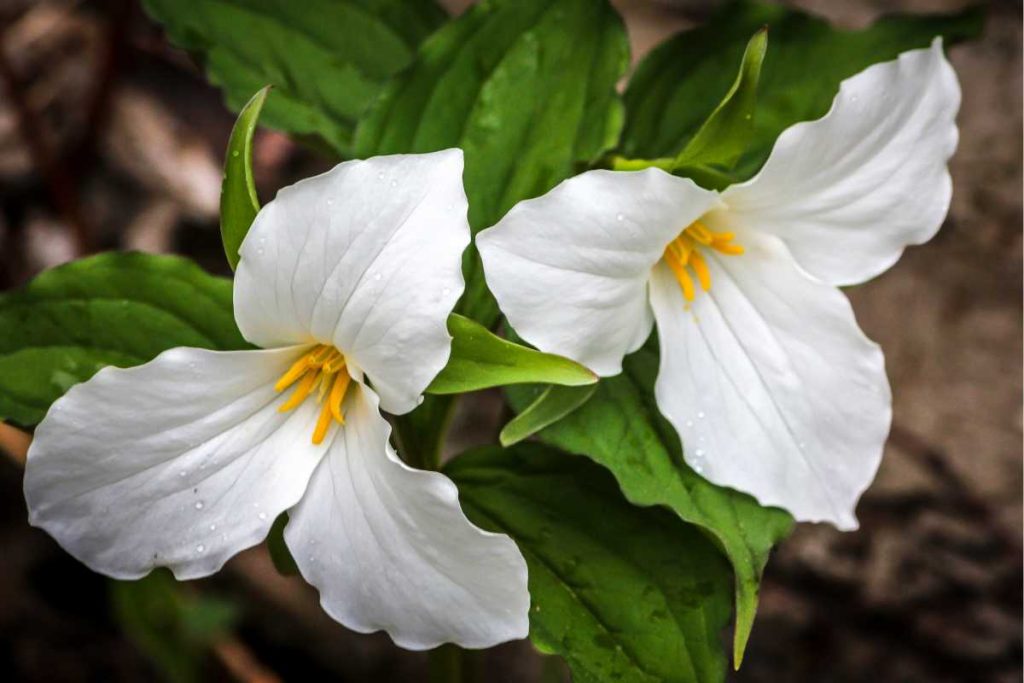
Trilliums are a group of perennial plants with leaves clustered in groups of three and three-petaled flowers that bloom in spring. They are often found carpeting the forest floor in shady woodland habitats and are prized by humans for their beauty.
PS – This plant is where Trillium Montessori gets its name!
- Average Size: Depending on the species, trilliums can range from a few centimeters to over half a meter in height.
- What eats this plant? Deer browse trillium leaves and flowers, sometimes heavily. Ants help disperse the seeds by carrying away their attached, nutrient-rich elaiosomes.
- Region/Continent: Native to North America and parts of Asia, commonly found in temperate forests, woodlands, and meadows.
- Scientific Name: Trillium
Viburnum
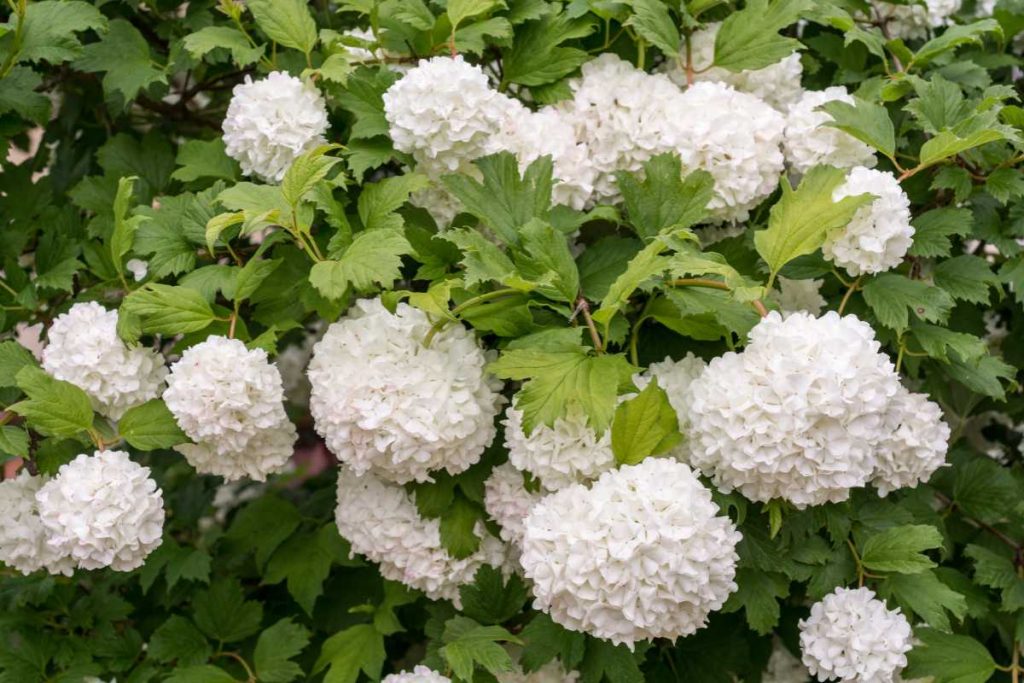
Viburnums are a diverse group of deciduous and evergreen shrubs and small trees known for their clusters of fragrant flowers and colorful berries. In addition to their usefulness as a food source for animals, viburnums are also valued for their ornamental appeal in gardens and landscapes.
- Average Size: Depending on the species, viburnums range from small shrubs to medium-sized trees up to 5-6 meters tall.
- What eats this plant? Several bird species eat viburnum berries, including thrushes, robins, and cedar waxwings. Some mammals, such as squirrels and raccoons, may also feed on viburnum berries. Additionally, humans sometimes harvest viburnum berries for consumption or use them in culinary recipes.
- Region/Continent: Native to North America, Europe, and Asia, commonly found in temperate forests, woodlands, and hedgerows.
- Scientific Name: There are several species of viburnum, such as Viburnum opulus, pictured above.
Witch Hazel
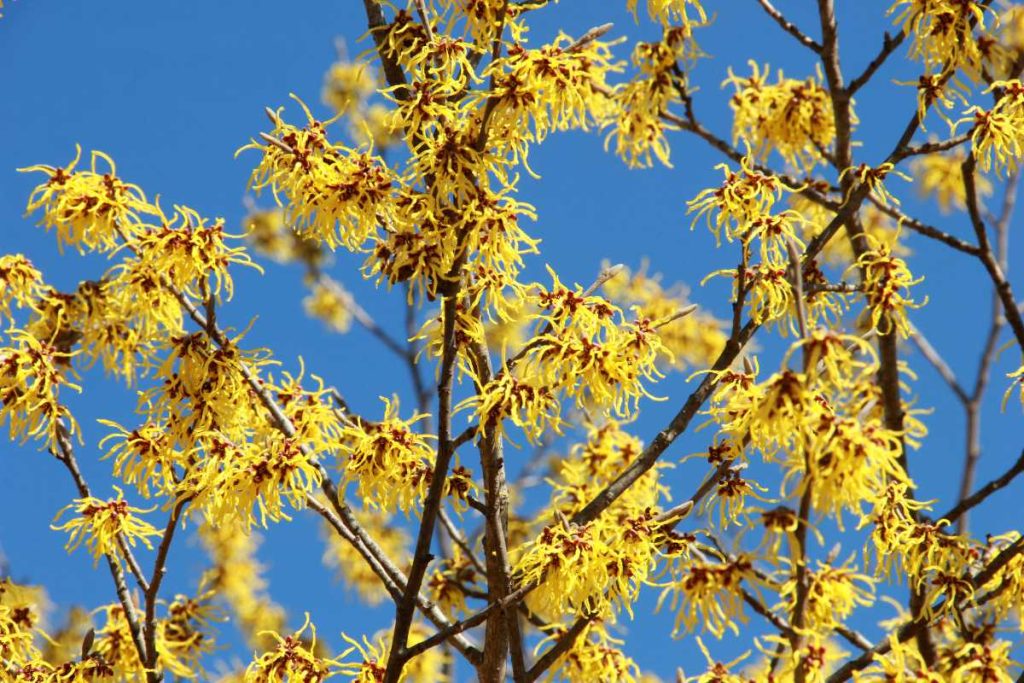
Witch hazels are deciduous shrubs with narrow, ribbon-like flower petals. Flowering season depends on the species: American witch hazel (Hamamelis virginiana) blooms in fall, while some other species bloom in winter or early spring.
- Average Size: Depending on the species, witch hazels range from small shrubs to medium-sized trees up to 6-8 meters tall.
- Seed dispersal: Witch hazel capsules split open and eject their seeds. This explosive release, rather than passage through an animal, is a characteristic dispersal mechanism. Some wildlife also eats the seeds.
- Region/Continent: Native to North America and parts of Asia, commonly found in temperate forests, woodlands, and stream banks.
- Scientific Name: Hamamelis
Temperate Forest Plants: Mosses, Ferns, and More
Bamboo (Giant Bamboo)
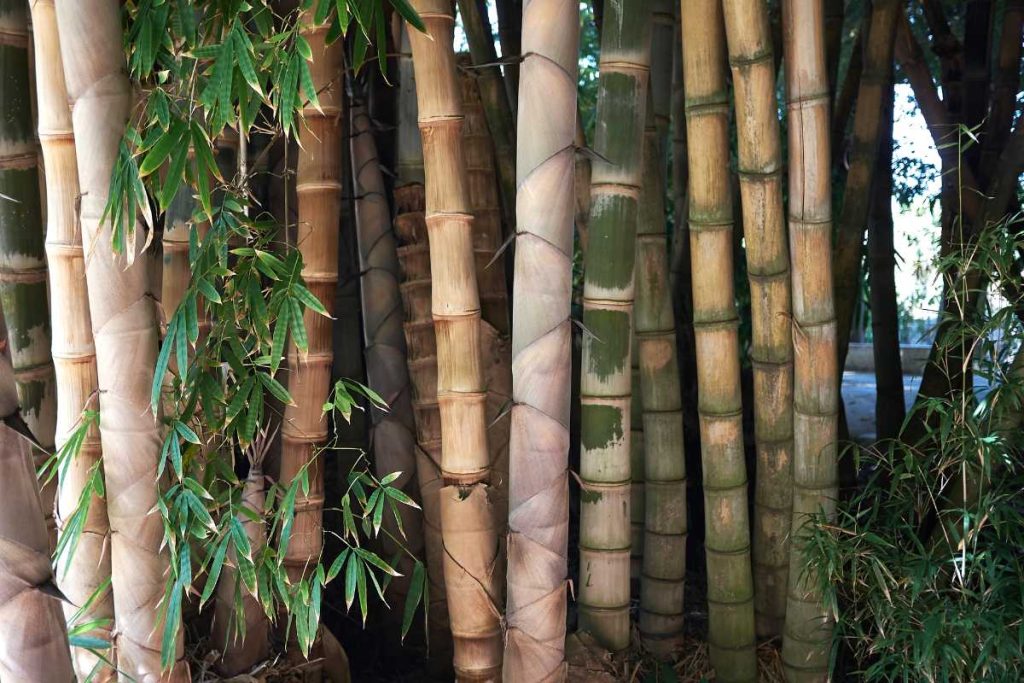
Giant bamboo is a large, woody grass with hollow stems. The species listed here, Dendrocalamus giganteus, is primarily a wet-tropical bamboo rather than a typical temperate-forest species. Other bamboo species do occur in temperate regions.
- Average Size: Depending on the species, giant bamboo can range from several meters to over 30 meters tall
- What eats this plant? Bamboo is the main food of pandas, and they spend a considerable amount of time each day foraging for bamboo shoots and leaves. Other wildlife species, including elephants and certain species of birds, also eat bamboo shoots and leaves. Humans also harvest bamboo shoots for consumption.
- Region/Continent: Dendrocalamus giganteus is native from eastern India to Yunnan, China, and grows primarily in the wet tropical biome.
- Scientific Name: Dendrocalamus giganteus
Bird’s Nest Fern
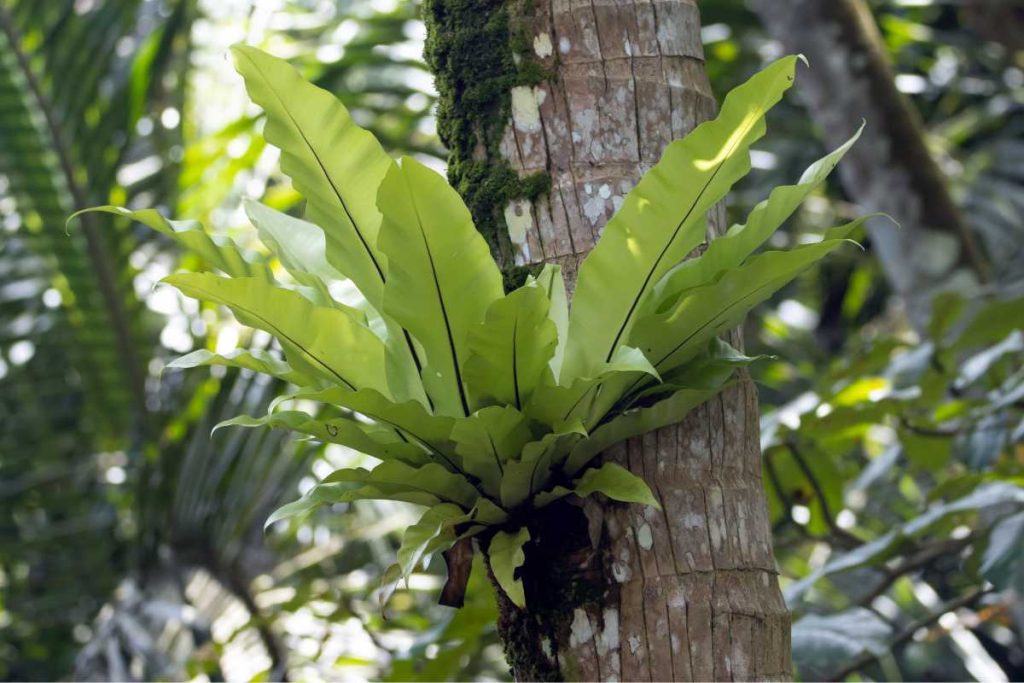
Bird’s nest fern has broad, undivided fronds arranged in a rosette. It often grows on trees as an epiphyte in warm, humid forests. The species listed here, Asplenium nidus, is tropical rather than a typical cold-temperate forest fern.
- Average Size: Typically grows 30-90 centimeters tall, with fronds spanning 60-150 centimeters in length.
- What eats this plant? While Bird’s Nest Fern foliage is not typically consumed by animals due to its tough texture and bitter taste, birds sometimes use the fronds as nesting material.
- Region/Continent: Tropical regions of the Old World, including parts of Africa, Asia, and the Pacific.
- Scientific Name: Asplenium nidus
Cinnamon Fern
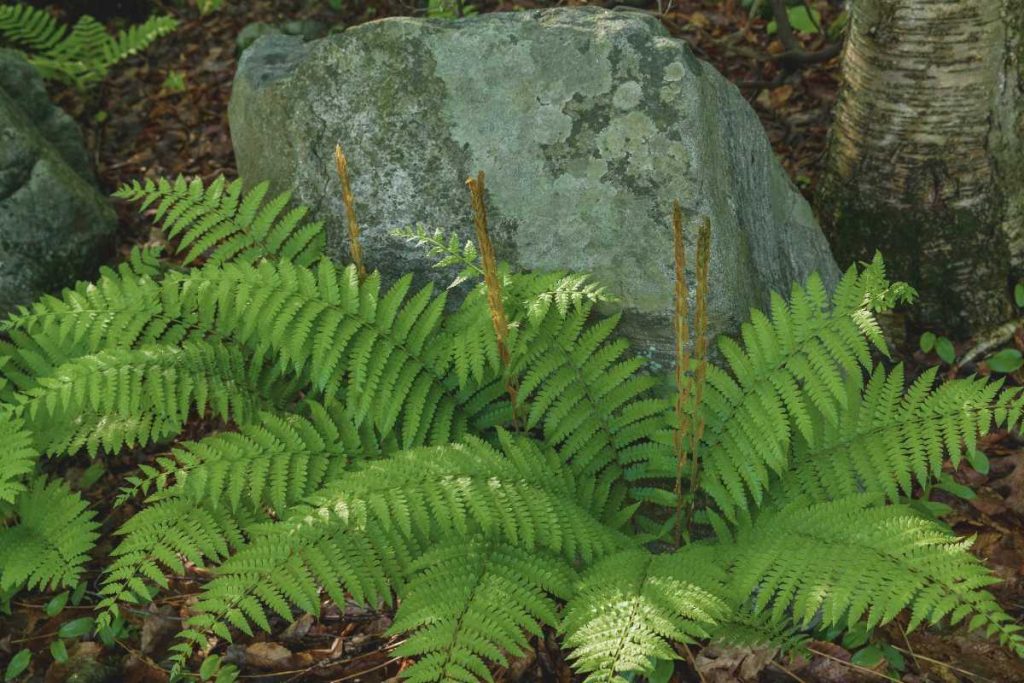
Cinnamon Fern is a large, clumping fern with upright fronds and distinctive cinnamon-colored fronds that appear in spring. It thrives in wet, acidic soils and is often found along stream banks and in swampy areas in and near temperate forests.
- Average Size: Typically grows 60-150 centimeters tall, with fertile fronds extending up to 90-180 centimeters.
- What eats this plant? Some wildlife browses fern growth, although cinnamon fern is not a major food plant. Do not identify an edible fiddlehead by its coiled shape alone; different fern species have different safety profiles.
- Region/Continent: Native to North America and parts of Asia, commonly found in temperate and subtropical forests, wetlands, and riparian areas.
- Scientific Name: Osmundastrum cinnamomeum
Carpet Moss

Carpet Moss is a dense, low-growing moss that forms a lush green “carpet” on the forest floor. It plays a vital role in the ecosystem by retaining moisture, preventing soil erosion, and providing habitat for small invertebrates.
- Average Size: Depending on the species, carpet moss can form mats ranging from a few centimeters to several meters in diameter.
- What eats this plant? Carpet Moss is not typically consumed by wildlife due to its fibrous texture and lack of nutritional value.
- Region/Continent: Widely distributed across temperate forests worldwide, commonly found in shaded, moist environments.
- Scientific Name: Hypnum
Resurrection Fern

Resurrection Fern is an epiphyte that grows on tree branches and trunks, often appearing brown and shriveled during dry periods but reviving and turning green when hydrated. It is well-adapted to drought conditions and is a common sight in temperate forest canopies.
- Average Size: Typically grows 5-15 centimeters tall, forming dense clusters on host trees.
- What eats this plant? Resurrection Fern foliage is not typically consumed by wildlife due to its tough texture and low nutritional value.
- Region/Continent: Native to North America, commonly found in temperate forests, woodlands, and shaded areas with high humidity.
- Scientific Name: Pleopeltis polypodioides
Spanish Moss
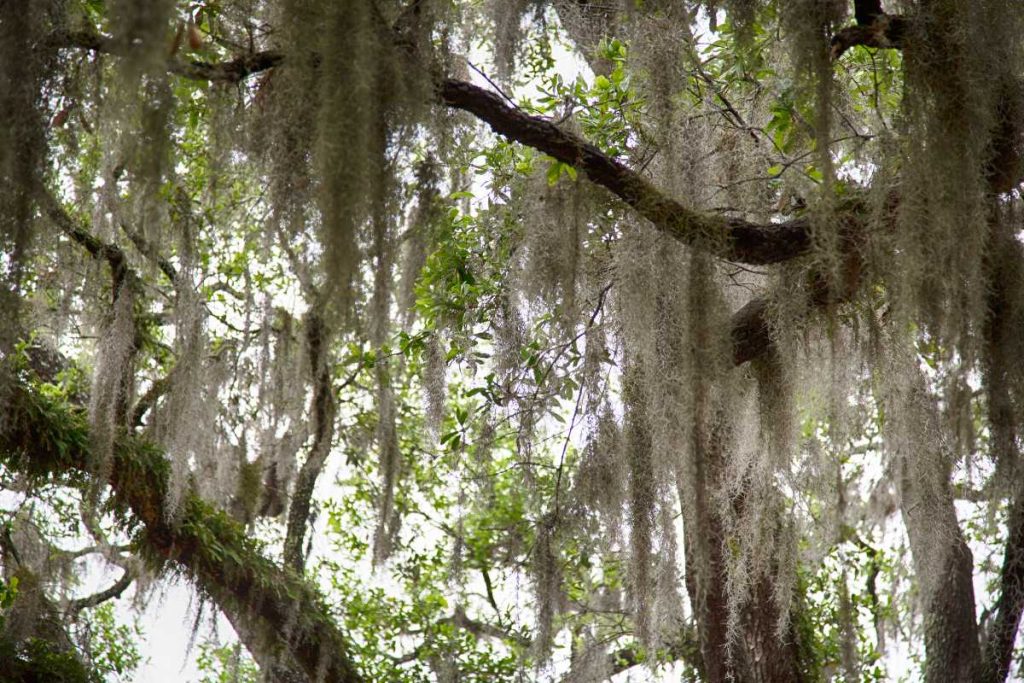
Spanish Moss is a type of bromeliad with long, trailing stems covered in gray-green, scale-like leaves. These trailing stems hang like curtains from tree branches. As an epiphyte, Spanish Moss absorbs moisture and nutrients from the air, rather than relying on soil for support.
- Average Size: Typically grows several meters long, forming cascading curtains in the forest canopy.
- Is Eaten by: Tree-dwelling animals such as squirrels and birds may use Spanish Moss for nesting material, but it is not a significant food source.
- Region/Continent: Native to the southeastern United States, commonly found in temperate and subtropical forests, swamps, and coastal areas.
- Scientific Name: Tillandsia usneoides
Spinulum

Spinulum, also known as Interrupted Clubmoss, is a small, creeping clubmoss with upright stems bearing narrow, lance-shaped leaves arranged in spirals. It reproduces using spores produced in cone-like structures and is commonly found in temperate forest understories.
- Average Size: Typically grows 10-30 centimeters tall, forming dense patches on the forest floor.
- Is Eaten by: Spinulum is not typically consumed by wildlife due to its bitter taste and low nutritional value.
- Region/Continent: Native to North America, Europe, and Asia, commonly found in temperate forests, woodlands, and rocky slopes.
- Scientific Name: Spinulum annotinum
Adaptations of Temperate Forest Plants
Temperate forest plants respond to seasonal changes in temperature, daylight, and water availability. They also compete for light beneath the canopy. The adaptations below explain several ways they survive these conditions.
Foliage Adaptations
- Shade Tolerance
Many understory plants in temperate forests have adaptations to thrive in low light conditions beneath the forest canopy. These plants may have larger leaves, or many small leaves, to capture as much light as possible. Others are shade-tolerant species that can photosynthesize efficiently under reduced light levels. - Deciduous Habit
Many trees in temperate forests are deciduous, meaning they shed their leaves in response to seasonal changes, particularly during the winter months. This adaptation helps trees conserve water and energy during periods of cold temperatures and reduced sunlight. - Coniferous Evergreen Foliage
Coniferous trees, such as pines, spruces, and firs, often have needle-like or scale-like leaves that are retained year-round. This evergreen foliage allows conifers to continue photosynthesis and maintain their metabolism throughout the year, even in colder seasons.
Root Adaptations
- Deep Root Systems
Temperate forest plants, including trees, often have deep root systems that enable them to access water and nutrients from deeper soil layers. This adaptation helps plants withstand periods of drought and increases stability in the often windy conditions of temperate forests. - Epiphytic Adaptations
In moist temperate forests, certain plants have adapted to grow as epiphytes, which means they live on the surface of other plants, such as trees. These plants often have specialized root systems or structures that enable them to absorb water and nutrients from the air or from organic matter accumulating around them.
Reproductive and Seasonal Adaptations
- Seasonal Flowering and Fruit Production
Many plants in temperate forests synchronize their reproductive cycles with the seasons, flowering and fruiting during periods of optimal environmental conditions. This adaptation increases the likelihood of successful pollination, seed dispersal, and establishment of new plants. - Seed Dispersal Mechanisms
Temperate forest plants spread seeds in several ways. Wind carries maple samaras and the small seeds of many conifers. Animals disperse fruits and nuts, while water can move seeds along streams and floodplains. - Winter Dormancy
Some temperate forest plants, particularly herbaceous perennials and bulbs, enter a period of dormancy during the winter months. This allows them to conserve energy and protect sensitive tissues from freezing temperatures until conditions become favorable for growth again in spring.
Frequently Asked Questions
Do all temperate forest trees lose their leaves in winter?
No. Many temperate forest trees, including most pines and firs, are evergreen. Deciduous trees shed their leaves seasonally. Some oaks and beeches retain dead brown leaves through winter, a condition called marcescence; retaining dead leaves does not make a tree evergreen.
Are all evergreen trees also coniferous?
While many evergreen trees are coniferous, not all of them are. Coniferous trees are usually identified by their needle-like or scale-like leaves and the production of cones. Trees like pine, spruce, and fir fall into this category. However, there are also evergreen trees that don’t belong to the conifer family. Temperate forest trees like holly and magnolia keep their leaves all year long, but their leaves look different compared to conifers. Despite these differences, both types of evergreen trees play important roles in the diversity and health of temperate forests.
Are there any edible or medicinal temperate forest plants?
Yes, there are some edible and medicinal plants in temperate forests. For instance, various temperate forest berries, such as blueberries and blackberries, are not only tasty treats but also rich in vitamins and antioxidants. Additionally, other temperate forest plants like ginseng and echinacea have a long history of medicinal use. However, it’s essential to exercise caution and proper knowledge when foraging for wild plants to ensure safety and sustainability.
Are mushrooms temperate forest plants?
While mushrooms often grow in temperate forests, they are not considered plants. Instead, they belong to their own group called fungi. Fungi play important roles in forest ecosystems, serving as decomposers that break down dead organic matter, such as fallen leaves and wood, into nutrients that can be recycled by plants.
How do temperate forest plants contribute to their ecosystems?
Temperate forest plants contribute to their ecosystems in many ways. For example, temperate forest plants convert sunlight into energy through photosynthesis. This process not only provides food for the plants themselves but also for other organisms higher up the food chain.
Temperate forest plants also produce oxygen for animals to breathe. Additionally, many temperate forest plants provide nesting sites, shelter, and food for animals like birds, insects, and squirrels. Another important contribution, their roots help to hold soil in place, preventing erosion and maintaining environmental stability.
What are some important plant-animal interactions in temperate forests?
In temperate forests, plants and animals depend on each other in many ways. For example, Birds, small mammals, and insects rely on plants for food, shelter, and nesting sites. Additionally, pollinators like bees and butterflies visit flowers to collect nectar and pollen, helping temperate forest plants reproduce. Birds and small animals also help plants reproduce by eating berries and seeds from plants and spreading the seeds when they poop. Temperate forest herbivores such as deer and rabbits consume large amounts of leaves and twigs, contributing to nutrient cycling and helping control plant growth. These interconnected relationships underscore the importance of maintaining healthy plant populations in temperate forests.
How do human activities impact temperate forest plants?
Human activities impact temperate forest plants in various ways. Some human activities cause harm to plants in the temperate forest ecosystem. For example, deforestation for timber or to make space for construction destroys plant habitats as well as the plants themselves. Furthermore, pollution from cars and factories makes the air and water dirty, negatively affecting plant health and the overall ecosystem. Sometimes, people also introduce new plants from other places, which can sometimes take over and crowd out native temperate forest plants.
However, other human activities – such as conservation efforts – support plants in the temperate forest. For example, certain timber companies are using careful logging practices to harvest only the trees they need while allowing others to continue growing. Also, some organizations and governments actively plant trees in cleared or degraded forest areas. Actions such as these can help restore and maintain the temperate forest ecosystem, including its plant life.