
Things that start with M include moon, magnet, mouse, and mushroom. Browse the categorized lists for objects, actions, describing words, foods, animals, plants, and more. Some entries are names, technical terms, or phrases rather than everyday objects. Common things that start with M: machine, magnet, mail, map, marble, mask, match, meadow, melon, milk, mirror, mitten, […]
Things That Start with L

Things that start with L include lamp, leaf, lion, and ladder. Browse the categorized lists for objects, actions, describing words, foods, animals, plants, and more. Some entries are names, technical terms, or phrases rather than everyday objects. Common things that start with L: ladder, lake, lamp, leaf, leg, lemon, letter, library, lid, light, lion, lizard, […]
Things That Start with K

Things that start with K include kite, kangaroo, key, and kiwi. Browse the categorized lists for objects, actions, describing words, foods, animals, plants, and more. Some entries are names, technical terms, or phrases rather than everyday objects. Common things that start with K: kale, kangaroo, kayak, kettle, ketchup, key, keyboard, kickball, kid, kidney, king, kite, […]
Things That Start with I

Things that start with I include ink, iguana, insect, and iron. Browse the categorized lists for objects, actions, describing words, foods, animals, plants, and more. Some entries are names, technical terms, or phrases rather than everyday objects. Common things that start with I: ice, icebox, iceberg, icicle, icon, idea, igloo, iguana, image, ink, insect, instrument, […]
Things That Start with H

Things that start with H include hat, house, horse, and hammer. Browse the categorized lists for objects, actions, describing words, foods, animals, plants, and more. Some entries are names, technical terms, or phrases rather than everyday objects. Common things that start with H: hair, hammer, hand, hat, head, heart, helmet, hill, hippo, hook, horn, horse, […]
Things That Start with G

Things that start with G include gift, guitar, globe, and grass. Browse the categorized lists for objects, actions, describing words, foods, animals, plants, and more. Some entries are names, technical terms, or phrases rather than everyday objects. Common things that start with G: game, garden, gate, gem, giraffe, glass, glove, goat, gold, goose, grape, grass, […]
Things That Start with F

Things that start with F include feather, forest, flag, and flower. Browse the categorized lists for objects, actions, describing words, foods, animals, plants, and more. Some entries are names, technical terms, or phrases rather than everyday objects. Common things that start with F: fabric, face mask, fan, faucet, feather, fence, fig, fireplace, fire truck, flashlight, […]
Things That Start with E

Things that start with E include egg, elephant, elbow, and engine. Browse the categorized lists for objects, actions, describing words, foods, animals, plants, and more. Some entries are names, technical terms, or phrases rather than everyday objects. Common things that start with E: ear, earmuffs, earphones, earring, easel, egg, eggplant, elbow, elevator, engine, envelope, eraser, […]
Things That Start with D

Things that start with D include dog, desk, door, and diamond. Browse the categorized lists for objects, actions, describing words, foods, animals, plants, and more. Some entries are names, technical terms, or phrases rather than everyday objects. Common things that start with D: doll, door, dog, desk, dish, doctor, drum, duck, dime, dinosaur, dress, drawer, […]
Things That Start with C

Things that start with C include cat, cup, candle, and camera. Browse the categorized lists for objects, actions, describing words, foods, animals, plants, and more. Some entries are names, technical terms, or phrases rather than everyday objects. Common things that start with C: cake, calendar, camera, candle, candy, car, card, carpet, carrot, cat, chair, cheese, […]
Things That Start with B

Things that start with B include ball, banana, book, and bicycle. Browse the categorized lists for objects, actions, describing words, foods, animals, plants, and more. Some entries are names, technical terms, or phrases rather than everyday objects. Common things that start with B: ball, balloon, banana, band, barn, basket, bat, beach, bed, bee, bell, berry, […]
Things That Start with A

Things that start with A include apple, ant, anchor, and accordion. Browse the categorized lists for objects, actions, describing words, foods, animals, plants, and more. Some entries are names, technical terms, or phrases rather than everyday objects. Common things that start with A: Accordion, Actor, Address, Album, Alligator, Almonds, Alphabet, Ambulance, Amulet, Anchor, Angel, Animal, […]
Parts of a Leaf

Leaves are essential to the survival of plants, acting as the primary site for photosynthesis, where energy from the sun is turned into food. Although leaves may appear simple, they are made up of various specialized parts, each with its own important role. In this post, we’ll focus on four key parts of a leaf: […]
Parts of a Tree

Trees are some of the most vital organisms on Earth, providing oxygen, habitats, and resources for humans and wildlife. Understanding the parts of a tree is crucial in grasping how these incredible plants function. Here’s a breakdown of the main parts of a tree, along with definitions and interesting facts. Scroll down to find our […]
Types of Snakes: Pictures, Facts, Adaptations

Snakes are reptiles with elongated bodies and no limbs. Different kinds live in forests, grasslands, deserts, wetlands, and oceans. Explore examples of venomous and nonvenomous snakes, their diets, and adaptations. Color alone is not a reliable way to judge whether a snake is dangerous. Video: Free School Venomous Snakes These snakes possess venom, which they […]
Antarctic Animals

Antarctic animals include penguins, seals, whales, seabirds, fish, and invertebrates of the Southern Ocean and its coasts. Most depend on the sea for food, even when they breed or rest on land or ice. This guide compares their habitats and adaptations and explains how krill and other small organisms support the food web. Video: BBC […]
Types of Whales: Facts, Pictures, Adaptations, Printable

Whales are marine mammals in the cetacean group, which also includes dolphins and porpoises. Baleen whales filter prey from the water, while toothed whales use teeth to catch food. This guide compares their sizes, habitats, diets, and adaptations. Scroll down to find our free printable 3-part cards of 12 types of whales. Video: Socratica Kids […]
Mammals That Lay Eggs

The mammals that lay eggs are monotremes: the platypus and four living echidna species. They are native to Australia and New Guinea. Like other mammals, monotremes have hair and produce milk for their young, even though they reproduce by laying eggs. Platypus (Ornithorhynchus anatinus) The platypus is one of the most unusual and unique animals […]
Types of Jellyfish

Jellyfish are soft-bodied marine invertebrates in the phylum Cnidaria. Different kinds vary in size, appearance, habitat, and sting. Explore familiar examples and how they feed, move, and reproduce; some jellyfish-like animals, such as the Portuguese man-of-war, are colonies rather than a single jellyfish. Video: Nat Geo Wild Types of Jellyfish Moon Jellyfish (Aurelia aurita) Box […]
8 Types of Bears: Pictures, Adaptations, Habitats, Facts

The eight living bear species include brown, polar, American black, Asian black, sun, sloth, Andean bears, and the giant panda. Their diets and habitats vary widely. Grizzly and Kodiak bears are forms of brown bear, rather than additional species. Video: Textbook Travel Types of Bears 1. Brown Bear (Ursus arctos) Description: Brown bears are one […]
Kodiak Bear

The Kodiak bear (Ursus arctos middendorffi) is a large subspecies of brown bear native to Alaska’s Kodiak Archipelago. It eats plants, salmon, and other foods that change with the seasons. Kodiak bears are powerful wild animals whose behavior depends on the situation. Useful Information About Kodiak Bears Scientific Name The Kodiak bear’s scientific name is […]
Sun Bear

The sun bear (Helarctos malayanus) is the smallest living bear species. Native to Southeast Asia’s tropical forests, it has a short coat, strong climbing claws, and usually a pale chest patch. Its diet includes fruits, insects, and honey. Despite their size, sun bears are powerful climbers and have long tongues to help them extract honey […]
Macaroni Penguin

The macaroni penguin (Eudyptes chrysolophus) is a crested penguin with conspicuous yellow-orange head feathers. It breeds mainly on subAntarctic islands and feeds at sea on krill and other small marine animals. Explore its habitat, breeding cycle, and adaptations to ocean life. Read more: medium-sized penguins. Video: Animal Fact Files Useful Information About Macaroni Penguins Physical […]
Types of Penguins: Photos, Habitat, Facts, Characteristics

Penguins are flightless seabirds adapted for swimming. Most live in the Southern Hemisphere, in habitats ranging from Antarctic ice to temperate coasts and the equatorial Galápagos Islands. Different penguin species vary in size, markings, breeding habits, and diet. Video: Richard Sidey Types of Penguins Our Penguin Identification Mini Unit includes detailed 3-part cards featuring 17 […]
Fall and Autumn Words

Fall and autumn are two names for the same season. This list groups fall words by nature, weather, activities, clothing, foods, and animals, followed by A–Z links. Many examples reflect autumn in temperate parts of the Northern Hemisphere; choose words that fit your region and the season you are describing. Nature and Scenery Weather Fall […]
Sea Lions vs Seals

Sea lions have visible ear flaps and can turn their hind flippers underneath their bodies to move on land. True seals lack external ear flaps and move differently on shore. Both are pinnipeds, a group of marine mammals that also includes fur seals and walruses. Key Differences: Sea Lions vs Seals Ears Movement on Land […]
Sea Urchins

Sea urchins are marine invertebrates in the phylum Echinodermata, the group that also includes sea stars and sand dollars. Their rounded skeletons carry movable spines and tube feet. Many graze on algae, and their feeding can strongly affect rocky-shore and kelp-forest habitats. Read more: oceans. Useful Information Scientific Classification Physical Characteristics Diet Habitat Reproduction Predators […]
River Otters

River otters are semiaquatic members of the weasel family. This article focuses on the North American river otter, which lives around rivers, lakes, wetlands, and some coastal waters. Its streamlined body, webbed feet, and dense fur help it swim and hunt. Information about River Otters Scientific Name Habitat Physical Characteristics Diet Behavior Video: Oregon Zoo […]
Life Cycle of a Frog
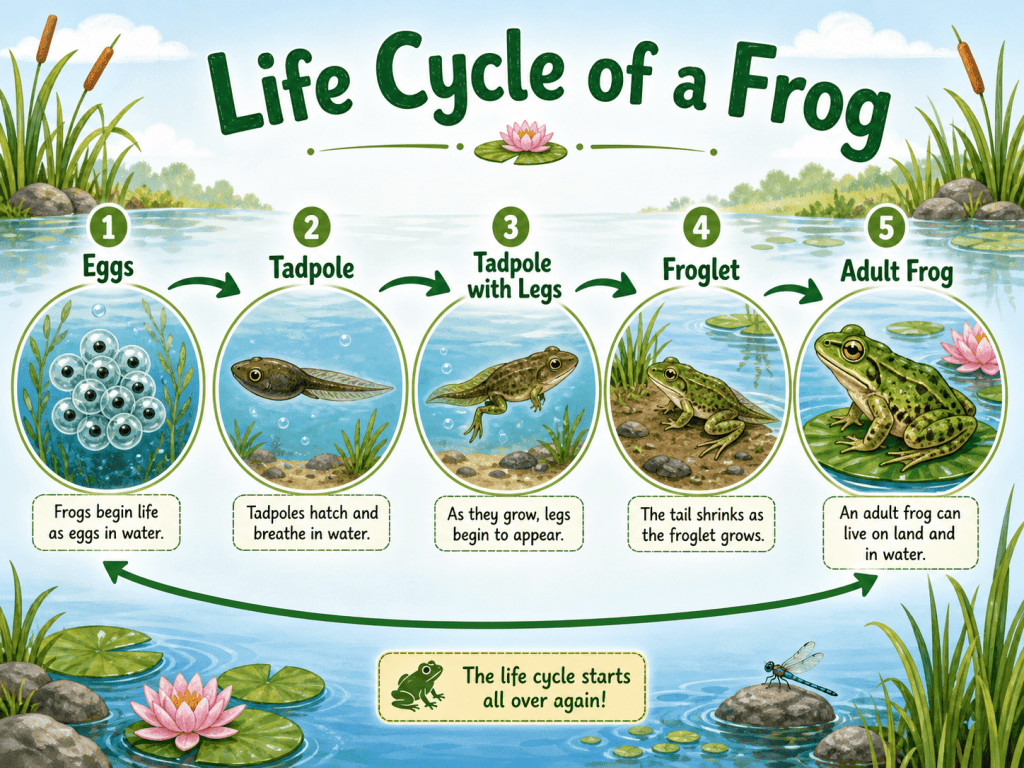
A typical frog life cycle includes an egg, a tadpole, a froglet with a shrinking tail, and an adult frog. The changes from tadpole to frog are called metamorphosis. This pond-frog model is useful for learning, although development and habitats vary among frog species. The Four Stages of a Frog’s Life Cycle: 1. Egg Stage […]
The Life Cycle of a Chicken Free Printable

The life cycle of a chicken is a fascinating journey that transforms a tiny egg into a full-grown rooster or hen. Chickens undergo several stages of development, each with its unique changes and milestones. Understanding the life cycle of a chicken can help you appreciate how these birds grow and develop from their earliest days […]
Types of Foxes

Foxes are members of the dog family, Canidae. Different species live in habitats ranging from Arctic tundra to deserts and forests. Explore familiar foxes and their appearance, diets, and adaptations; some animals commonly called foxes belong to different genera. Read more: Africa. Facts About Foxes Types of Foxes The Red Fox (Vulpes vulpes) The Red […]
Grassland Animals: Facts, Pictures, and Adaptations

Grassland animals include grazing mammals such as bison, zebras, and antelopes, along with predators, burrowing animals, birds, reptiles, and insects. They live in temperate prairies and steppes or tropical savannas. Rainfall, fire, and grazing help shape these open habitats. This guide compares their diets, habitats, and adaptations. There are two types of grasslands: Animals of […]
The Montessori Cultural Curriculum

The Montessori approach is based on the belief that children learn best when they are given the opportunity to explore and discover the world around them. The Montessori cultural curriculum includes lessons on geography, botany, zoology, science, art, and music. In addition to helping children develop a deeper understanding and appreciation of the world around […]
The Sensorial Area of the Montessori Classroom

The Sensorial Area is one of the core academic areas of the Montessori Primary classroom. This area is designed to help children refine their senses and develop their ability to observe, compare, and contrast various attributes of the world around them. The Sensorial area offers children not only the opportunity to explore and discover, but […]
Montessori Language: An Overview of the Materials and Curriculum

The Montessori approach to language and literacy development in early childhood is grounded in the belief that children learn best through hands-on, experiential learning. In a Montessori classroom, children are encouraged to explore language and literacy through a variety of activities and materials. Montessori schools place a strong emphasis on developing literacy skills in young […]
Montessori: What is it?

Montessori education, a revolutionary approach to learning developed by Dr. Maria Montessori over a century ago, stands out for its unique focus on the individual child’s natural development. Characterized by self-directed activities within a prepared environment and guided by specially trained teachers, this method nurtures children’s innate curiosity and desire to learn, fostering both academic […]
Grace and Courtesy in Montessori

Grace and Courtesy is a fundamental aspect of the Montessori curriculum. It is an essential part of Montessori philosophy, which emphasizes the importance of respect, empathy, and kindness. Grace and Courtesy lessons teach young children how to interact with others in a polite, respectful, and considerate manner. The Montessori Method of education recognizes that learning […]